Kwanzaa
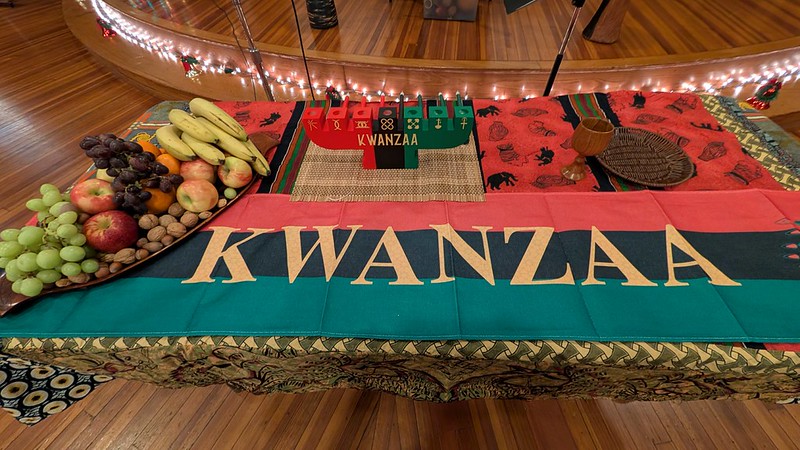
Kwanzaa is an annual celebration of African-American culture from December 26 to January 1, culminating in a communal feast called Karamu, usually on the sixth day.
It was created by activist Maulana Karenga based on Karenga’s research of African harvest festival traditions from various parts of West, East, and Southeast Africa. Kwanzaa was first celebrated in 1966. A 2009 estimate placed the number of Americans who celebrate Kwanzaa between 500,000 and 2,000,000.
American black separatist Maulana Karenga created Kwanzaa in 1966 during the aftermath of the Watts riots as a non-Christian,African-American holiday.Karenga said his goal was to “give black people an alternative to the existing holiday of Christmas and give black people an opportunity to celebrate themselves and their history, rather than simply imitate the practice of the dominant society.”
For Karenga, a figure in the Black Power movement of the 1960s and 1970s, the creation of such holidays also underscored the essential premise that “you must have a cultural revolution before the violent revolution. The cultural revolution gives identity, purpose, and direction.”
According to Karenga, the name Kwanzaa derives from the Swahili phrase matunda ya kwanza, meaning “first fruits”. First fruitsfestivals exist in Southern Africa and are celebrated in December/January with the southern solstice. Karenga was partly inspired by an account he read of the Zulu festival Umkhosi Wokweshwama.It was decided to spell the holiday’s name with an additional “a” so that it would have a symbolic seven letters.
During the early years of Kwanzaa, Karenga said it was meant to be an alternative to Christmas. He believed Jesus was psychoticand Christianity was a “White” religion that Black people should shun. As Kwanzaa gained mainstream adherents, Karenga altered his position so practicing Christians would not be alienated, stating in the 1997 book Kwanzaa: A Celebration of Family, Community, and Culture that “Kwanzaa was not created to give people an alternative to their own religion or religious holiday.” Many African Americans who celebrate Kwanzaa do so in addition to observing Christmas.
After its creation in California, Kwanzaa spread outside the United States to other parts of the African diaspora,but does not appear to be directly observed in any African countries.
Destinations: United States