The Sioux: Warrior Nation
The Sioux are a broad alliance of Native American and First Nations tribes and one of the most populous indigenous groups in North America. They are also known as the Oceti Sakowin (People of the Seven Council Fires), which is the name the tribes often prefer, as the term “Sioux” is an exonym derived from an Ojibwe word for “little snakes” or “enemies”.
The Sioux Nation is comprised of three major divisions based on dialect and geography: the Dakota (Santee), Nakota (Yankton/Yanktonai), and Lakota (Teton).
Originally from the Ohio Valley and Great Lakes regions, the Sioux migrated west to the Great Plains around the 1700s due to conflict with other tribes. There, they adopted a nomadic, buffalo-hunting lifestyle centered around the horse, which became an integral part of their culture.
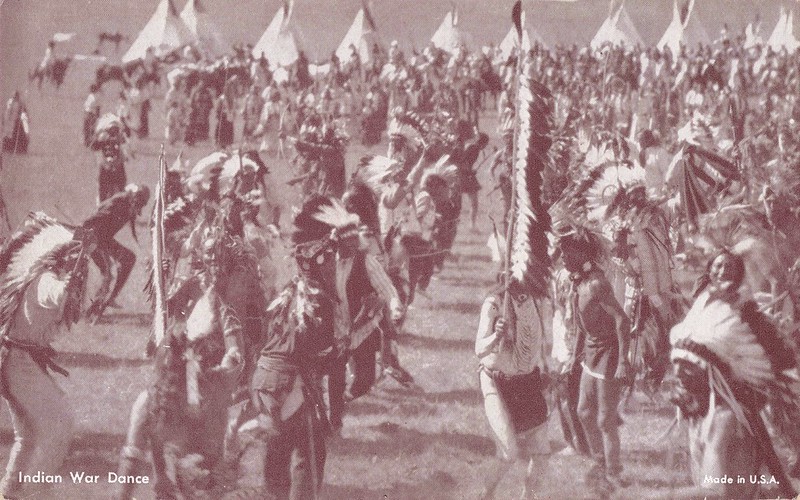
They lived in portable, buffalo-hide teepees and followed the seasonal movements of the bison herds, which provided food, clothing, and materials for shelter and tools.
The Sioux are deeply spiritual, believing in an interconnectedness of all living things and a creator known as Wakan Tanka(the Great Spirit)
Men achieved status through brave deeds in warfare, and conflicts with U.S. settlers and the Army were extensive during westward expansion, including famous events like the Battle of the Little Bighorn and the Wounded Knee Massacre.
The Great Sioux War
The Great Sioux War of 1876, also known as the Black Hills War, was a series of battles and negotiations that occurred in 1876 and 1877 between the Lakota, Northern Cheyenne, and the United States. The cause of the war was the desire of the US government to obtain ownership of the Black Hills.
Gold had been discovered in the Black Hills and settlers began to encroach onto tribal lands, and the Sioux and Cheyenne refused to cede ownership to the United States.The earliest engagement was the Battle of Powder River, and the final battle was the Wolf Mountain. Included are the Battle of the Rosebud, Battle of Warbonnet Creek, Battle of Slim Buttes, Battle of Cedar Creek, and the Dull Knife Fight.
Battle of Little Bighorn
Among the many battles and skirmishes of the war was the Battle of the Little Bighorn, often known as Custer’s Last Stand, the most storied of the many encounters between the US army and mounted Plains tribes. The Battle of the Little Bighorn, known to the Lakota as the Battle of the Greasy Grass and also commonly referred to as Custer’s Last Stand, was an armed engagement between combined forces of the Lakota, Northern Cheyenne, and Arapaho tribes and the 7th Cavalry Regiment of the United States Army. The battle, which resulted in the defeat of US forces, was the most significant action of the Great Sioux War of 1876. It took place on June 25–26, 1876, along the Little Bighorn River in the Crow Indian Reservation in southeastern Montana Territory.
The fight was an overwhelming victory for the Lakota, Northern Cheyenne, and Arapaho, who were led by several major war leaders, including Crazy Horse and Chief Gall, and had been inspired by the visions of Sitting Bull. The US 7th Cavalry, a force of 700 men, suffered a major defeat while under the command of Lieutenant Colonel George Armstrong Custer. Five of the 7th Cavalry’s twelve companies were annihilated and Custer was killed. The total US casualty count included 268 dead and 55 severely wounded (six died later from their wounds). The Little Bighorn Battlefield National Monument honors those who fought on both sides.
That victory notwithstanding, the US leveraged national resources to force the tribes to surrender, primarily by attacking and destroying their encampments and property. The Great Sioux War took place under the presidencies of Ulysses S. Grant and Rutherford B. Hayes. The Agreement of 1877 officially annexed Sioux land and permanently established Indian reservations.
The Wounded Knee Massacre
The Wounded Knee Massacre was the last major armed conflict between the Lakota and the United States. It was described as a massacre by General Nelson A. Miles in a letter to the Commissioner of Indian Affairs. On December 29, 1890, five hundred troops of the 7th Cavalry Regiment, supported by four Hotchkiss guns (a lightweight artillery piece capable of rapid fire), surrounded an encampment of the Lakota bands of the Miniconjou and Hunkpapa with orders to escort them to the railroad for transport to Omaha, Nebraska. By the time it was over, 25 troopers and more than 150 Lakota Sioux lay dead, including men, women, and children. It remains unknown which side was responsible for the first shot; some of the soldiers are believed to have been the victims of “friendly fire” because the shooting took place at point-blank range in chaotic conditions. Around 150 Lakota are believed to have fled the chaos, many of whom may have died from hypothermia.
Following a three-day blizzard, the military hired civilians to bury the dead Lakota. The burial party found the deceased frozen; they were gathered up and placed in a mass grave on a hill overlooking the encampment from which some of the fire from the Hotchkiss guns originated. It was reported that four infants were found alive, wrapped in their deceased mothers’ shawls. In all, 84 men, 44 women, and 18 children reportedly died on the field, while at least seven Lakota were mortally wounded.
For this 1890 offensive, the American army awarded twenty Medals of Honor, its highest commendation.In 2001, the National Congress of American Indians passed two resolutions condemning the Medals of Honor awards and called on the US government to rescind them.
The Sioux Today
Today, there are nearly 100,000 Lakota, Dakota, and Nakota people in the U.S. and an additional 10,000 in Canada. Roughly half of them live on reservations, with significant populations also residing in urban areas like Minneapolis and Chicago.
Federally recognized reservations for the Sioux in the U.S. are primarily located in North and South Dakota, with some in Minnesota, Nebraska, and Montana.
Modern Sioux communities actively work to preserve their cultural heritage through language revitalization programs, traditional ceremonies like powwows and the Sundance, and educational advocacy. The Sioux Nation continues to be involved in political advocacy, notably in the ongoing legal dispute with the U.S. government over the ownership of the sacred Black Hills, a claim they refuse to settle for monetary compensation.
Destination: United States