Iran’s Ayatollahs, the Revolutionary Guard and the Cult of Martydom, the Mahdi and the End of Times
Iranian Ayatollahs are senior Shiite clerics, with “Ayatollah” (Sign of God) being a high-ranking religious title rather than a name, often denoting experts in Islamic law.
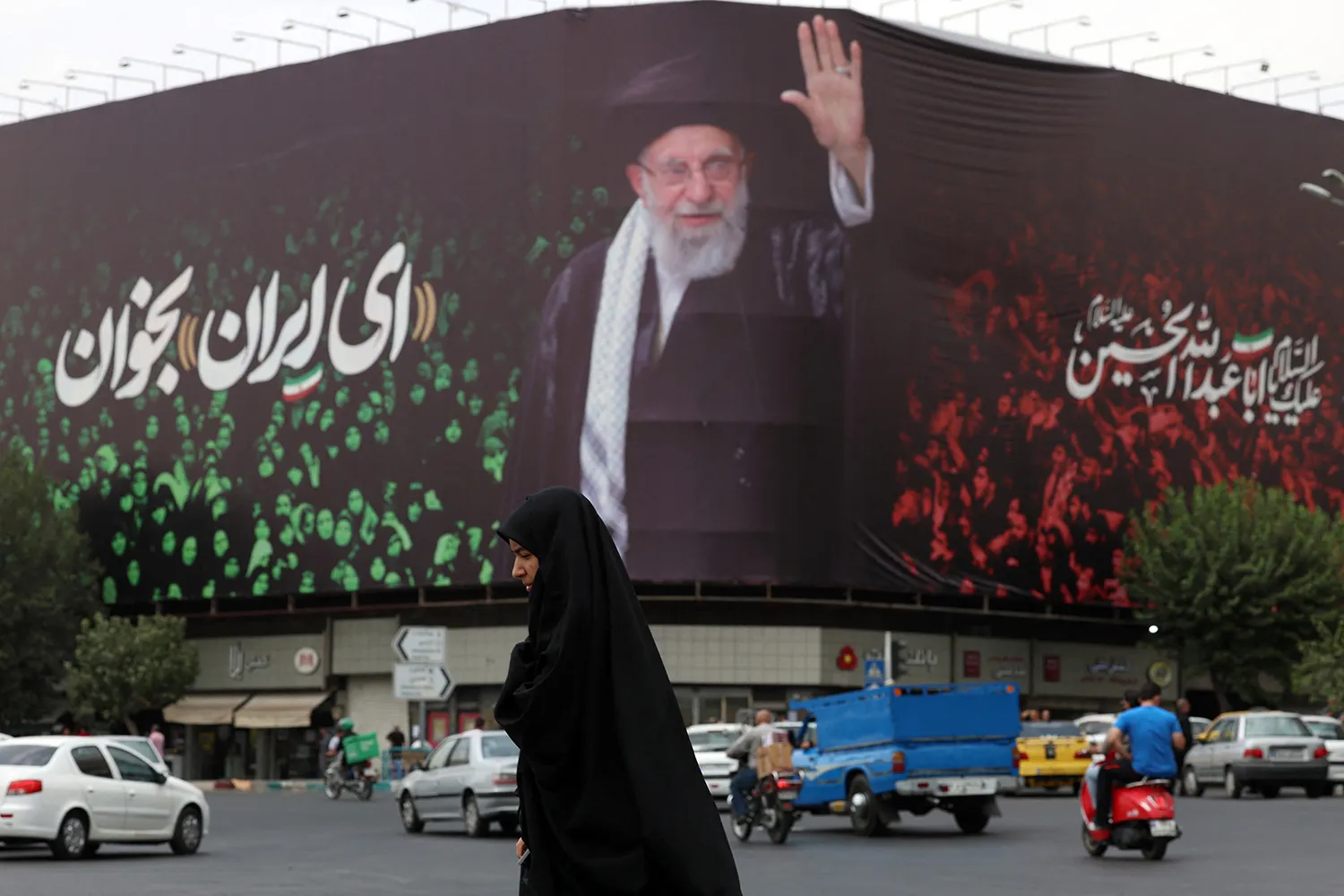
More than 60 live in Iran. They lead religious education and law, with some, like the former Supreme Leader Ali Khamenei, assassinated recently by US and Israeli forces, controlling the state.
Others like Ayatollah Sistani in Iraq often focus on religious duties.
While traditionally religious, many Ayatollahs in Iran are deeply involved in the theocratic political structure, while others maintain a distance, emphasizing the separation of religious leadership from direct political governance.
There is a brewing generational transition in the seminaries of Qom and other cities, with a mix of hardliner and moderate clerics influencing the future direction of Iran’s leadership.
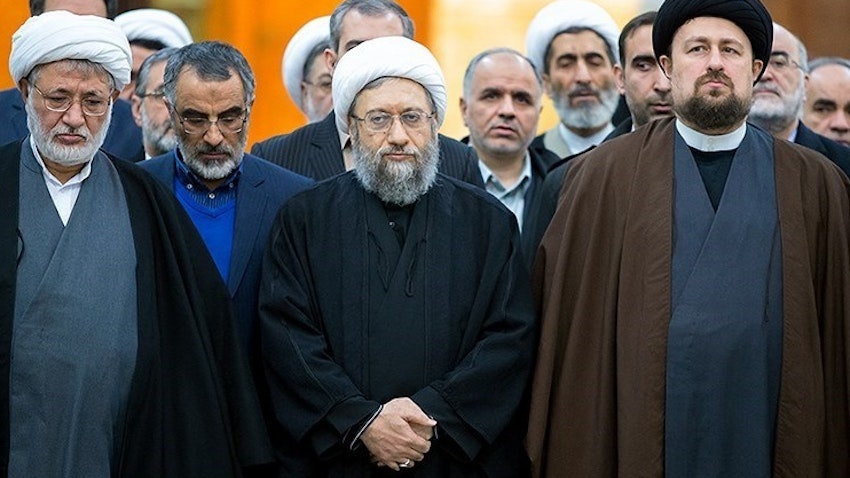
Many of the current political ayatollahs have faced criticism for enforcing a strict, often totalitarian, religious state, suppressing political opponents and social freedoms.
The Cult of Martyrdom
In Iran, the “cult of martyrdom” refers to the state-sanctioned glorification of self-sacrifice, rooted in Shiite theology and systematically institutionalised after the 1979 Islamic Revolution. It transforms individual death into a powerful tool for national identity and political mobilisation.
The core of this culture is the Battle of Karbala (680 CE), where Imam Hussain, the grandson of Prophet Muhammad, was killed by the forces of the Umayyad caliph Yazid. Hussain’s death is viewed as the ultimate triumph of justice over tyranny.
Revolutionary leaders like Ayatollah Khomeini reinterpreted this history, casting the Shah (and later foreign powers) as modern-day “Yazids” to inspire resistance.
The slogan “Every day is Ashura, every land is Karbala” suggests that the struggle for justice is eternal and requires constant readiness for sacrifice
The “cult” was fully established during the brutal war with Iraq, between 1980-1988 where it was used to sustain public support despite massive casualties.
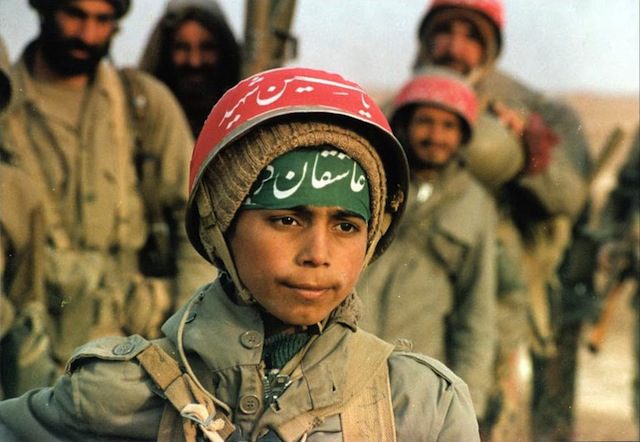
Young volunteers, including children in the Basij paramilitary, were often sent into minefields. Some reports mention “keys to paradise” given to these children to symbolize their path to heaven.
The Foundation of Martyrs was created to provide families of the deceased with financial aid, housing, and educational priorities, creating a system of permanent social mobility through sacrifice.
Streets, schools, and murals are named after and depict martyrs. Textbooks dedicate significant space to themes of martyrdom to educate children on the “virtue” of death for the state.
Today, the concept remains a pillar of Iranian domestic and foreign policy.
A military culture that views death as “transcendence” rather than defeat is harder to deter through conventional means.
When high-ranking officials like Qasem Soleimani , the charismatic leader of the Revolutionary Guardd or the recent Supreme Leader ,Ali Khamenei ,are assassinated by the US and Israel the state frames their deaths as “martyrdom” to unify the public and justify further resistance.
*The Iran – Iraq War”
The Iran-Iraq war remains one of the bloodiest conflicts since the second world war. It cost approximately 1m lives, and about four times that number were wounded. Iraq’s leader, Saddam Hussein, ordered the invasion of his neighbour in September 1980, ostensibly to pre-empt Iran’s hostile intentions towards his own country. He considered the newly installed clerical regime in Tehran to be a mortal enemy of his own secular Baath party.
After initial breakthroughs Iraq’s offensive petered out. What territory it did seize was recovered by Iran. The war, most people agree, ended in a stalemate.
What were the consequences for Iran? First, Saddam was expecting his invasion to provoke a popular uprising against the untested and divided revolutionary regime that had taken power in 1979. But instead of toppling the regime, the invasion entrenched it. The horrific human losses merely sustained Iran’s cult of martyrdom, much as the murderous and recently deceased Ali Khamenei is now being mythologised as a great leader.
The egregious failures of the regular Iranian army provided an opportunity for the Islamic Revolutionary Guard Corps (IRGC) to expand its power. The IRGC became both the regime’s praetorian guard and its own battlefield army. It also started arming proxies, such as Hizbullah in Lebanon and later the Houthis in Yemen and Hamas in Gaza, to keep the battles away from Iranian territory (a forward-defence strategy) and to rally the Shia faithful.
America has been fighting a clandestine war against these groups ever since, while Israel has done so more openly.
The conflict shows that Iran was ready to fight long wars with any means at its disposal. Iraq offered Iran a very good deal to end the bloodshed in 1982, but the regime just fought on, oblivious, it seemed, to the human cost. It was, happy to go for broke”, as it is now, sapping its opponent’s will and munitions. Remarkably, Iran carried on fighting even as most of the world’s great powers—including the Soviet Union, America and France—supported Iraq and supplied it with weapons. Although it’s hard to believe now, Israel actually armed Iran during this conflict to sustain a regional counterweight against Iraq.
Iran (and Iraq) discovered how to use attacks on shipping in the Strait of Hormuz to persuade other countries, such as America, to put pressure on their opponent to surrender. Altogether, hundreds of commercial vessels were damaged in the so-called Tanker War. Iran perfected speedboat attacks on tankers and also used missiles. Iraq—as America did this month—bombed Kharg Island, Iran’s main oil terminal in the Gulf, to little effect.
*The 12th Imam
Central to the belief of Shiite Islam is the 12th Imam, known as Muhammad al-Mahdi , is the final successor to the Prophet Muhammad. He is a central messianic figure believed to be currently alive but hidden from the world in a state called Occultation (Ghaybah), from which he will eventually return to establish global justice and peace.
Known as Al-Mahdi (The Guided One), Al-Qa’im (He Who Will Rise), Sahib al-Zaman (Lord of the Age), and Al-Muntazar (The Awaited). he was born in 869 CE (255 AH) in Samarra, Iraq, to the 11th Imam, Hasan al-Askari, and Lady Narjis.
It is believed he will reappear at the end of time to rid the world of tyranny and evil, often alongside Jesus Christ
Shiite tradition divides his absence into two distinct periods
The first is the Minor Occultation (874–941 CE): Following his father’s death, the Imam communicated with the faithful through a succession of four special deputies (Sufara).
The second is the Major Occultation (941 CE–Present): After the death of the fourth deputy, direct communication was severed. This period continues today, and believers are instructed to refer to religious scholars (Maraji) for guidance.
The constitution of the Islamic Republic of Iran recognizes the 12th Imam as the ultimate head of the state.
The concept of Velayat-e Faqih (Guardianship of the Jurist) justifies the rule of senior clerics, like the Supreme Leader, as temporary placeholders who manage the community’s affairs until the Imam’s return.
The Jamkaran Mosque near Qom is a major destination for pilgrims who believe the Imam once appeared there and continues to oversee the affairs of his followers.
Commonly cited apocalyptic signs indicating the re appearance of the 12 imam include Global prevalence of injustice and moral decay, The rise of the Sufyani (a tyrannical figure from Syria) and the Yamani (a righteous supporter). And a heavenly cry” that will announce his arrival to the entire world.
Belief in the 12th Imam (the Mahdi) is not just a religious tenet in Iran; it is a foundational pillar of its state identity and geopolitical strategy. Modern Iranian foreign policy is increasingly interpreted through the lens of Mahdism, where the state views itself as the “vanguard” responsible for preparing the world for his return.
The Iranian leadership, particularly the Islamic Revolutionary Guard Corps (IRGC), has institutionalised the idea that it must “set the stage” for the Mahdi’s reappearance.
Traditionally, many Shiites were “quietist,” waiting for the Imam to return in God’s time. The 1979 Revolution shifted this to an activist stance, asserting that believers must actively combat injustice to hasten his arrival.
Iran’s support for regional proxies (Hezbollah, Houthis, etc.)known as The Axis of Resistance is often framed as assembling the “army of the Mahdi” to defeat modern-day “oppressors” (typically identified as the U.S. and Israel).
In moments of military setback, the regime often invokes Tamhis(divine testing), viewing hardship as a “divine refining instrument” meant to separate true believers from the weak before the final battle.
Several specific prophecies are frequently linked to current events in Iranian state rhetoric:
Hardline factions often cite beliefs that the Mahdi will not return until the “enemies of Islam”—specifically Israel—are vanquished. Israel is viewed as the primary “obstacle” to his return.
Some radical interpretations suggest that global upheaval and war are necessary precursors to the Imam’s return. This can lead to a higher tolerance for high-stakes brinkmanship, as conflict is seen as a sign of the “end times” rather than a failure of diplomacy.
The Sufyani and the West: Traditional prophecies speak of the Sufyani, a tyrant from the Levant (modern Syria/Jordan) who will oppose the Mahdi. State-aligned analysts sometimes map these figures onto modern regional rivals or Western-backed leaders to galvanise domestic support.
Nuclear and Military Ambitions:
The “messianic” dimension of Iran’s policy introduces a layer of unpredictability that challenges traditional deterrence models:
While official fatwas (religious decrees) currently ban nuclear weapons, some hardline clerics and IRGC members argue that acquiring “ultimate power” is necessary to create the “apocalyptic opportunity” required for the Mahdi to reveal himself.
Under this framework, strategic retreat or diplomatic compromise can be seen as a betrayal of a “prophetic obligation,” making long-term de-escalation with the West more difficult.
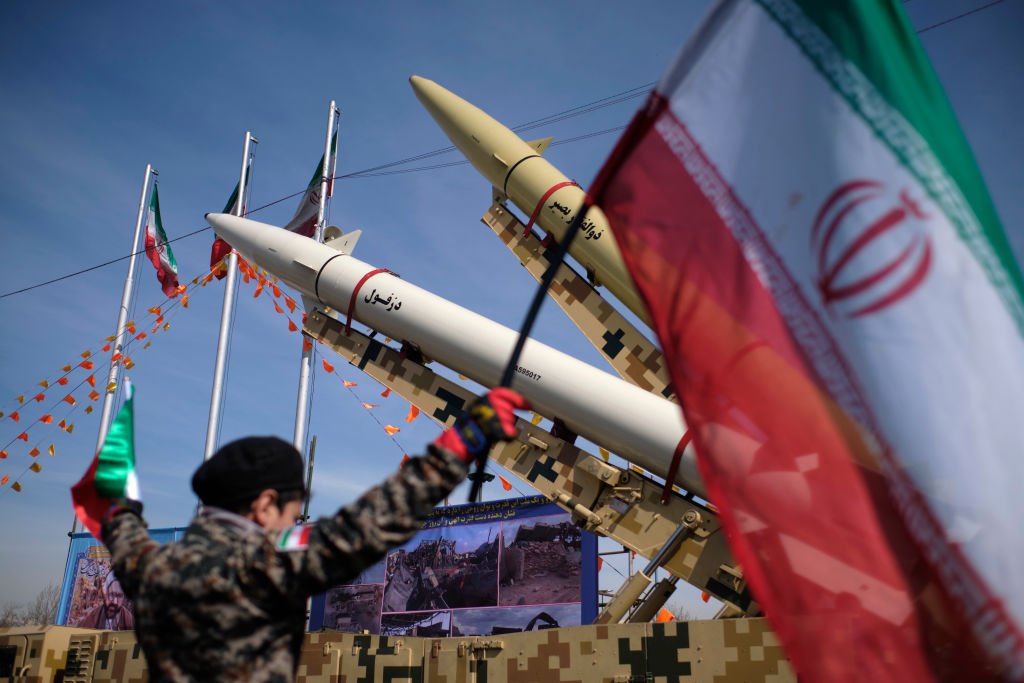
This messianic vision is often contested within Iran. Many Iranian officials remain focused on national survival, security, and economic stability, using Mahdist rhetoric more as a tool for legitimacy and mobilization than as a literal roadmap for suicide.
While the IRGC has increased ideological indoctrination of younger officers in “Mahdism,” the broader population, particularly Gen Z, is increasingly disillusioned with these religious justifications for state policy.
The Revolutionary Guard Corps
The development of the IRGC is fundamental to understanding its DNA. It began as an umbrella of Islamist militias that acted as the clergy’s bodyguards and helped them consolidate power in post-revolutionary Iran.
Since its inception the IRGC has also been the main organ for advancing the clergy’s objective of exporting the Islamic Revolution abroad. This is confirmed by Iran’s 1979 constitution, which establishes the IRGC as an “ideological army” and mandates it with “an ideological mission of jihad in God’s way; that is extending sovereignty of God’s law throughout the world.”
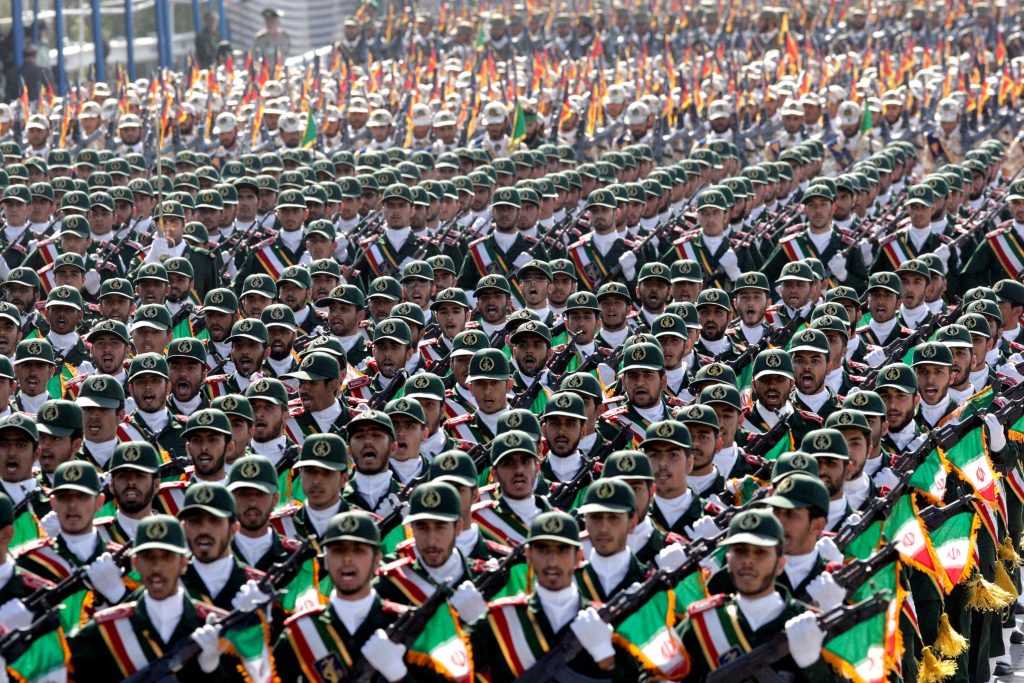
Unlike the regular Iranian army (the Artesh), whose primary objective is to protect Iran’s borders, the IRGC’s principal mission is to protect the Shi’a clergy and advance the Islamic Revolution at home and abroad.
The Iran-Iraq War (1980-88) resulted in the IRGC expanding its remit and professionalizing as a military organization, moving toward becoming an institutionalized militia. In 1985 it expanded into three main branches: a ground force, an air force, and a navy. The end of the eight-year conflict with Saddam Hussain in 1988 and the death of Supreme Leader Ayatollah Ruhollah Khomeini in 1989 would accelerate the IRGC’s growth. Upon assuming the mantle of supreme leader, Ayatollah Ali Khamenei added a new extraterritorial branch, the Quds (Jerusalem) Force, to double down on exporting the Islamic Revolution and promoted the volunteer civil militia, the Basij, as a separate branch under the IRGC’s purview.
The early 1990s would propel the IRGC into economic activities. Its newly established Khatam al-Anbiya Construction Headquarters, an engineering and building conglomerate, would lead Iran’s post-war reconstruction efforts and over time carve out an economic empire. In parallel, the IRGC also became involved in the provision of social services for its own members after it became closely affiliated with several ideological-charitable organizations (bonyads). Later on, these bonyads would become deeply entrenched in the Iranian economy, from the stock market to the oil and gas industry. The late 1990s and early 2000s gave rise to the IRGC’s involvement in politics and “elected” roles in the regime.
It served as the hardline clergy’s vanguard against the liberalization of Iranian society and the so-called reformist President Mohammad Khatami, with the IRGC even threatening to remove Khatami from power over his soft response to anti-regime student protests. An election boycott by many Iranians in response to the failure of “reformists” to support the people’s aspirations would see a surge in IRGC members being elected across city councils in 2003 and the Iranian parliament in 2004.
The election of Mahmoud Ahmadinejad in 2005 — a Basij member — as president further entrenched the Guard across the Iranian government, including in ministerial positions.
The anti-regime Green Movement unrest, which emerged after Iran’s fraudulent elections in 2009, would see the IRGC further expand its remit in the intelligence field. In October 2009, upon Khamenei’s orders, its Intelligence Directorate was upgraded to the Intelligence Organization of the IRGC, directly challenging the authority of the Ministry of Intelligence and Security. The election of so-called “moderate” Hassan Rouhani as president in 2013 would not impede the IRGC’s rising trajectory. This period would see it streamline its focus on monopolizing culture in the Islamic Republic, investing heavily in social and cultural programs, especially in rural areas. The IRGC’s increasing representation within the clerical regime (IRGC-ization) also resulted in a significant influx of Guard members seizing seats in the February 2021 parliamentary elections, which were boycotted en mass by the Iranian people.
Today, the IRGC is the foundation of the administration, with its members occupying key ministerial roles and many of the 874 political appointee positions.All of these developments have contributed to the IRGC’s growing prominence within the Islamic Republic over the past four decades.
What began as an armed Islamist militia in 1979 with fewer than 500 members transformed itself into a state within a state with its own economic, political, intelligence, and cultural arms. Tracking the development of the IRGC reveals that it is anything but a conventional state armed force.
Iran’s Islamic Revolution: Preparing for Mahdi’s Return
The 1979 Islamic Revolution in Iran led by Ayatollah Khomeini would fundamentally change the Shi’a political doctrine and Mahdism.
In the years leading up to Iran’s revolution, then exiled cleric Khomeini developed a theory of Islamic government that would transfer all political power to the Shi’a clergy. Khomeini outlined his plans for the creation of an Islamic state by reconceptualizing the doctrine of velayat-e faqih to legitimize clerical guardianship of the state. The ayatollah claimed that God had made Islam for it to be implemented as shown by the creation of divine law (sharia). Given that no one knew Islam better than the clergy (Islamic jurists), Khomeini argued, it was natural that they should rule as guardians of the state until the return of the 12th Imam.
In the absence of the 12th Imam, velayat-e faqih would transfer all political and religious authority to a supreme clerical leader (mujtahid), who would have custody over the Shi’a ummah as the imam’s deputy (nayeb-e Imam) and God’s representative on Earth.
Khomeini’s theory also reconceptualized Mahdism, reversing centuries of clerical quietism during the Major Occultation. Rather than silently waiting for the 12th Imam’s return, Khomeini argued, the 12th Imam was waiting for Shi’a Muslims to prepare the ground for his arrival. Shi’a Muslims, in turn, had to be politically active and form an Islamic government to prepare for Mahdi’s global revolution. After the 1979 Islamic Revolution, velayat-e faqih would be enshrined into Iran’s constitution and would underpin the Iranian state, with Iran’s supreme leader ruling as the 12th Imam’s deputy. Under this interpretation, the Islamic Revolution in Iran marked the first stage before the return of the 12th Imam.
Khamenei and the Mahdism Doctrine
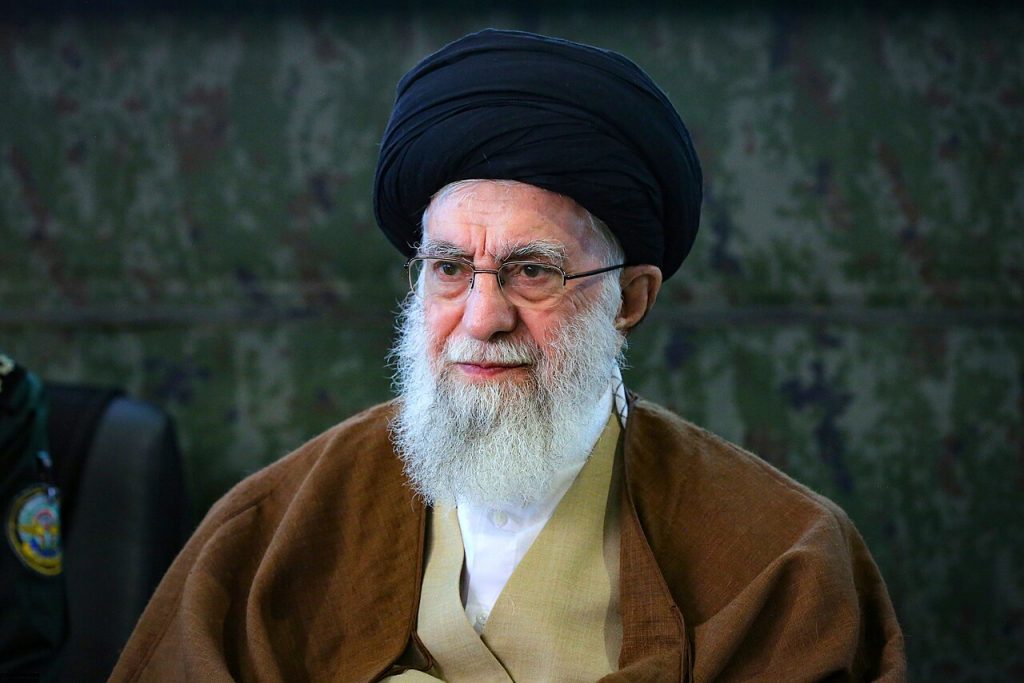
Preparations for the return of Mahdi became more serious after Ayatollah Khamenei assumed the mantle of supreme leader in 1989. This appetite was initially shaped by the influence of Ayatollah Mohammed-Taqi Mesbah-Yazdi, a hardline Islamist cleric who was one of the main proponents and theorists of Khomeini’s reinterpretation of Mahdism. This influence began to manifest itself in the late 1990s where Khamenei developed a doctrine around Mahdism.
To prepare for the 12th Imam’s return, the ayatollah claimed it was necessary to create an ideal Islamic society based on Mahdism (jaameh-e mahdavi). Khamenei further developed this thesis a few years later. To lay the ground for the 12th Imam’s return, the supreme leader outlinedfive necessary revolutionary stages: an Islamic Revolution, an Islamic regime, an Islamic government, an Islamic society, and an Islamic civilization. According to Khamenei and his allies, Iran had only achieved the first two stages and was stuck on completing an Islamic government.
Ahmadinejad: The “Government of Mahdi”
The election of the hardliner Ahmadinejad as president in 2005 turbocharged Mahdism across the Islamic Republic. Ahmadinejad — a member of the Basij — was obsessed with the doctrine of Mahdism and finding ways to speed up the return of the 12th Imam.
This is perhaps unsurprising given the fact that his spiritual leader was none other than Mesbah-Yazdi. As the new president declared, “We have a mission — to turn Iran into the country of the Hidden Imam.”Ahmadinejad would give special importance to the Jamkaran Mosque, which hosts the Well of Jamkaran, where some Shi’a Muslims believe the 12th Imam will return.
Ahmadinejad’s administration would allocate $17 million in state funds to Jamkaran Mosque as well as expand its facilities, transforming it from a small mosque to a multimillion-dollar shrine. His administration would also spend around $8 million on refreshments for pilgrims visiting the Jamkaran Mosque for the celebration of Mahdi’s birthday. Ahmadinejad would go as far as constructing the Jamkaran Highway to connect Jamkaran Mosque directly to Imam Khomeini Airport in Tehran. In a meeting with the supreme leader, the president reportedlyinsisted on its construction so that “in case Imam Mahdi reappears he could travel directly from Jamkaran to Tehran’s airport without getting stuck in traffic.”
While Ahmadinejad’s assertions were perhaps comical for audiences beyond Iran’s Islamist support base, the number of pilgrims to Jamkaran would reach in the millions during his presidency. The Ahmadinejad period would also result in the significant growth of grassroots heyats(Islamist institutions) and ideological preachers (maddahs or eulogists) across Iranian society.
Maddahs are usually not clerics and have no religious education; rather, they are individuals who perform Shi’a mourning processions — such as self-flagellation ceremonies — and are known for their ability to evoke religious emotion. After the Islamic Revolution, maddahs became a central component of the ideological radicalization of IRGC and Basij members, and were instrumental in preparing Iranian soldiers — often volunteers — to launch “martyrdom-seeking,” human-wave attacks during the Iran-Iraq War (1980-88).
Whereas the traditional Shi’a clerical establishment devotes more attention to Imam Ali and Imam Hussain, the maddah culture and class are fixated on Mahdism and praise for the Hidden Imam. The apocalyptic and revolutionary environment is fundamental to heyati and maddah culture. After the 2009 unrest period, the IRGC began to organize, mobilize, and promote maddahs by establishing the Basij Maddahs Organization, with the goal of monopolizing the heyat network across Iran.
The combination of increasing poverty and desperation would provide fertile ground for the emergence of a new form of state-backed radicalism among Iran’s hardline Islamist constituency, not least the youth. This new form of radicalism can be described as a “Cult of Mahdism.” This would go as far as proclaiming that Ahmadinejad was Shu’ayb bin Salih and Khamenei was Seyed Khorasani — two individuals, who, according to historic Shi’a Islamic narrations, appear before Imam Mahdi’s return.
The Emergence of the Cult of Mahdi
The aftermath of Iran’s 2009 anti-regime protests, triggered by the rigging of that year’s presidential elections, would result in the Islamic Republic doubling down on its hardline Islamist ideology. To mitigate against future waves of protests, it was believed that the regime needed to nurture a more ideologically zealous generation of youth. This would provide fertile ground for radical proponents of Mahdism to fill. The rise of Ali Akbar Raefipour, the anti-Semitic conspiracy theorist and staunch advocate of Mahdism, would be a direct consequence of this. Raefipour’s extreme interpretation of Mahdism would gain huge traction among Iran’s Islamist youth (javanan-e hezbollahi) — the core constituency from which the IRGC recruits.
The rise of Raefipour was the direct result of support from the Ahmadinejad government and the IRGC. Today, his organization, the Masaf Institute, which states it has a goal of “acquainting Muslims with Mahdist topics and teachings,” is the direct recipient of IRGC financial support.
Perhaps more importantly, the post-2009 landscape also injected a new dose of radicalism about Mahdism into Khamenei’s close circle. This inner elite of hardline clerics began to view, understand, and communicate all contemporary world events in the context of Mahdism and its apocalyptic “end of the times” worldview (akhar al-zaman). Hojatoleslam Alireza Panahian, a hardline cleric in the Office of the Supreme Leader, close confident of Khamenei’s son Mojtaba, and an ideological trainer for the IRGC, would be instrumental in this regard. Like a younger version of Mesbah-Yazdi, Panahian would become one of the regime’s key propagandists about Mahdism, placing particular emphasis on the warning signs of the nearing of the end of the occultation.
For example, in 2020, he claimed the outbreak of the Coronavirus pandemic was the “preamble to the reappearance of Mahdi,” drawing parallels between COVID-19 and the “all encompassing plague” that Islamic scripture describes as a sign of the nearing of the end times. Such predictions were by no means restricted to Panahian though. In fact, in March 2022, Ayatollah Golpayegani, the head of the Office of the Supreme Leader, asserted support for Putin’s invasion of Ukraine and described it as a “prelude to the reappearance of the Lord of the Age (Imam Mahdi).”
The clerical regime’s increasing emphasis on Mahdism from the Ahmadinejad period onwards — not least post-2009 — was absorbed by the IRGC, which began to more vocally embrace its role in preparing for Mahdi’s return.
In 2012 Hojatoleslam Ali Saeedi, the supreme leader’s representative to the IRGC, delivered a major intervention in this regard. Saeedi, who was also in charge of indoctrination in the Guard, asserted:
“The IRGC is one of the tools for paving the way for the emergence of the Imam of the Age (Mahdi) in the field of a regional and international awakening, and the IRGC Quds Force plays the primary role in this regard.”
Saeedi’s intervention is of particular significance as it explicitly overlayed a military dimension to Mahdism during the occultation — a proactive responsibility designated to the IRGC and specifically its extraterritorial Quds Force. In the same speech, Saeedi stated that the presence of the U.S in Iraq is a barrier to the reappearance of Imam Mahdi and that the “Middle East must change.” The clerical regime’s appetite for changing the international order also began to surface in the context of Mahdism, with Saeedi contending that an “awakening of the kind that took place in the Middle East [is required] in the international arena in Europe and among the American people.” The military responsibility for achieving all of these factors as steps toward the reappearance of Mahdi laid specifically with the Quds Force.
The opposition of some of Iran’s clerical establishment toward the superstitious nature of the radical form of Mahdism that emerged during the Ahmadinejad period had restricted the mainstreaming of this doctrine in the Guard.
However, the post-2009 unrest period would result in Khamenei’s regime “purifying” the ranks of Iran’s clerical establishment, silencing dissident clerics, and elevating the most ideologically extreme voices. Coupled with the ramping up of indoctrination in the Guard, the doctrine of Mahdism would become one of the main prisms through which the IRGC and the hardline clerics affiliated with it would understand the world around them and the IRGC’s actions, as well as communicate those understandings.
The Syrian uprising in 2011 and the rise of ISIS, for example, were understood and communicated in the context of Mahdism. According to historic Shi’a hadiths, as a prelude to the nearing of Mahdi’s return and the apocalyptic wars (jang-e akhar al-zaman), a “sedition” will take place in Syria, and this will give rise to the emergence of Sufiyani — an evil tyrant and descendent of the Sunni Umayyad caliphs — in Syria and Iraq. Iran’s hardline clergy affiliated with the IRGC viewed the rise of ISIS through this lens. For example, Ayatollah Mohammad Ali Mousavi Jazayeri, the supreme leader’s representative to Khuzestan Province, declared that “the presence of ISIS and the followers of the Umayyads in Iraq as well as the creation of chaos and sedition in this country are signs of the emergence of Sufiyani.”
The involvement of the IRGC Quds Force in fighting in Syria was also seen as a way of preparing for the reappearance of the 12th Imam. As the supreme leader’s representative to the IRGC, Saeedi, asserted, “The role that the IRGC is playing in Syria today is to lay the international and regional ground for the emergence of the Imam of the Age.” In fact, this became one of the main rallying calls for IRGC and Basij volunteers to pick up arms to fight in Syria and Iraq as “Defenders of the Holy Shi’a Shrines” — something that resulted in an influx of younger IRGC generations traveling to Syria and Iraq.
Similarly, the IRGC’s role in supporting the Houthis in Yemen has also been contextualized in light of historic Shi’a scriptures that claim the development of a “reform movement in Yemen” is “one of the definite signs of the emergence of Imam Mahdi.” These historic Shi’a narrations claim that “Yemeni and Iranian forces will take action to confront Sufiyani” and that after the fight against Sufiyani the “rule of Yemen, the Hejaz, and the Persian Gulf states must be in the hands of the Yemeni forces and followers of Imam Mahdi.”
Mahdism and the Eradication of Israel
Mahdism has also become an increasing focus in IRGC indoctrination and has come to underpin other pillars of its ideology. It is being used to explain the Guard’s system of beliefs, in which the world is seen as divided between good (jebeh-e hagh) and evil (jebeh-e batel). As Saeedi has asserted, the current era represents the final period of history ahead of the reappearance of the 12th Imam, with the world being divided between the “will of the essence of transcendence” and “the arrogant powers.”
The former — according to Saeedi — is led by “the people and the leadership of Iran” and the latter include “Zionism, Wahhabi Zionism, and Christian Zionism.”
The IRGC is increasingly understanding and communicating its official policy of eradicating Israel and Zionism through the doctrine of Mahdism. While the destruction of Israel has been the IRGC’s working objective since its inception, like other Islamist groups this hostility was borne out of viewing the Jewish state an illegitimate, oppressive, and usurping entity for the West to achieve its supposed colonial goals across the Muslim world.
More recently, however, the existence of Israel is being viewed and understood as the “greatest barrier” to the reappearance of the 12th Imam. According to the doctrine of Mahdism, part of preparing for the reappearance of the 12th Imam is removing all obstacles and barriers to his return.
Against this backdrop, Iran’s hardline clergy affiliated with the IRGC claim religious hadiths state that the “Jewish state will be destroyed before Mahdi’s arrival.” According to these accounts, which are legitimized through religious scripture, “Sh’ia Muslims will be on the side of the war against Jews” prior to the reappearance of Mahdi. As such, the collapse of “Israeli regime and Zionist Jews” at the behest of “Iran and the Resistance Axis” will take place “prior to the emergence of Mahdi.”
Such accountseven claim that the “Shi’as’ war with Israel” will take place after a world war. Against this backdrop, Ayatollah Golpayegani’s assertion that Putin’s war against the Ukraine and the West was a “prelude to the reappearance of the Lord of the Age (Imam Mahdi)” can be better understood.
Indeed, the ideological belief that the eradication of Israel is a necessary step for the reappearance of the 12th Imam is increasingly being mainstreamed in the IRGC. As senior hardline cleric Mehdi Taeb, commander of the Ammar Headquarters and brother of Hossein Taeb, the head of the IRGC’s Intelligence Organization, asserted during a speech to the IRGC’s Basij members in 2015, “Observers must remove the obstacles to the emergence of the Imam of the Age, the most important of which is the existence of the usurper regime of Israel.” This relatively new ideological phenomenon has incorporated the IRGC’s goal of eradicating Israel as part of the necessary steps for the reappearance of Mahdi. This ideological conviction helped to convince large numbers of young IRGC and Basij volunteers, as well as transnational Shi’a fighters, to pick up arms for the Islamic Republic’s intervention in the Syrian civil war. Hundreds of first-hand accounts reveal that a desire to enter a “final battle with the Zionists” was the primary motivating factor for these men to fight in Syria. In the same speech Taeb explained that the “U.S. is doing everything in its power to ensure the security of the Israeli regime” and that the Islamic Republic must therefore ensure “this security is destroyed.”
Seven years on, today, the IRGC’s primary objective of expelling the U.S. forces from the Middle East is viewed as facilitating the isolation of Israel and removing its security guarantees. As senior IRGC commander Mohammad Reza Naghdi asserted in January this year, “Our hard revenge will be the expulsion of the U.S. from the region and the eradication of the Zionist regime.”
The IRGC’s “War Footing” to Prepare to Aid Mahdi’s Army
A decade on from Saeedi’s 2012 speech, in March 2022, Hojatoleslam Haji-Sadeghi, Khamenei’s new representative to the IRGC, reaffirmed the IRGC’s role in facilitating the reappearance of Imam Mahdi. In a speech to IRGC members, Haji-Sadeghi declared, “The IRGC’s last responsibility is to prepare the world for the emergence of Imam of the Age.”
Just weeks after Haji-Sadgehi’s speech, on March 2022, the IRGC released a publication on the militaristic concept of Mahdism, entitled “Waiting means that we must prepare ourselves for soldiering in the army of Imam of the Age.”
The IRGC has redefined waiting for the reappearance of Imam of the Age as being about proactively preparing to aid Mahdi establish the rule of justice throughout the world (entezar-e faraj). Based on Khamenei’s statements on the “duty of those waiting,” this is not about “sitting down and mourning” — a cultural custom in Shi’a Islam — but about being on a “war footing” (amadeh baash). The IRGC must “prepare for the army of Imam of the Age, which wants to fight all the centers of power and international corruption.” According to this doctrine, however, this does not mean “because the Imam of the Age will come and fill the world with justice, we have no duty today.” Rather the IRGC is mandated as having a “duty today to move in that direction and prepare for Mahdi’s emergence.” This is presented as fighting “oppression, injustice, discrimination, and coercion everywhere in the world.”
In practical terms, “not accepting and rejecting” the liberal international rule-based order — what is described as the “current situation that rules humanity based on ignorance/barbarism (jahiliyyah)” is presented as one of the actionable measures to pave the way for the reappearance of Mahdi. Against this backdrop, the IRGC’s actions — from regional destabilization to disrupting the international system and its militia network — are being understood and communicated as part of the plan to prepare for the return of Mahdi.
Likewise, the Guard’s permanent conflict with America is increasingly being tied to preparing for Mahdi’s emergence, with the U.S. viewed as a barbaric force the “Imam of the Age will come to fight against.” Indeed, in a speech in February 2022 where Khamenei lent his support for Vladimir Putin’s invasion of Ukraine, the supreme leader asserted that Islam was in a permanent war with the age of barbarism/ignorance (jahiliyyah) and that the modern form of this was the “American mafia regime.” It is important to note that Khamenei’s worldview on jahiliyyah derives from Sayyid Qutb, the so-called “father of Salafi-Jihadism,” with the ayatollah being the first person to translate Qutb’s works into Persian.
Based on Islamic hadiths and historic Shi’a narrations, the militaristic doctrine of Mahdism also calls on Shi’a populations to take up arms in preparation for the end times. As another publication on “IRGC and Mahdism” asserts, “Since the foundation of [the Islamic Republic] is bound to the Lord of the Age (Imam Mahdi) in order to truly connect with the Lord of the Age, various tasks have been assigned to us” not least “regarding the military readiness of the Shi’as.” In this light, the IRGC’s involvement in the Middle East — including its weapons proliferation, ballistic missile program, and support for arming, financing, and training Shi’a militias — is consistent with Mahdist doctrine to pave the way and remove the barriers to the reappearance of Mahdi.
Until now, most Western observers have viewed all of the IRGC’s activities through the lens of national-interest, but its involvement in the Middle East is more consistent with the Mahdist doctrine.
Sources:
Middle East Institute
The Economist
Wikipedia
Destination: Middle East and North Africa