
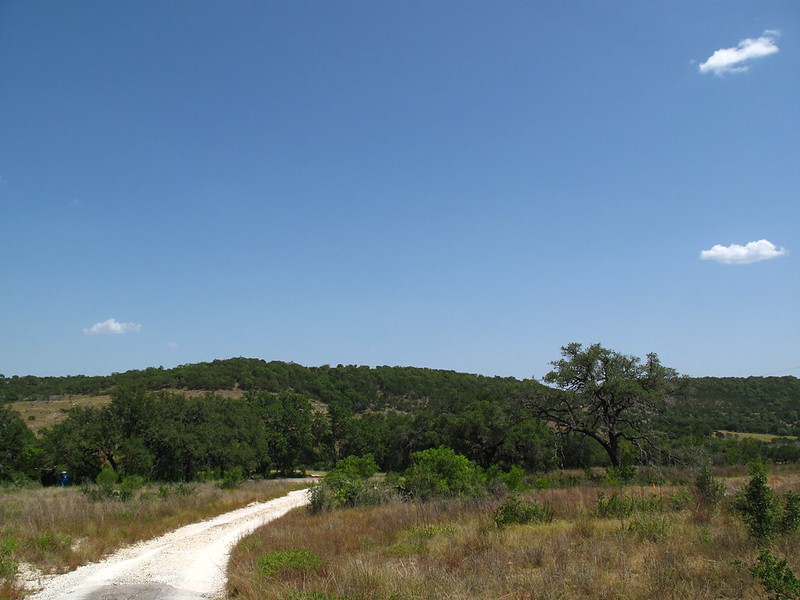
History of the Texas Hill Country
The Texas Hill Country is a complex blend of rugged frontier survival, intense cultural clashes, and a unique German-Texan heritage.
Historically, the region was a “meeting ground” where the cultures of Indigenous peoples, Spanish explorers, German immigrants, and Anglo-American settlers collided and eventually merged.
Humans have occupied the Hill Country for at least 10,000 years, drawn by the abundant natural springs and Edwards Chert (flint) used for toolmaking.
The region was primarily home to the Tonkawa and Lipan Apache, who lived as nomadic hunter-gatherers.
By the 1700s, the Comanche moved south into the region, pushing the Apache toward Spanish settlements and creating a period of intense “raiding-trading” conflict that lasted until the late 1800s.
In the 1700s, the Spanish built a stone fort and mission near present-day Menard to convert the Apache and search for silver, but the mission was destroyed by rival tribes shortly after.
The city Austin which is the capitol of Texas ,is actually considered one of the major “gateways” to the region, so you are essentially on the doorstep of the Texas Hill Country the moment you head west of the city.
Depending on where you are going, the distance varies from a few minutes to a two-hour drive:
Areas like West Lake Hills and Bee Cave are part of the Hill Country’s eastern boundary.
The Gateway Towns of Dripping Springs and Wimberley are roughly 25 to 30 miles away.
The “Heart” of the Hill Country is 1-1.5 hours drive. Popular hubs like Johnson City and Fredericksburg are about 50 to 80 miles west.
The Deep Hill Country and its rather reaches like Kerrville or Lost Maples can be 100+ miles away.
In the mid-19th century, the Hill Country underwent a major cultural shift as thousands of German immigrants arrived seeking political and religious freedom.
The Adelsverein (Society of Noblemen) organized large-scale immigration, founding New Braunfels in 1845 and Fredericksburg in 1846.
Many German settlers were pro-Union and opposed slavery, which led to significant tension and violence during the Civil War.
This period left a lasting imprint on the region’s architecture (limestone buildings), music (accordion-heavy polkas), and food (breweries and biergartens).
Economic Evolution
The Hill Country’s economy has transitioned from a harsh agricultural frontier to a multi-billion dollar tourism hub.
In the late 1800s, the region became a global leader in wool and mohair production, at one point producing nearly 90% of the nation’s mohair from Angora goats.
Towns like Banderadiversified into “dude ranches” in the 1920s, cementing the region’s identity as a western heritage destination.
Today, tourism is a $22 billion industry for the broader region, fueled by the booming Texas wine industry and nature-based travel like “glamping”.
The region is the birthplace of the 36th U.S. President, Lyndon B. Johnson, whose ranch near Stonewall is now a National Historical Park.
Destination: Texas