Philadelphia: Birthplace of a Nation
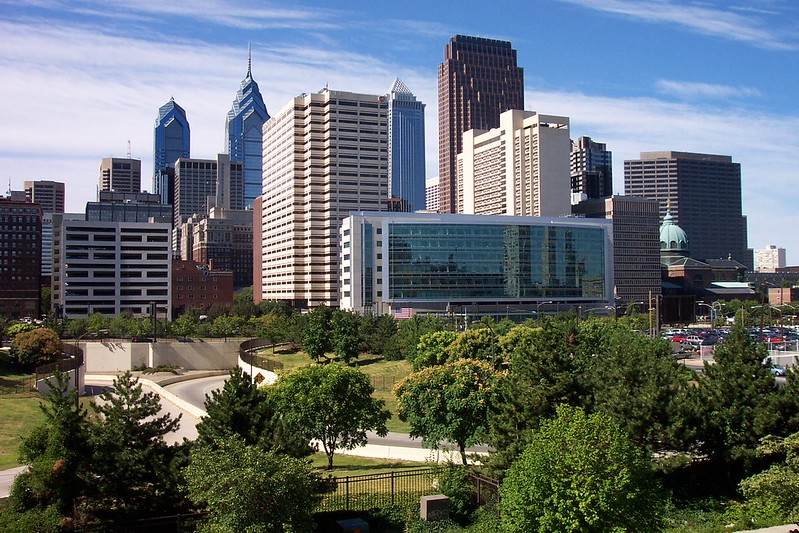
Philadelphia, Pennsylvania, nicknamed “Philly” or “The City of Brotherly Love,” is the state’s largest city and the sixth-most populous in the U.S.
Located on the Delaware River, it was a key city in early American history, serving as a temporary U.S. capital, and is now a major center for business, education, and arts.
Philadelphia was founded in 1682 by William Penn, an English Quaker and advocate of religious freedom, and served as the capital of the colonial era Province of Pennsylvania.[It then played a vital role during the American Revolution and Revolutionary War. It served as the central meeting place for the nation’s Founding Fathers in hosting the First Continental Congress in 1774 and the Second Continental Congress, during which the Founders formed the Continental Army, elected George Washington as its commander, and adopted the Declaration of Independence on July 4, 1776.
During the Revolutionary War’s Philadelphia campaign, the city fell to the British Army, which occupied Philadelphia for nine months from September 1777 to June 1778. Following the end of the Revolutionary War, the U.S. Constitution was ratified at the Philadelphia Convention. Philadelphia remained the nation’s largest city until 1790, and it served as the nation’s first capital from May 10, 1775, until December 12, 1776, and on four subsequent occasions until 1800, when construction of the new national capital in Washington, D.C. was completed.
Philadelphia contains 67 National Historic Landmarks, including Independence Hall. From the city’s 17th century founding through the present, Philadelphia has been the birthplace of or home to many prominent and influential Americans.
Key American History Sites
Independence Hall
This is where the Declaration of Independence was signed and the U.S. Constitution was drafted and signed.
Liberty Bell Center
Visitors can view the iconic bell, a symbol of freedom for many movements throughout history, for free year-round.
Betsy Ross House
Tour the home of the famous seamstress who is said to have sewn the first American flag.
Carpenters’ Hall
The meeting place for the First Continental Congress in 1774.
President’s House Site
An open-air exhibit detailing the executive mansion for George Washington and John Adams, which also acknowledges the nine enslaved people who lived and worked there.
Philadelphia is a city of many firsts, including the nation’s first library (1731), hospital (1751), medical school (1765), national capital (1774), university (by some accounts) (1779), central bank (1781), stock exchange (1790), zoo (1874), and business school (1881)
Destination: Mid Atlantic States