Scottish Icon: Robbie Burns
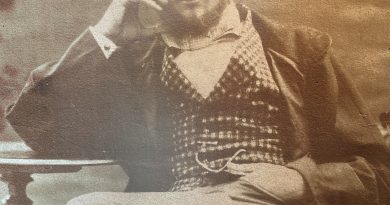
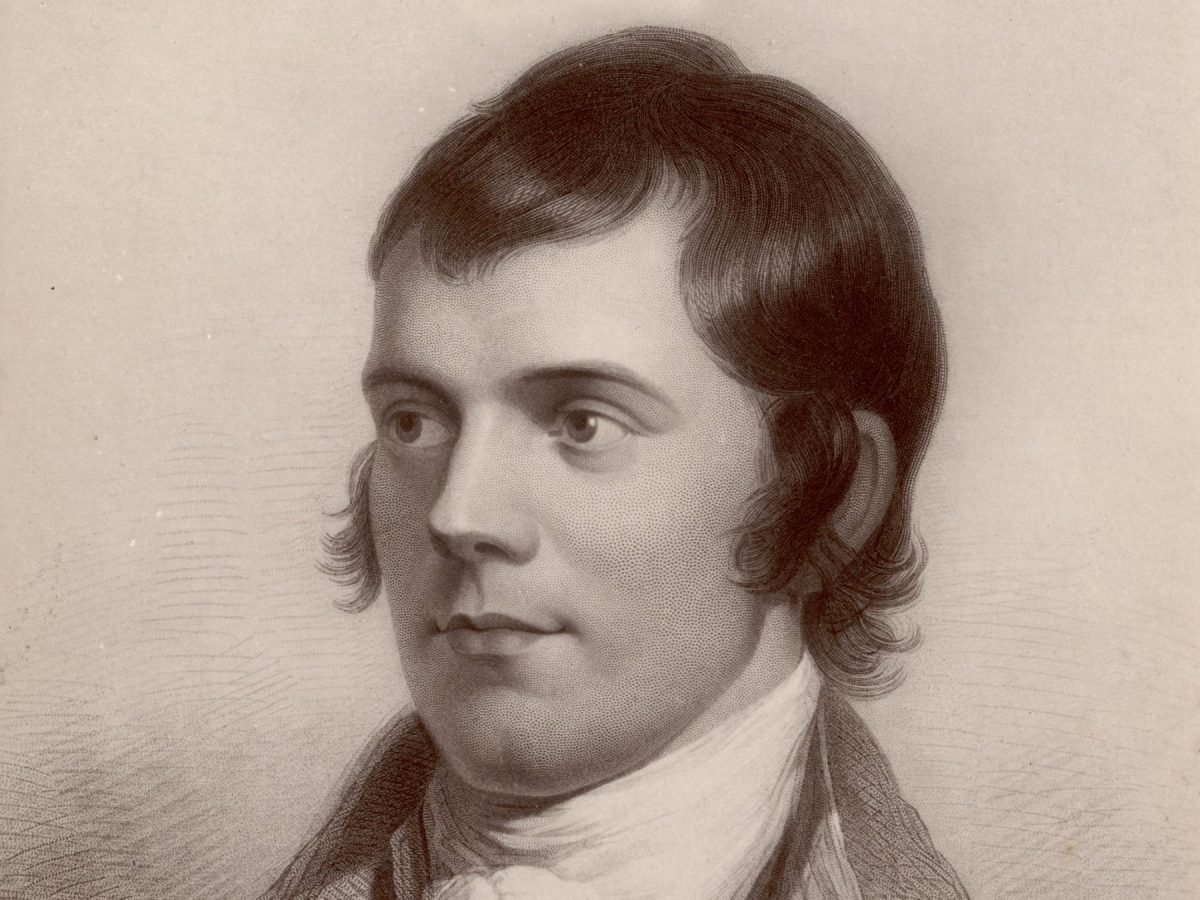
Robbie Burns was a Scottish poet and lyricist and is widely regarded as the national poet of Scotland and is celebrated worldwide. He is the best known of the poets who have written in the Scots language, although much of his writing is in a “light Scots dialect” of English, accessible to an audience beyond Scotland. He also wrote in standard English
Born on Ayshire in 1759,he is regarded as a pioneer of the Romantic movement, and after his death he became a great source of inspiration to the founders of both liberalism and socialism, and a cultural icon in Scotland and among the Scottish diaspora around the world.
Celebration of his life and work became almost a national charismatic cult during the 19th and 20th centuries, and his influence has long been strong on Scottish literature. In 2009 he was chosen as the greatest Scot by the Scottish public in a vote run by Scottish Television.
As well as making original compositions, Burns also collected folk songs from across Scotland, often revising or adapting them. His poem (and song) “Auld Lang Syne” is often sung at Hogmanay (the last day of the year).
Lyrics of Auld Lang Syne
Should old acquaintance be forgot
And never brought to mind?
Should old acquaintance be forgot
In the days of auld lang syne?
For auld lang syne, my dear
For auld lang syne
We’ll drink a cup of kindness yet
For the sake of auld lang syne
And surely, you will buy your cup
And surely, I’ll buy mine!
We’ll take a cup of kindness yet
For the sake of auld lang syne
We two who’ve paddled in the stream
From morning sun ’til night
The seas between us roared and swelled
Since the days of auld lang syne
For old acquaintance be forgot
And never brought to mind
Should old acquaintance be forgot
For the sake of auld lang syne?
For old acquaintance be forgot
And never brought to mind
Should old acquaintance be forgot
In the days of auld lang syne?
For auld lang syne, my dear
For auld lang syne
We’ll drink a cup of kindness yet
For the sake of auld lang syne
Burns’poem snd sing am “Scots Wha Hae” served for a long time as an unofficial national anthem of the country.
Other poems and songs of Burns that remain well known across the world today include “A Red, Red Rose”, “A Man’s a Man for A’ That”, “To a Louse”, “To a Mouse”, “The Battle of Sherramuir”, “Tam o’ Shanter”, “Halloween” and “Ae Fond Kiss”.
Burns was the son of a struggling tenant farmer on the west coast of Scotland. He was born in a house built by his father now the Burns Cottage Museum.
He was given irregular schooling and a lot of his education was with his father, who taught his children reading, writing, arithmetic, geography, and history and also wrote for them A Manual of Christian Belief. He was also taught and tutored by the young teacher John Murdoch who taught him Latin, French, and mathematics
Burns worked as a farm labourer often on the family farm . It’s said the work and conditions contributed to his poor health .Then, seeking money and adventure, he took a job as an assistant overseer of slaves on a sugar plantation in Port Antonio in Jamaica .He later opposed slavery as the abolition movement gained strength
Returning to Scotland Burns ‘ poems and songs were published and became hugely popular .Burns had numerous love affairs and had 12 children .He died aged only 37 in 1796.
Listen to Auld Lang Syne on YouTube
Destination: Scotland