The Chumash: The First Californians
The Chumash are a Native American people of the central and southern coastal regions of California, in portions of what became Kern, San Luis Obispo, Santa Barbara, Ventura, and Los Angeles counties, extending from Morro Bay in the north to Malibu in the south to Mount Pinos in the east.
Their territory includes three of the Channel Islands: Santa Cruz, Santa Rosa, and San Miguel; the smaller island of Anacapawas likely inhabited seasonally due to the lack of a consistent water source.
Chumash
Historical Chumash territory
Modern place names with Chumash origins include Malibu, Nipomo, Lompoc, Ojai, Pismo Beach, Point Mugu, Port Hueneme, Piru, Lake Castaic, Saticoy, Simi Valley, and Somis.
Archaeological research shows that the Chumash people have deep roots in the Santa Barbara Channel area and have lived along the southern California coast for millennia.
The mild temperatures, save for winter, made gathering easy; during the cold months, the Chumash harvested what they could and supplemented their diets with stored foods. What villagers gathered and traded during the seasons changed depending on where they resided.With coasts populated by masses of species of fish and land densely covered by trees and animals, the Chumash had a diverse array of food.
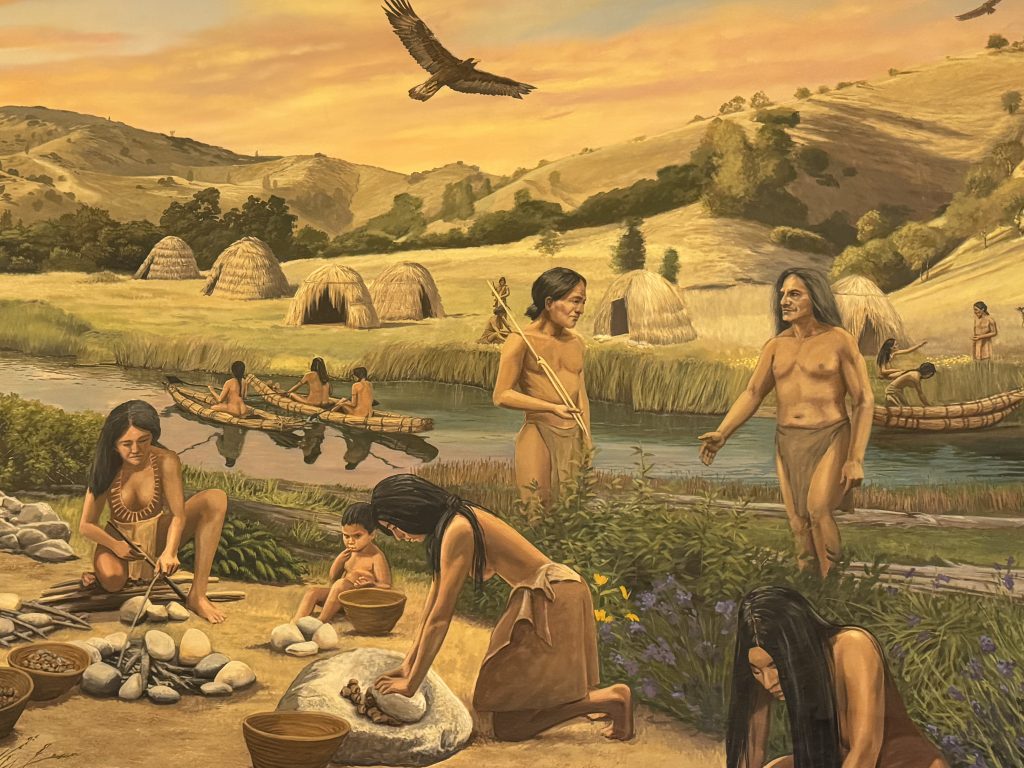
Abundant resources and a winter rarely harsh enough to cause concern meant the tribe lived a sedentary lifestyle in addition to a subsistence existence. Villages in the three aforementioned areas contained remains of sea mammals, indicating that trade networks existed for moving materials throughout the Chumash territory.
The Chumash were connected to extensive trade networks reaching into modern-day Arizona, from which pottery and textiles were traded in exchange for shell beads. The emergence of this trade network within the Chumash territory was facilitated by the existence of three distinct Chumash ecological groups including the island, coastal, and mainland Chumash.
Access to distinct resources for these different groups made inter-Chumash trade a large part of life. Villages along the mainland coast emerged as intermediaries between groups.
The closer a village was to the ocean, the greater its reliance on maritime resources.Due to advanced canoe designs, coastal and island people could procure fish and aquatic mammals from farther out. Shellfish were a good source of nutrition: relatively easy to find and abundant. Many of the favored varieties grew in tidal zones.
Shellfish grew in abundance during winter to early spring; their proximity to shore made collection easier. Some of the consumed species included mussels, abalone, and a wide array of clams. Haliotis rufescens (red abalone) was harvested along the Central California coast in the pre-contact era.
The Chumash and other California Indians also used red abalone shells to make a variety of fishhooks, beads, ornaments, and other artifacts. Large piles of shellfish waste were expanded over time to create ceremonial and residential mounds.
Ocean animals such as otters and seals were thought to be the primary meal of coastal tribes people, but recent evidence shows the aforementioned trade networks exchanged oceanic animals for terrestrial foods from the interior.
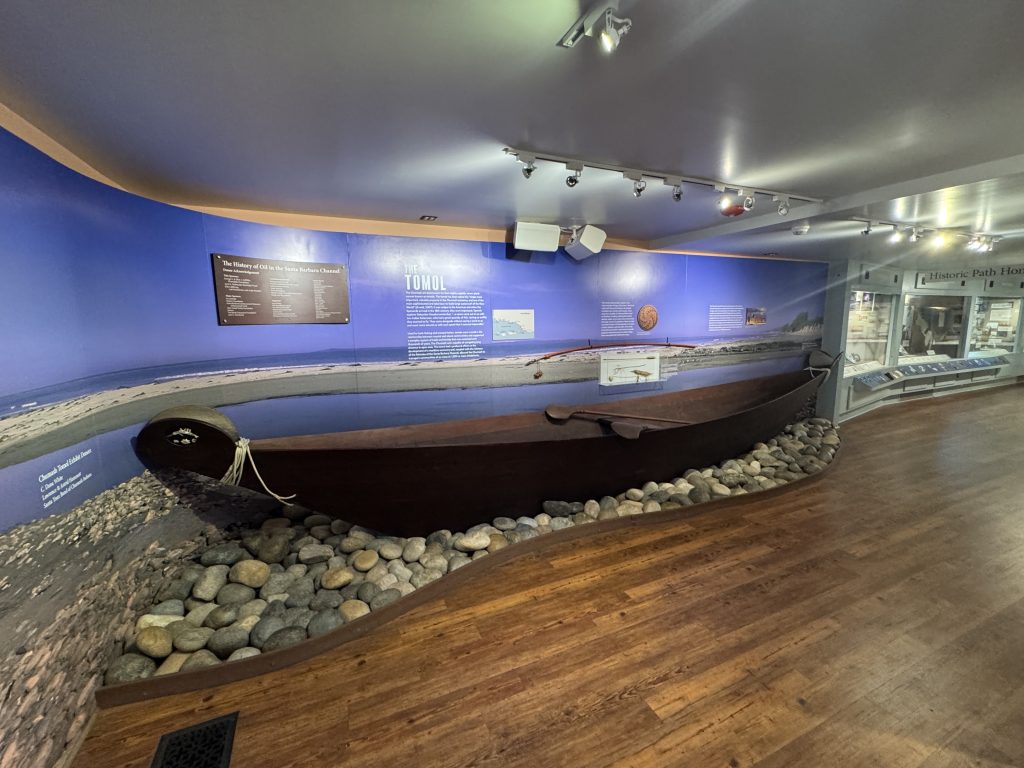
Any village could acquire fish, but the coastal and island communities specialized in catching not just smaller fish, but also the massive catches such as swordfish.
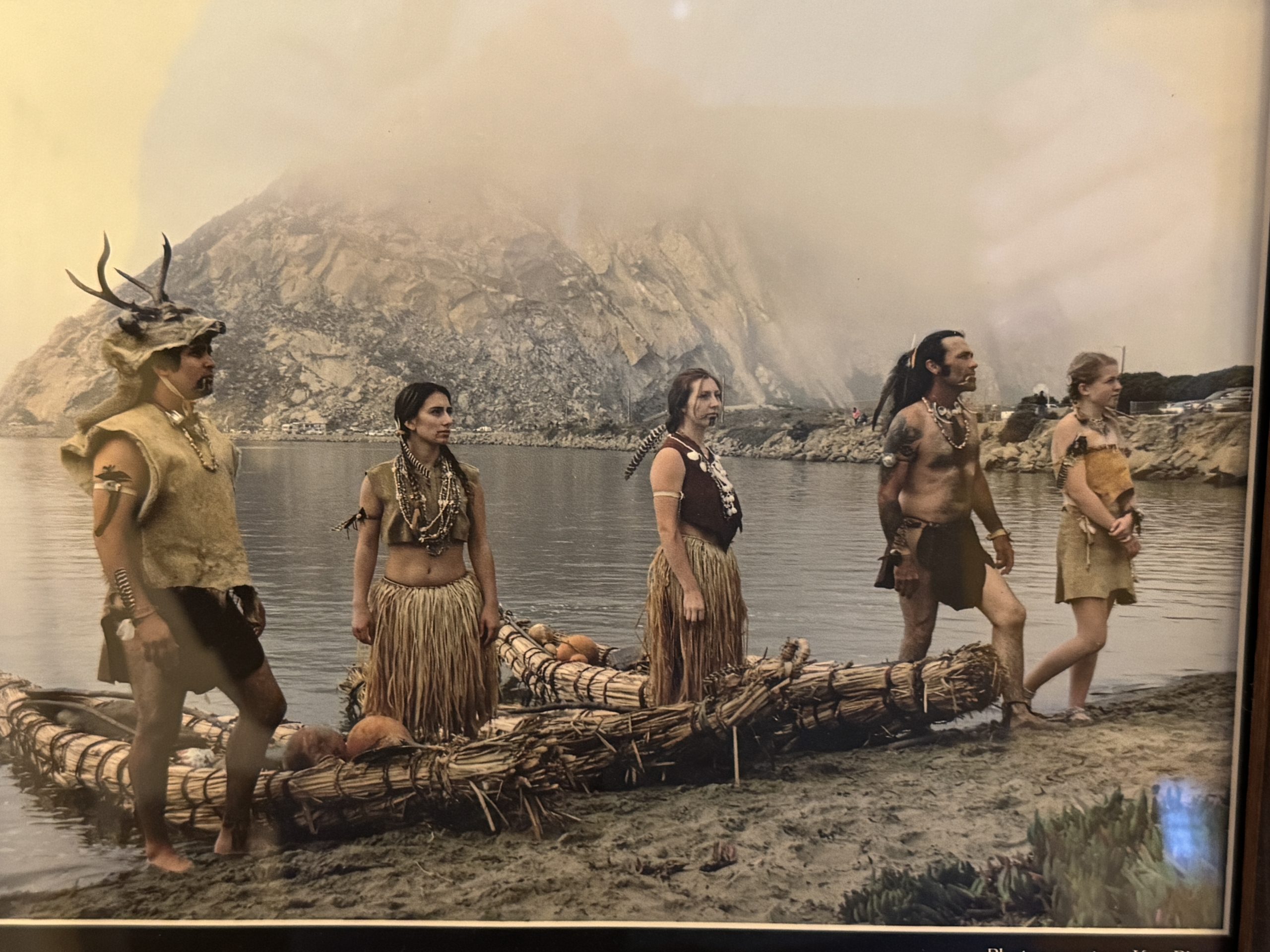
This feat, difficult even for today’s technology, was made possible by the tomol plank canoe. Its design allowed for the capture of deepwater fish, and it facilitated trade routes between villages.
Some researchers believe that the Chumash may have been visited by Polynesians between AD 400 and 800, nearly 1,000 years before Christopher Columbus reached the Americas.
The Chumash advanced sewn-plank canoe design, used throughout Polynesia but unknown in North America except by those two tribes, is cited as the chief evidence for contact. Comparative linguistics may provide evidence as the Chumash word for “sewn-plank canoe”, tomolo’o, may have been derived from kumula’au, the Polynesian word for the redwood logs used in that construction.
Before contact with Europeans, coastal Chumash relied less on terrestrial resources than they did on maritime; vice versa for interior Chumash.Regardless, they consumed similar land resources. Like many other tribes, deer were the most important land mammal the Chumash pursued; deer were consumed in varying amounts across all regions, which cannot be said for other terrestrial animals. Interior Chumash placed greater value on the deer, to the extent of developing unique hunting practices for them.
They dressed as deer and grazed alongside the animals until the hunters were in range to use their arrows. Even Chumash close to the ocean pursued deer, though in fewer numbers. The villages also relied on smaller animals, such as rabbits and birds, to supplement their meat needs. Plant foods composed the rest of the Chumash diet, especially acorns, which were the staple food despite the work needed to remove their inherent toxins. They could be ground into a paste that was easy to eat and store for years. Coast live oak provided the best acorns; their mush would usually be served unseasoned with meat and fish.
Spanish/Mexican era (1542–1846)
The maritime explorer Juan Cabrillo was the first European to make contact with the coastal Alta Californian tribes in the year 1542.Cabrillo was killed following an attack by Tongva braves and was buried on San Miguel Island, but his men brought back a diary that contained the names and population counts for many Chumash villages.
Spain claimed what is now California from that time forward, but for some centuries returned only infrequently—for example, during the Morro Bay Landing of 1587, when Chumash braves murdered one Spanish sailor and one Filipino sailor.
Full-scale Spanish settlement began in 1769, when the Portolá expedition brought Spanish soldiers and missionaries with the double purpose of Christianizing the Native Americans and facilitating Spanish colonization. By the end of 1770, missions and military presidios had been founded at San Diego to the south of Chumash lands and Monterey to their north.
With the arrival of the Europeans “came a series of unprecedented blows to the Chumash and their traditional lifeways. In 1770, Spain settled in Chumash territory. They founded colonies, bringing in missionaries to begin evangelizing Native Americans in the region by forcing Chumash villages into numerous missions that emerged along the coast.
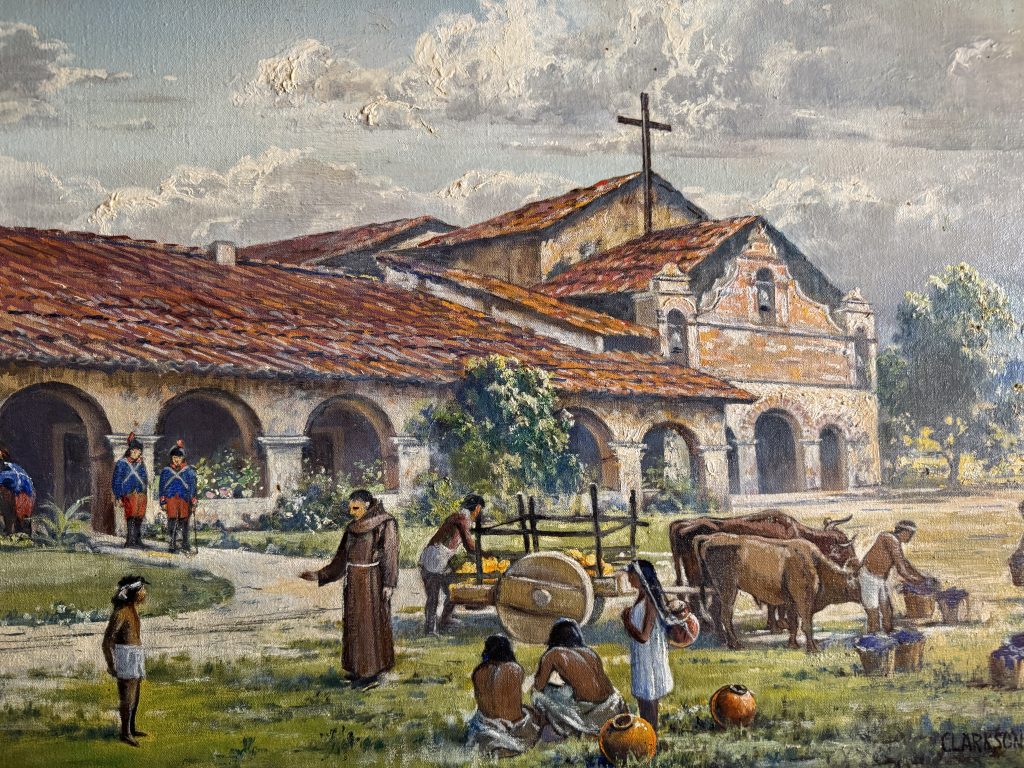
The Chumash people moved from their villages to the Franciscan missions between 1772 and 1817. Mission San Luis Obispo, established in 1772, was the first mission in Chumash-speaking lands, as well as the northernmost of the five missions ever constructed in those lands. Next established, in 1782, was Mission San Buenaventura on the Pacific Coast near the mouth of the Santa Clara River. Mission Santa Barbara, also on the coast, and facing out to the Channel Islands, was established in 1786.
Mission La Purisima Concepción was founded along the inland route from Santa Barbara north to San Luis Obispo in 1789. The final Franciscan mission to be constructed in Chumash territory was Santa Ynez, founded in 1804 on the Santa Ynez River with a seed population of Chumash people from Missions La Purisima and Santa Barbara.
While most of the Chumash people joined one mission or another between 1772 and 1806, a significant portion of the Native peoples of the Channel Islands did not move to the mainland missions until 1816.
The Chumash Revolt of 1824, which began at Mission Santa Inés, was “one of the largest and most successful revolts of Native American Catholic neophytes in the Spanish West” and is regarded as a major instance of Indigenous resistance to European colonization.
Mexico achieved independence from Spain in 1821, but the mission system remained. Tribes people continued to be relocated to missions, often forcibly, and many fled into the interior to avoid slavery in the mission system.
The Mexican Secularization Act of 1833 seized control of the missions, and tribes people still living at the missions were freed by 1840. Many, however, continued highly exploitative work on the large privately owned ranches created from the former mission-controlled lands.
American era (1846–present)
After the United States seized control of the area in 1846, in the Mexican-American War, most remaining Chumash land was lost to Americans amid a declining population, due to the effects of violence, disease, and anti-Indigene California laws.
The remaining Chumash began to lose their cohesive identity. In 1855, a small piece of land (120 acres) was set aside for just over 100 remaining Chumash Indians near Santa Ynez mission. This land ultimately became the only Chumash reservation, although Chumash individuals and families also continued to live throughout their former territory in southern California. Today, the Santa Ynez band lives at and near Santa Ynez. The Chumash population had been between roughly 10,000 and 18,000 in the late 18th century, but in 1990, only 213 Indians lived on the Santa Ynez Reservation.
Reconstructed Chumash hut at the Chumash Indian Museum
Today, an estimated 5,000 people are Chumash. Many current Chumash can trace their ancestors to the five islands of Channel Islands National Park.
Beginning in the late 1960s and early 1970s, efforts were made to reawaken Chumash tradition and community practices by notable community members throughout the Chumash Nation. They promoted traditions of the Chumash.
The first modern tomol was built and launched in 1976 as a result of the efforts of the Quabajai Chumash of the Coastal Band of the Chumash Nation. Its name is Helek/Xelex, the Chumash word for hawk. The Brotherhood of the Tomol was revived and her crew paddled and circumnavigated around the Santa Barbara Channel Islands on a 10-day journey, stopping on three of the islands. The second tomol, the Elye’wun (“swordfish”), was launched in 1997.
On September 9, 2001, the first “crossing” in the Chumash tomol, from the mainland to the Channel Islands, was sponsored by the Chumash Maritime Association and the Barbareño Chumash Council.
Link: California
Watch: Empire Builders Los Angeles