The Orange Men of Northern Ireland
The Orange Order was founded by Ulster Protestants in County Armagh in 1795, during a period of Protestant–Catholic sectarian conflict, as a fraternity sworn to maintain the Protestant Ascendancy in Ireland.
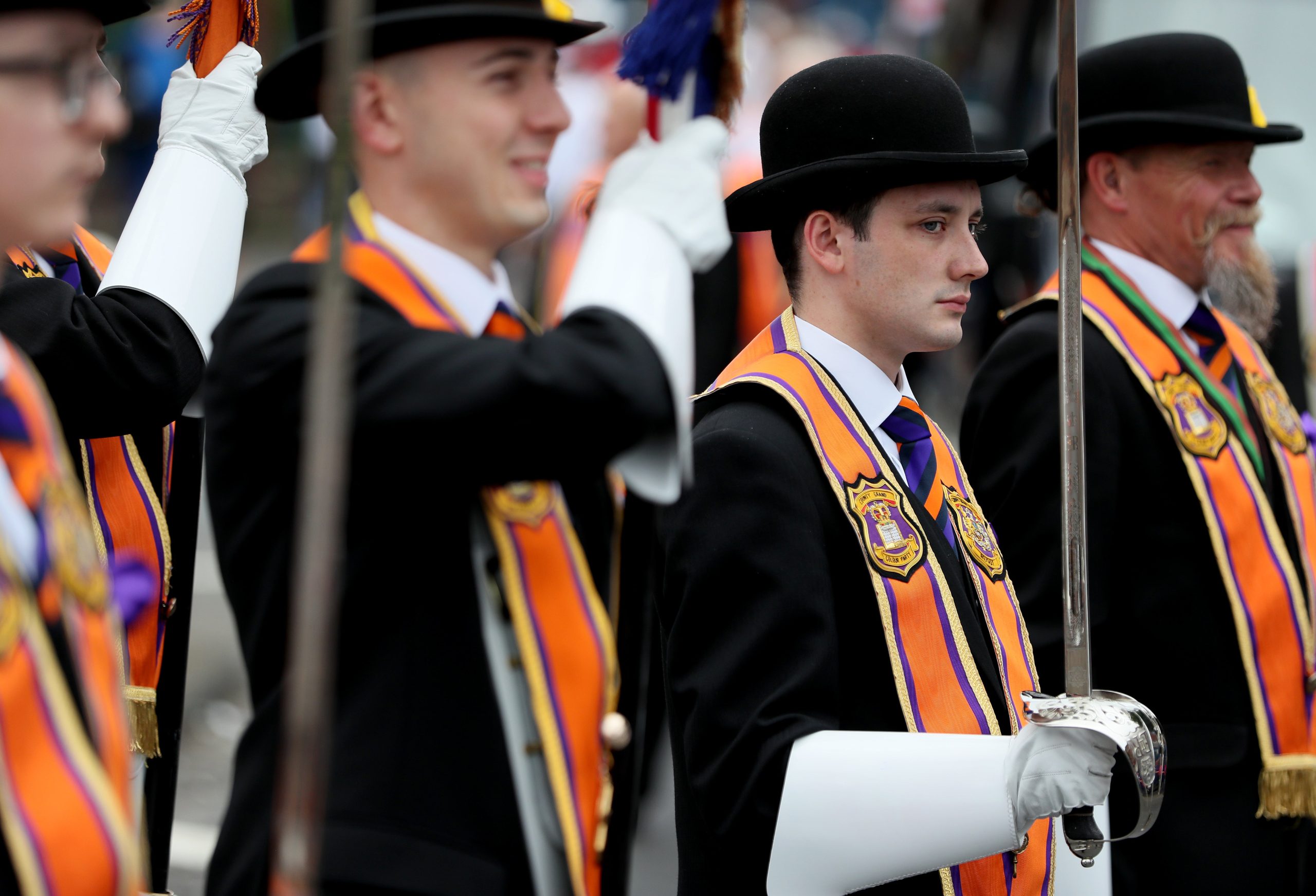
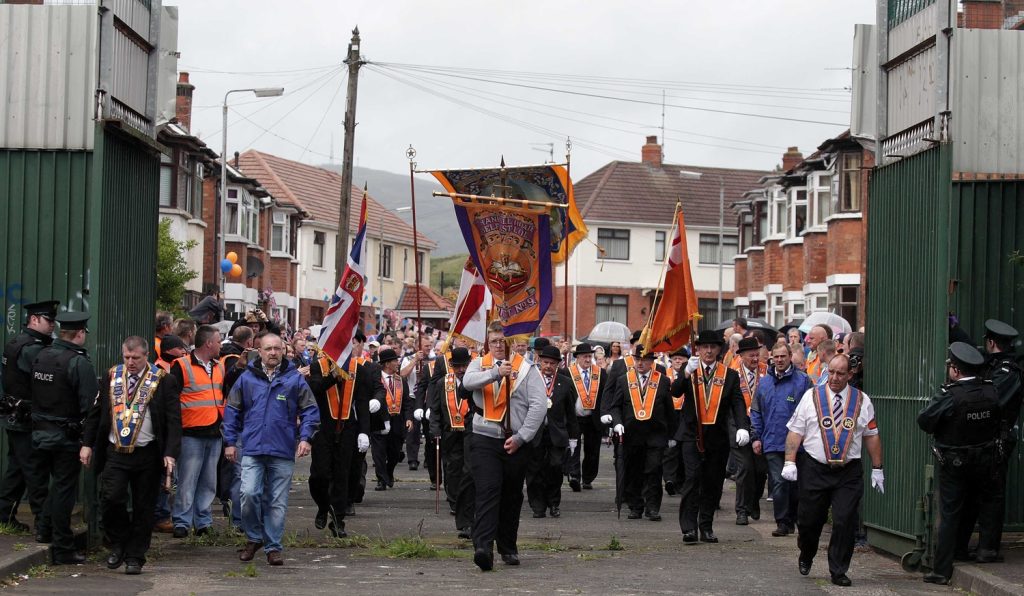
The all-island Grand Orange Lodge of Ireland was established in 1798. Its name is a tribute to the Dutch-born Protestant king William of Orange, who defeated the Catholic English king James II in the Jacobite War waged in Ireland from 1689 to 1691 .The Order is best known for its yearly marches, the biggest of which are held on or around 12 July (The Twelfth), a public holiday in Northern Ireland.
The Orange Order remains a conservative, British unionist and Ulster loyalist organisation .It has traditionally opposed Irish nationalism and republicanism and campaigned against Scottish independence.The Order sees itself as defending Protestant civil and religious liberties, whilst critics accuse it of being sectarian,triumphalist,supremacist and anti-Catholic.It does not accept non-Protestants as members unless they convert and adhere to its principles, nor does it accept Protestants married to non-Protestants.Orange marches through Catholic neighbourhoods are controversial and have on occasion, led to violence,such as the Drumcree conflict in the Northern Irish county of Armagh.
History
The Orange Order celebrates the civil and religious privileges conferred on Protestants by William of Orange, the Stadtholder of the Dutch Republic who became King of England, Scotland, and Ireland in the Glorious Revolution of 1688., replacing James the 2nd who was seen as too Catholic at time of intense Protestant and Catholic rivalries across Northern Europe The Order regularly commemorates the victories of William III and his forces during the wars in Ireland in the early 1690s, especially the Battle of the Boyne
Formation and early years
Since the 1690s, commemorations had been held throughout Ireland celebrating key dates in other battles such as the Battle of Aughrim , Siege of Derry and the second Siege of Limerick. These followed a tradition started in Elizabethan England of celebrating key events in the Protestant calendar.By the 1740s, there were organisations holding parades in Dublin such as the Boyne Club and the Protestant Society, both seen as forerunners to the Orange Order.
Destinations: Northern Ireland, Ireland