Study Guides

The Portuguese Empire

The Portuguese Empire was one of the longest-lived empires in world history, spanning from the late 15th century until the mid-20th century. It began with Portugal’s explorations during the Age of Discovery, leading to the establishment of colonies and trade routes in Africa, Asia, and South Africa .

Driven by a desire for spices, wealth, and religious zeal, and blessed with pioneering maritime technology, Portugal kicked off the “Age of Discovery.”This period between 1425 and 1580 was Portugal’s “Golden Age,” marked by unprecedented exploration.

Initiated by figures like Prince Henry the Navigator, Portugal explored the west coast of Africa, reaching India and Brazil. The Treaty of Tordesillas (1494) divided the New World between Spain and Portugal.

The empire expanded rapidly, with territories in Brazil, parts of Africa (like Angola and Mozambique), and significant holdings in Asia, including Goa, Malacca, and Macao.

Monument to Explorer Henry the Navigator, Lisbon

Competition from other European powers, such as Spain, the Netherlands, and England, led to a decline in Portuguese influence. The empire faced challenges, including revolts in colonies and loss of territories.

The empire continued into the 20th century, but after World War II, decolonization movements gained momentum. Most African colonies gained independence in the 1970s, marking the end of the empire.

The legacy of the Portuguese Empire includes a rich cultural influence in the regions it once controlled, especially in language, religion, and architecture. Portuguese remains a global language, largely due to this historical expansion.

*Portugese Colonies

The Portuguese Empire had numerous colonies across different continents.

South America

The largest and most important colony, Brazil was a center for sugar production and later coffee. It gained independence in 1822.

Africa

Colonized in the late 16th century, Angola became a major source of slaves for the Americas. It gained independence in 1975.

Established in the 16th century, Mozambique was also involved in the slave trade and gained independence in 1975.Guinea-Bissau, colonised in the late 19th century, fought for independence and achieved it in 1973

Cape Verde, an archipelago off the west coast of Africa , served as a crucial stop for transatlantic trade, gained independence in 1975.

Asia

A major trading post on the west coast of India, Goa was annexed by India in 1961.A territory in China, Macao was a vital trading hub until it was handed back to China in 1999.

East Timor , now known as Timor- Leste , which s a small island between Indonesia and Papua New Guinea ,was part of the Portuguese Empire until it declared independence in 1975, though it faced Indonesian occupation until 1999.

The Portuguese colonies were characterized by their rich cultural exchanges, blending indigenous, African, and Portuguese influences, which can still be observed in the languages, traditions, and customs of these regions today.

* Key Voyages and Conquests:

Instead of massive land conquests, the Portugese established a network of feitorias (trading posts) and fortified ports to control trade routes.

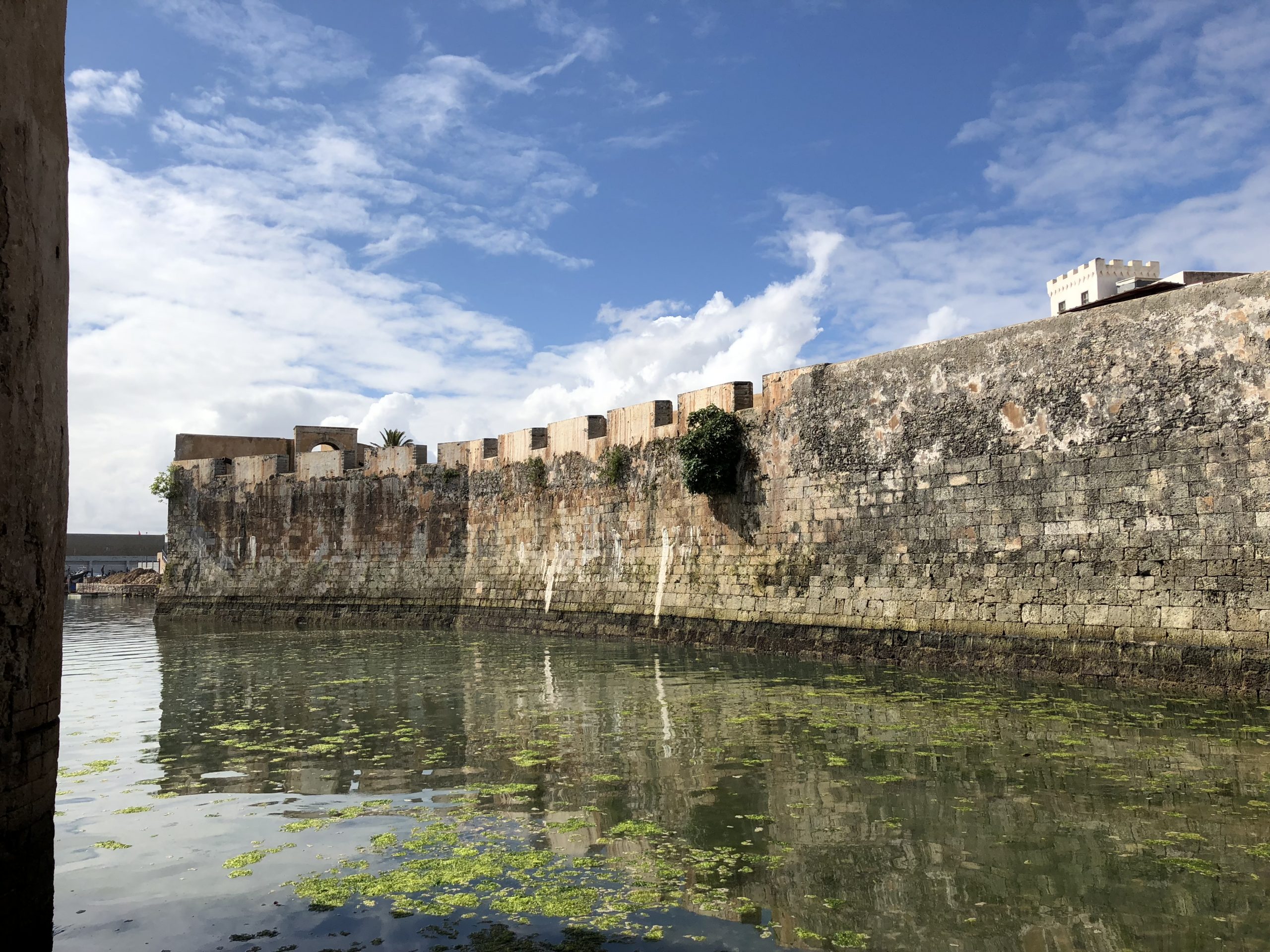
· 1415: Conquest of Ceuta in North Africa (the symbolic start of the empire).

· 1488: Bartolomeu Dias rounds the Cape of Good Hope, proving a sea route to Asia was possible.

· 1498: Vasco da Gama reaches India, opening the direct sea route to the spice trade.

· 1500: Pedro Álvares Cabral lands in Brazil, claiming it for Portugal.

· 1510: Conquest of Goa (India), becoming the capital of the Estado da Índia.

· 1511: Conquest of Malacca (Malaysia), a key hub for the spice trade.

· 1557: Establishment of a trading post in Macau, China.

*Colonial Wealth

The empire’s wealth came from a global trade network:

· From Asia: Pepper, cinnamon, cloves, silk, porcelain.
· From Brazil: Sugar, gold, diamonds, coffee, timber.
· From Africa: Ivory, gold, and tragically, enslaved people.

Portugal was a pioneer and major player in the Transatlantic Slave Trade, transporting millions of Africans, primarily to Brazil.

*Global Competition (1580 – 1663)

This period marked the beginning of a slow decline. The Iberian Union , which lasted from 1580 to 1640 occurred when the Portuguese king died without an heir, leading to a union of the crowns under the Spanish Habsburgs. This dragged Portugal into Spain’s wars with England and the Netherlands.

At the same time, the The Dutch, English, and French began to challenge Portugal’s monopoly. The Dutch East India Company was particularly aggressive, capturing many Portuguese possessions in Asia , such as Ceylon and Malacca, breaking Portugal’s domination of the highly lucrative spice trade.

*The Portuguese in Brazil

As Asian holdings dwindled, the empire’s center of gravity shifted to Brazil, where the discovery of gold and diamonds in the 1690s brought immense new wealth. The mining boom in Minas Gerais made Brazil the most valuable colony and led to a massive influx of enslaved Africans.

Then one hundred years later with Napoleon on the march in Europe the Portuguese Royal Family and government fled to Brazil, elevating it to the status of a united kingdom with Portugal.They stayed there for 15 years .

After the court returned to Lisbon, Brazil declared independence in 1822 under Pedro I, son of the Portuguese king. This was a massive blow to the empire’s prestige and economy.

* The Scramble for Africa (1822 – 1961)

During this period focused on consolidating its African territories. A grand ambition to link Angola and Mozambique across Africa clashed with British ambitions to link the Cape to Cairo, leading to the 1890 British Ultimatum, which forced Portugal to back down—a deeply humiliating event that fueled republicanism.

From 1933, António de Oliveira Salazar’s regime clung to the colonies, rebranding them as “overseas provinces” and refusing decolonization.

*The Carnation Revolution and Decolonization (1961 – 1999)

The empire collapsed rapidly in the mid-20th century. Portugal fought long, costly, and unwinnable wars against independence movements in Angola, Mozambique, and Guinea-Bissau. In 1974, a bloodless military coup in Portugal, tired of the endless war and dictatorship, overthrew the regime.

The new democratic government immediately granted independence to all its African colonies (1975) and Timor-Leste (which was immediately invaded by Indonesia).

The handover of Macau to China in 1999 marked the official end of the Portuguese Empire.

Tomb of Vasco de Gama, Lisbon

*Legacy

The Portuguese Empire’s legacy is complex and still felt today.

Portuguese is the official language of 9 countries (Portugal, Brazil, Angola, Mozambique, Guinea-Bissau, Cape Verde, São Tomé and Príncipe, Timor-Leste, and Equatorial Guinea) with over 260 million speakers.

A significant legacy of racial and cultural mixing exists in Brazil, Angola, Mozambique, and Goa. This includes cuisine, music, religion (the spread of Catholicism), and architecture.

Portugal created the first truly global trade network, connecting Europe, Asia, Africa, and the Americas. They established new and lasting maritime routes.

Like all colonial empires, it was built on exploitation, violence, slavery, and the extraction of wealth, the consequences of which are still addressed today.

The Portuguese Empire was the pioneer that charted the world’s oceans and built the first global commercial network. Though it was eventually overshadowed by its rivals, its linguistic, cultural, and historical impact remains deeply embedded across four continents.

Link: Portugal, Malaysia, China, Indonesia, Sri Lanka, India, Angola, Mozambique, Cape Verde, Brazil