

The Inuit: Surviving in the Arctic
The Inuit are the Indigenous people inhabiting the Arctic regions of Canada, Greenland, Alaska, and Russia, with a population of over 155,000.
They are known historically as expert hunters and for their rich oral traditions, adaption to the harsh climate by living in snow-block houses (igloos) or sod homes and wearing insulating clothing.
The Inuit languages are part of the Eskaleut language family, with many regional dialects.
Inuit have traditionally been fishermen and hunters. They still hunt whales (esp. bowhead whale), seal, (esp. ringed seal, harp seal, common seal, bearded seal), polar bears, muskoxen, caribou, birds, and fish and at times other less commonly eaten animals such as the Arctic fox.
The typical Inuit diet is high in protein and very high in fat – in their traditional diets, Inuit consumed an average of 75 percent of their daily energy intake from fat.While it is not possible to cultivate plants for food in the Arctic, Inuit have traditionally gathered those that are naturally available.
Grasses, tubers, roots, plant stems, berries, and seaweed (kuanniq or edible seaweed) were collected and preserved depending on the season and the location.There is a vast array of different hunting technologies that Inuit use to gather their food.
Inuit Survival Traditions
Inuit hunted sea animals from single-passenger, seal-skin covered boats called qajaq (Inuktitut syllabic which were extraordinarily buoyant, and could be righted by a seated person, even if completely overturned. Because of this property, the design was copied by non-Inuit, who still produce them as kayak, a name derived from the Inuit language.
Inuit also made umiaq (“woman’s boat”), larger open boats made of wood frames covered with animal skins, for transporting people, goods, and dogs. They were 6–12 m (20–39 ft) long and had a flat bottom so that the boats could come close to shore.
In the winter, Inuit would also hunt sea mammals by patiently watching an aglu (breathing hole) in the ice and waiting for the air-breathing seals to use them. This technique is also used by the polar bear, who hunts by seeking holes in the ice and waiting nearby.
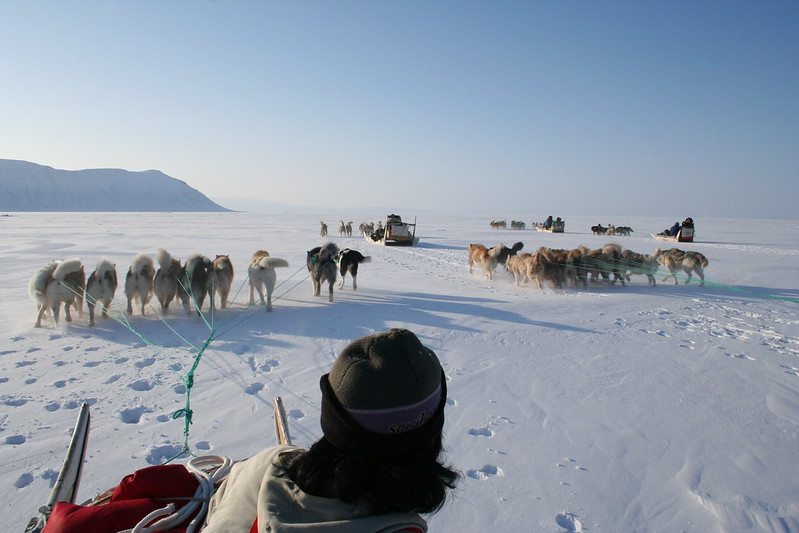
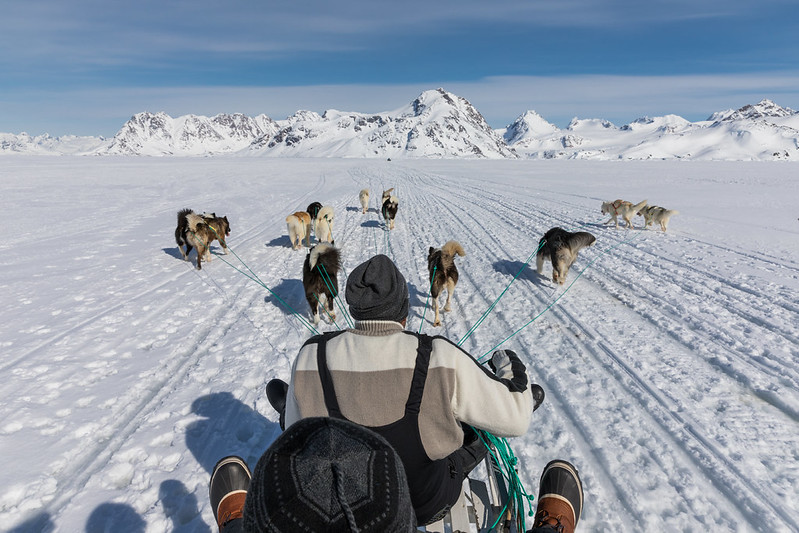
In winter, both on land and on sea ice, Inuit used dog sleds (qamutiik) for transportation. A team of dogs in either a tandem / side-by-side or fan formation would pull a sled made of wood, especially driftwood, lashed together with animal-hide thongs or baleen. In the absence of wood, a sled could be made with cross pieces and runners made from bone, antler, or even frozen fish or meat.
Inuit used stars to navigate at sea and landmarks to navigate on land; they possessed a comprehensive native system of toponymy. Where natural landmarks were insufficient, Inuit would erect an inuksuk. Also, Greenland Inuit created Ammassalik wooden maps, which are tactile devices that represent the coastline.
Dogs played an integral role in the annual routine of Inuit. During the summer they became pack animals, sometimes dragging up to 20kg (44lb) of baggage and in the winter they pulled the sled. Yearlong they assisted with hunting by sniffing out seals’ holes and pestering polar bears.
They also protected Inuit villages by barking at bears and strangers. Inuit generally favoured, and tried to breed, the most striking and handsome of dogs, especially ones with bright eyes and healthy coats. Common husky dog breeds used by Inuit were the Canadian Inuit Dog, the official animal of Nunavut,(Qimmiq; Inuktitut for dog), the Greenland Dog, the Siberian Huskyand the Alaskan Malamute.
Inuit industry relied almost exclusively on animal hides, driftwood, and bones, although some tools were also made out of worked stones, particularly the readily worked soapstone. Walrus ivory was a particularly essential material, used to make knives.
Art played a big part in Inuit society and continues to do so today. Small sculptures of animals and human figures, usually depicting everyday activities such as hunting and whaling, were carved from ivory and bone. In modern times prints and figurative works carved in relatively soft stone such as soapstone, serpentinite, or argillite have also become popular.
Traditional Inuit clothing and footwear is made from animal skins, sewn together using needles made from animal bones and threads made from other animal products, such as sinew. The anorak (parka) is made in a similar fashion by Arctic peoples from Europe through Asia and the Americas, including Inuit.
The back part of an amauti (women’s parka) was traditionally made extra-large with a separate compartment below the hood to allow the mother to carry a baby against her back and protect it from the harsh wind. Styles vary from region to region, from the shape of the hood to the length of the tails. Boots (mukluk or kamik, could be made of caribou or seal skin, and designed for men and women.
Snow goggles (Inuktitut) are a type of eyewear traditionally used by the Inuit and the Yupik peoples of the Arctic to prevent snow blindness.
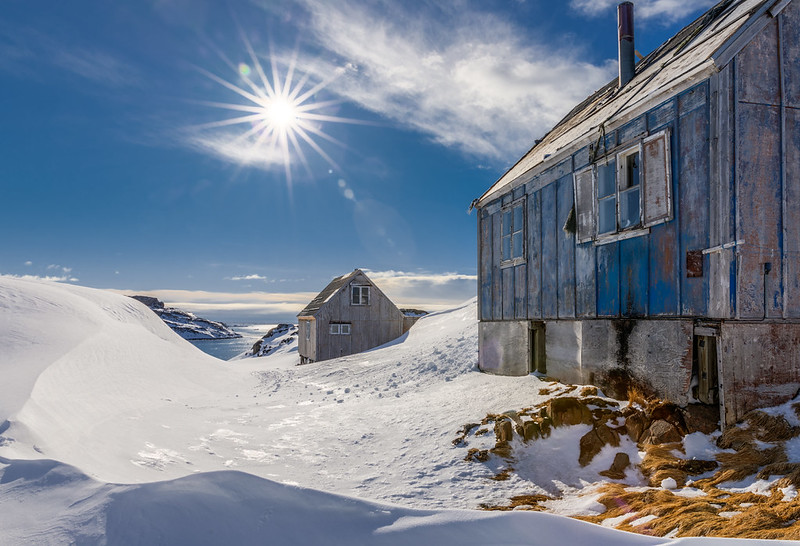
During the winter, certain Inuit lived in a temporary shelter made from snow called an igloo, and during the few months of the year when temperatures were above freezing, they lived in tents, known as tupiq, made of animal skins supported by a frame of bones or wood.Some, such as the Siglit, used driftwood, while others built sod houses.
Inuit also used the Cape York Meteorite as a primary resource of Iron, using a technique called cold forging, which consisted in slicing a piece of the meteorite and giving it shape by smashing it with rocks until getting the desired shape, for example, tools for fishing. They used this meteorite for centuries until Robert E. Peary sold it to the American Natural History Museum in 1883.
Destinations: Alaska, Canada, Greenland, Russia