Pre Historic Menorca
The Spanish island of Menorca has the greatest concentration of pre historic sites in the world.
There are more than 1,400 times pre historic sites in Menorca – two per square kilometre.
Menorca is an open-air archaeological museum, officially recognized as a UNESCO World Heritage Site under the title Talayotic Menorca. The island features an incredibly high density of well-preserved structures from the Bronze and Iron Ages.
The sites date from 1200 BC right up to the invasion of the Carthigiinians and then the Punic Wars in the Mediterranean between the Carhiginian Empire and the emerging Roman Empire. Some sites remained inhabited right up to the Moorish invasions in the 8th century.
The first settlers did not arrive until around 2200 BC and would have come to the island by boat , bringing with them everything they needed – livestock, seeds, tools – to start a new life here.
Despite having sailed here, evidence suggests the earliest inhabitants had little love of the sea and did not build boats, fish or live near the coast. All the known pre-historic settlements on the island – of which there are some 1500 – are located inland
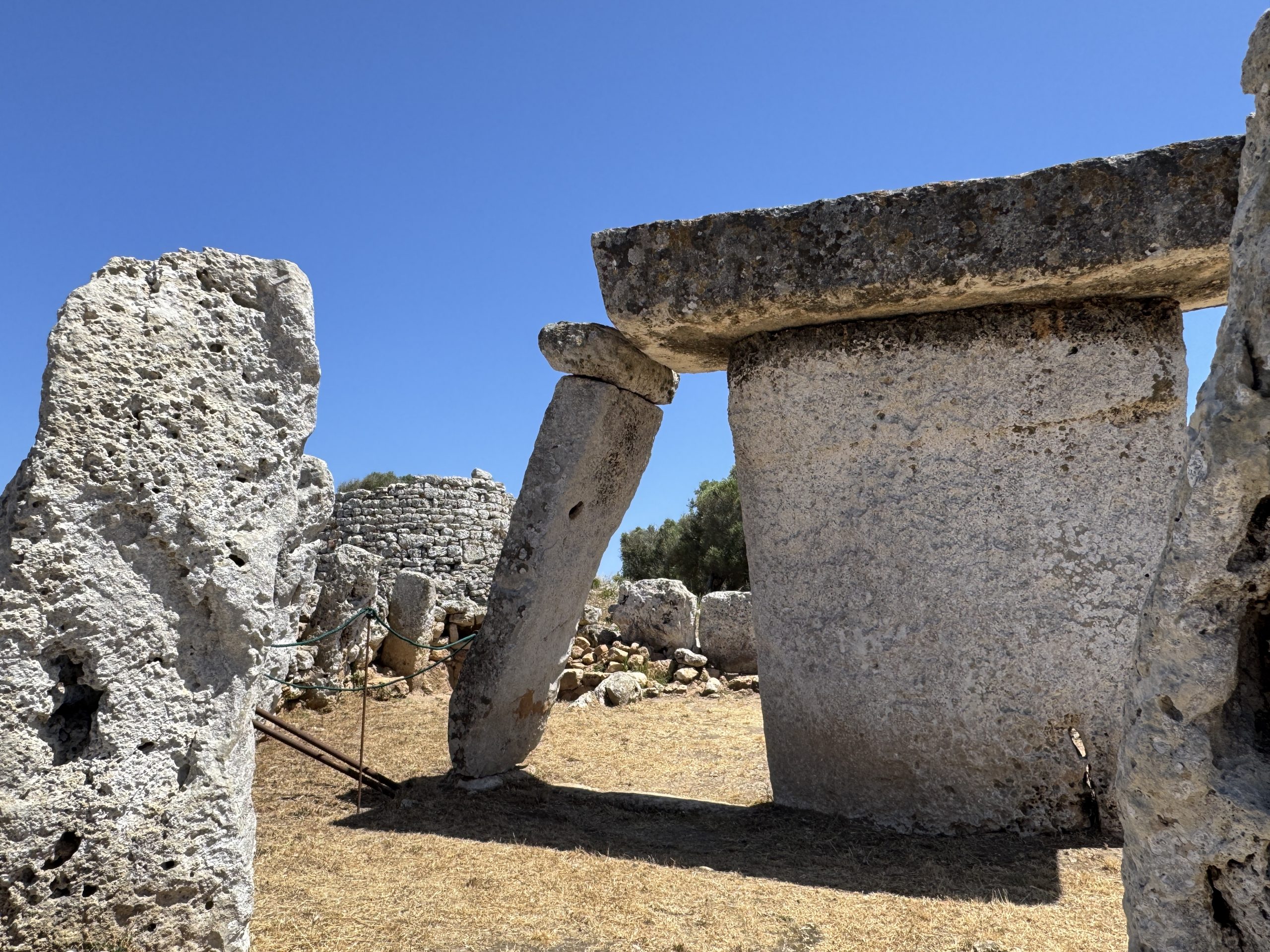
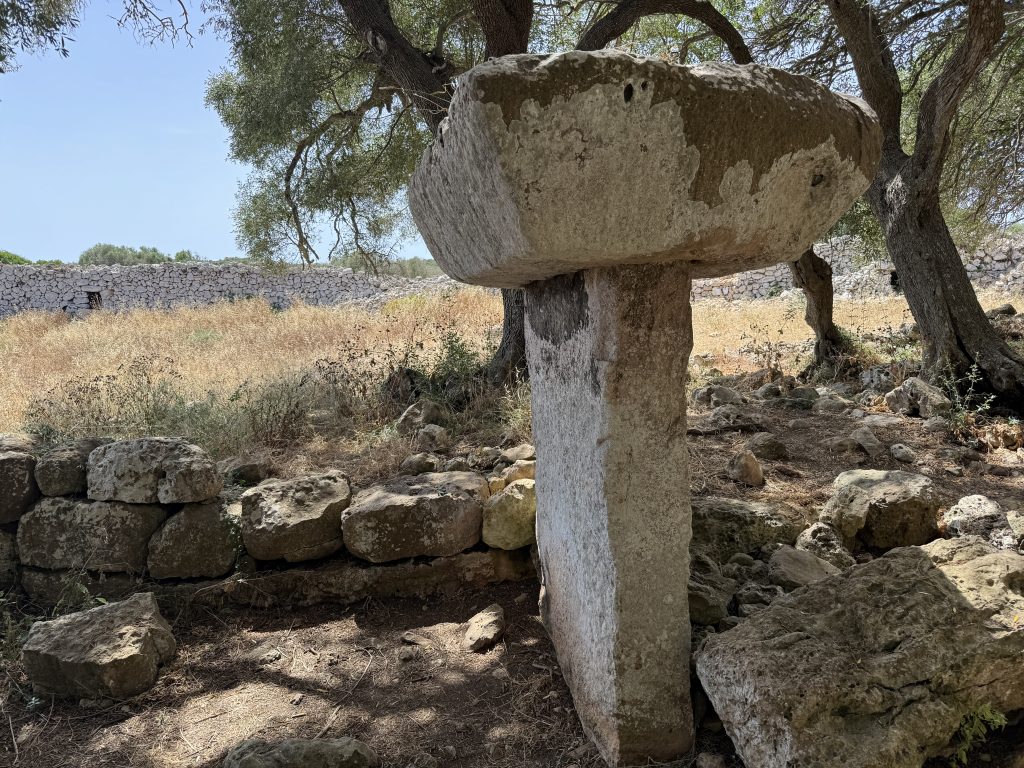
These ancient settlements were megalithic villages which featured talayots ,which were watchtowers circular houses, and taulas which were T shaped stone sanctuaries found nowhere else in the world.
Although talaiots and taulas are often found together, archaeologists believe they were built during different periods. The dome-shaped talaiots, built between 1200 and 550 BC, came first, and most likely marked territories and were used as lookouts. An excellent example is the huge Talaiot de Trepuco just outside Maó, which once covered an area of 5000 square metres.
The taulas, made from massive slabs of stone, some weighing over ten tons, and placed in a T shape, would have been built sometime between 550BC and the Roman conquest.
The other feature of these megalithic villages were Funerary Navetas or Tombs
These dry-stone collective burial tombs are shaped like inverted boats and are unique to the Balearic Islands.
Naveta d’Es Tudons: Located near Ciutadella, this is the most iconic monument on the island and is considered the oldest standing building in Europe dating back over 3,000 years.
Perched on a hill over looking the sea, Torre d’en Galmes is the largest Talayotic settlement in Menorca. It covers over 60,000 square meters and offers an incredible look at ancient domestic life, complete with advanced rainwater collection systems.

Poblado Talatí de Dalt: Situated near Mahón, this highly visited village features an exceptional taula sanctuary where a neighboring stone column has accidentally fallen and leans against the central T-shaped monolith.
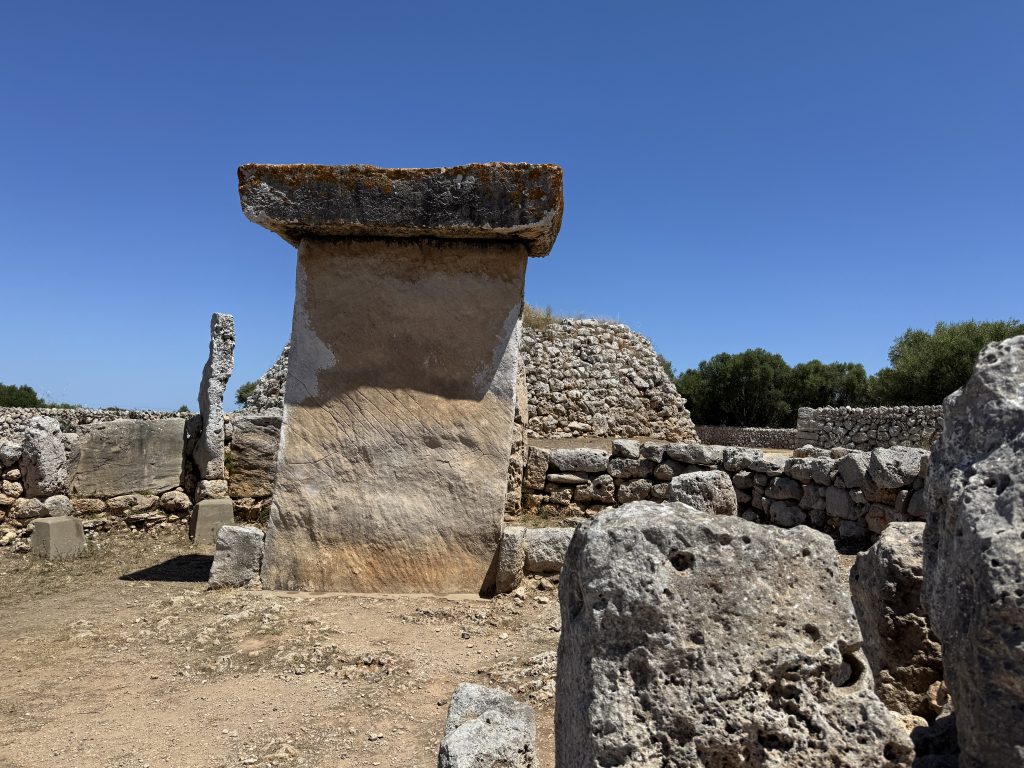
Poblat Talaiòtic de Trepucó: One of the largest prehistoric settlements on the island, stretching across 5 hectares. It boasts an enormous central talayot tower and offers free entry year-round.
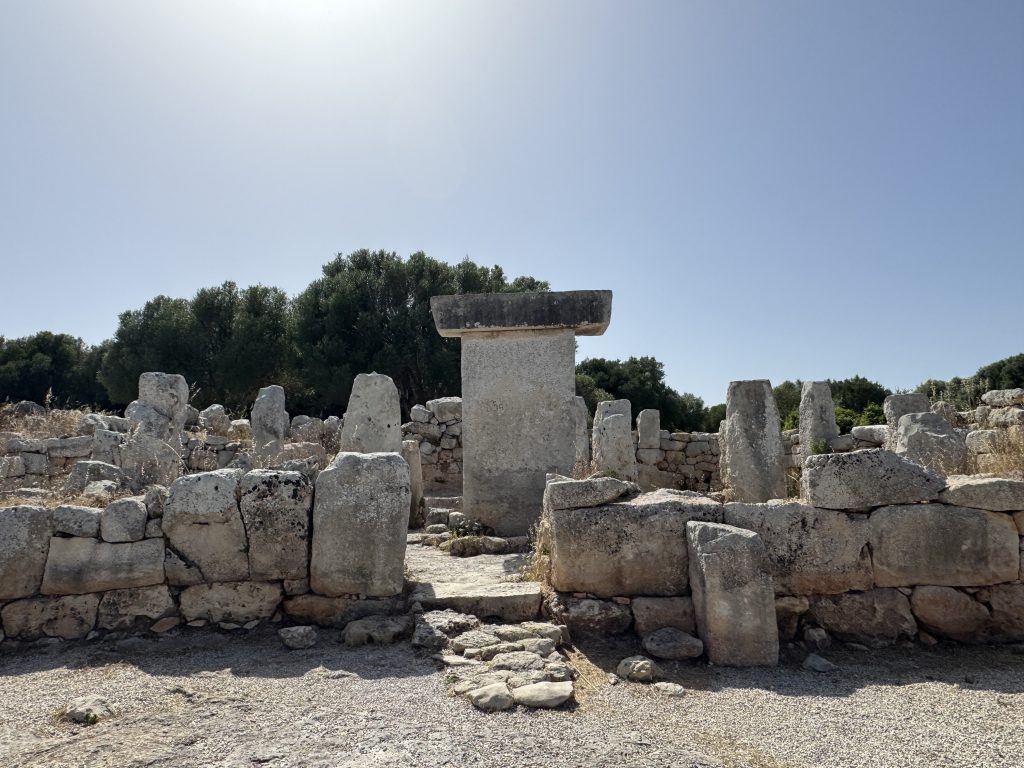
Torralba d’en Salort: Located between Alaior and Cala en Porter, this site is famous for hosting the largest and most perfectly preserved taula on the island, standing 3 meters high
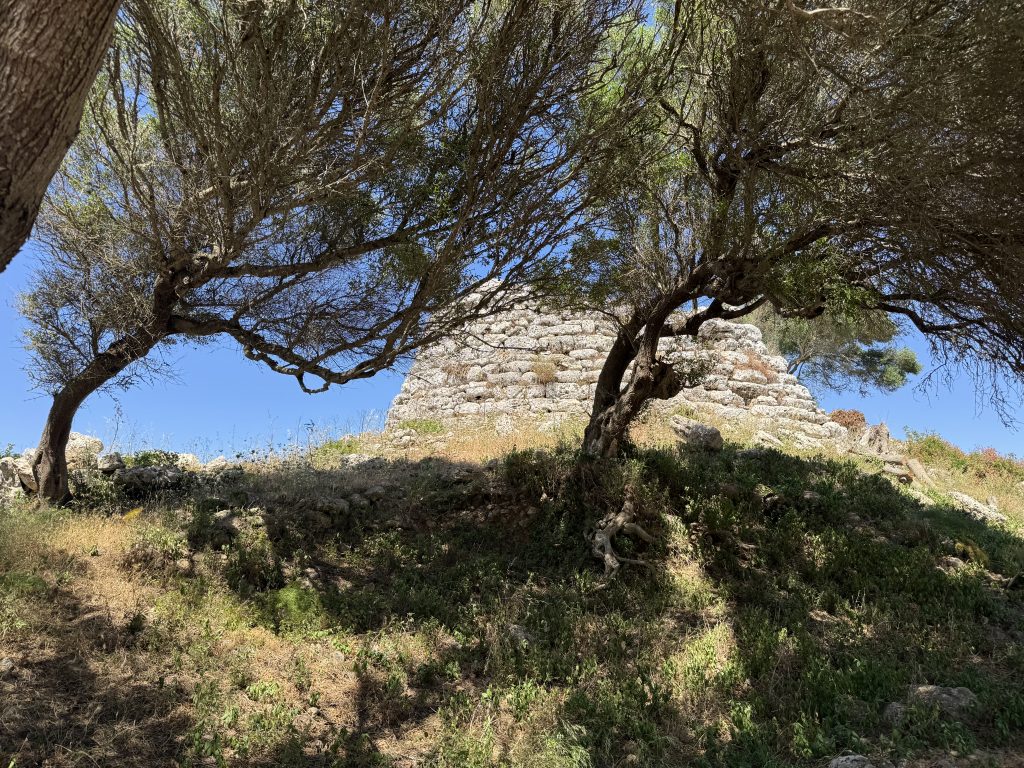
Torrellafuda is a prominent, beautifully preserved prehistoric Talayotic settlement located near Ciutadella in western Menorca, Spain. Nestled within a shaded, atmospheric forest of ancient wild olive and holm oak trees
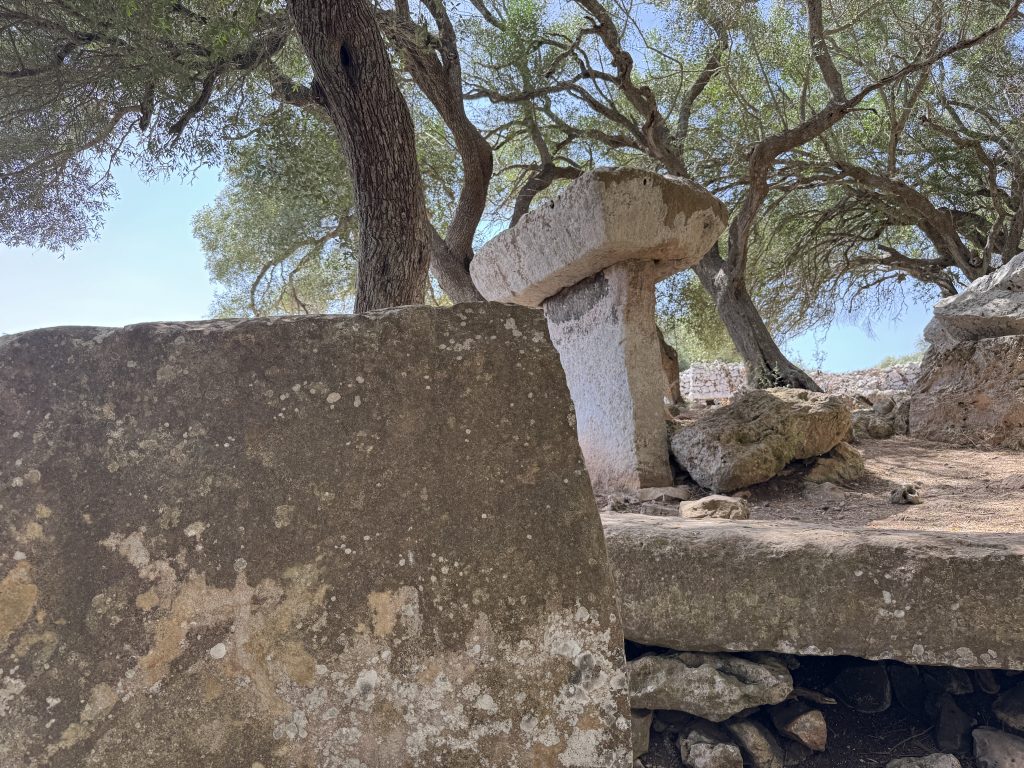
The Tayalot here is A massive, truncated-cone watchtower built out of colossal dry stone blocks. Situated at the highest point of the site, it historically served as a community hub and defensive vantage point.
The Taula Enclosure here post-Talayotic sanctuary built for spiritual rituals. While its iconic central, T-shaped pillar has fallen and split over time.
Destination: Spain / Spanish Islands