The Midsummer Festivals of Spain
The Festival of Sant Joan (Saint John’s Eve, or San Juan in Spanish) is one of the most culturally significant and widely celebrated holidays across Spain, particularly in Catalonia, the Balearic Islands, and Valencia.
Marking the summer solstice and the nativity of St. John the Baptist, the festival spans June 23 to June 24.
The absolute heart of the festival takes place on the night of June 23, widely known as the Nit de Sant Joan(Night of Fire), followed by a public holiday on June 24.
Depending on where you experience the festival, the traditions vary between fiery city street parties and magnificent equestrian spectacles.
Fire and Fireworks (Catalonia & Mallorca)
In Barcelona and the rest of the Catalonia region, Sant Joan functions much like a summer New Year’s Eve. The underlying theme is purification, renewal, and warding off bad spirits through three elements: fire, water, and herbs.
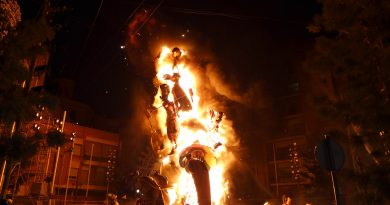
The Flame of Canigó (Flama del Canigó): A single flame lit atop Mount Canigó in the Pyrenees is carried down by torchbearers to light hundreds of official town bonfires (hogueras) across thousands of Catalan towns simultaneously on the evening of June 23.
La Revetlla (The Party): People pack city plazas and beaches (like Barcelona’s Barceloneta) to launch personal fireworks, light bonfires, and dance until dawn.
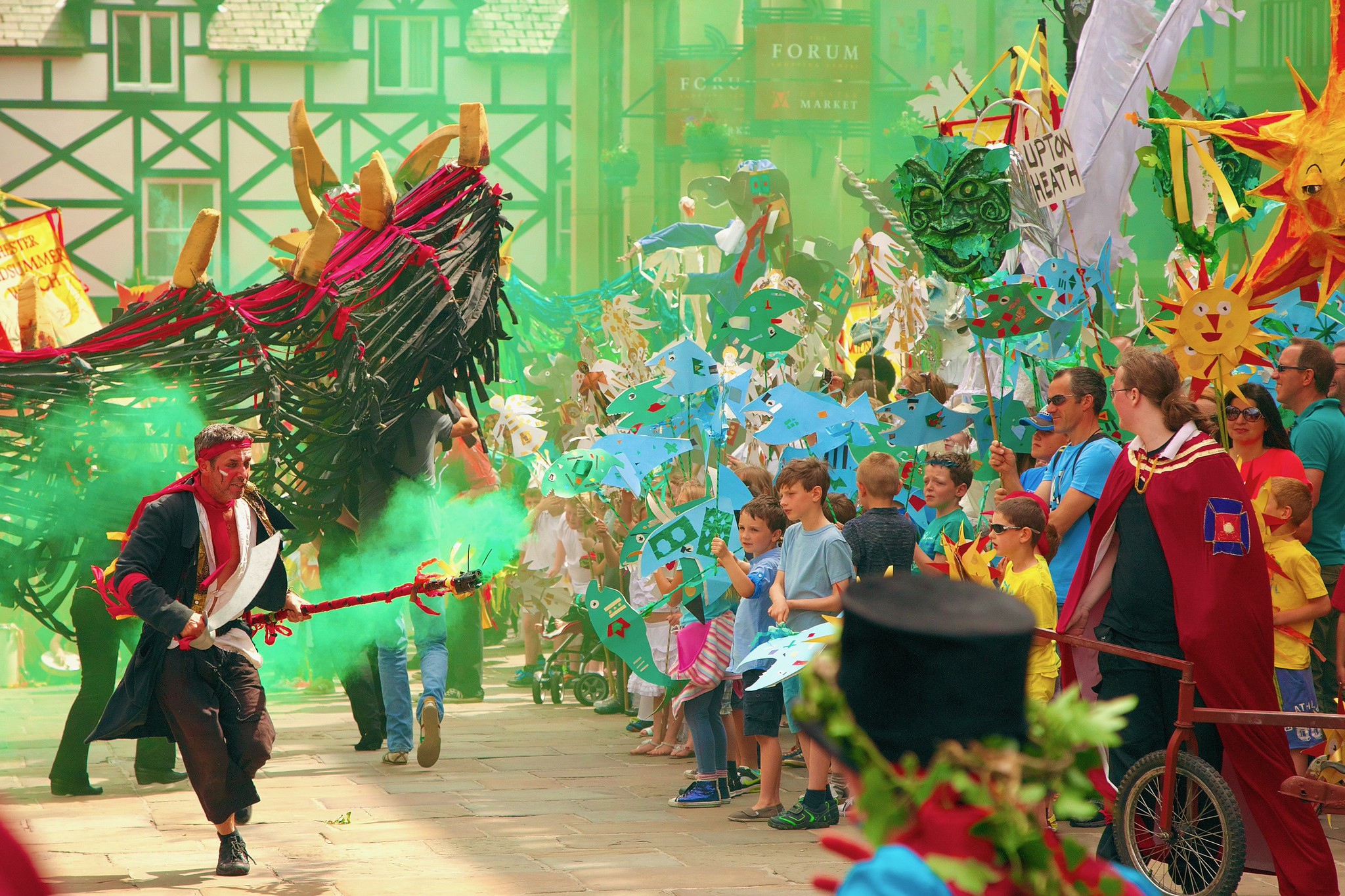
(Fire runs): Masked “devils” dance through crowds under heavy showers of sparks launched from spinning fireforks.
The Traditional Food: Coca de Sant Joan
You cannot celebrate Sant Joan without tasting Coca de Sant Joan, the official pastry of the holiday.
It is a flat brioche-style sweet bread, traditionally twice as long as it is wide.Common toppings include candied fruits, pine nuts, and pastry cream.Modern variations include fillings like cabell d’àngel (pumpkin jam), whipping cream, or chocolate.It is traditionally washed down with sweet Cava (sparkling wine).
The Majestic Horses of Menorca
If you travel to the Balearic island of Menorca, specifically the town of Ciutadella, Sant Joan transforms from a fire festival into one of Europe’s most spectacular historic equestrian games.
The Medieval Guilds: The festival is strictly orchestrated around representatives of old society—the nobility, the church, artisans, and peasants.
Caracoldel Born: More than a hundred elegantly dressed riders (cavallers) on black Menorcan horses enter the crowded Plaça des Born.
The Bots: To a frantic, recurring folk melody played on a cane flute (flabiol), riders encourage their horses to rear up on their hind legs and walk into the roaring, packed crowds. The crowd attempts to touch the horses’ chests for good luck.
Major Public Events & Key Locations
If you are looking to attend the major central events, these specific locations coordinate the largest public spectacles:
Barceloneta Beach (Barcelona): The city’s largest open-air beachfront party with massive crowds, swimming, and continuous firework displays.
Le Passage de Lluís Companys (Barcelona): Features the official welcoming of the Canigó flame, traditional fire parades, and large-scale public concerts.
Plaça des Born (Ciutadella, Menorca): The epicenter of the Balearic horse festival and the iconic Jocs des Pla (equestrian skill games).
Parc de la Mar (Palma, Mallorca): The capital of Mallorca hosts dramatic night runs of local “devils” casting fireworks directly beneath the illuminated Cathedral.
Destinations: Spain / Spanish Islands