Czech Texans
Czech Texans often informally called Czexans, are residents of the state of Texas who are of Czech ancestry.
Large scale Czech immigration to Texas began after the Revolutions of 1848 changed the political climate in Central Europe, and after a brief interruption during the U.S. Civil War, continued until the First World War.
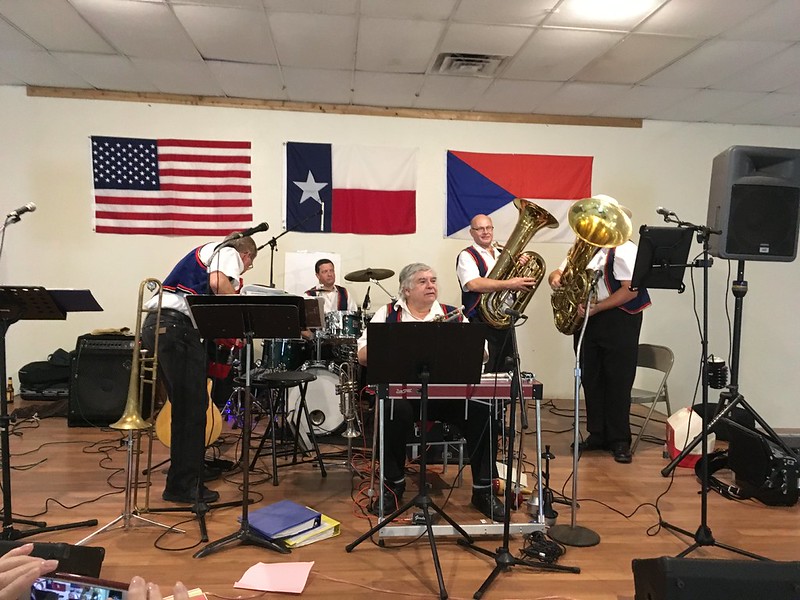
Concentrated in Central Texas, Czech Texans have preserved their identity through the Czexan style of music, the Painted Churches of Texas, regular Czech dances and festivals, bakeries specializing in Czech pastries, and Czech and Czexan fusion cuisine.
Historically, “Czechs first settled in Texas in the 1840s, traveling from Bohemia, Moravia, and Austrian Silesia … Czech settlers usually identified themselves as Austrian, German, Bohemian, Slovak or Moravian.”
Czech immigration to Texas began as early as the 1820s, but most immigrants made the journey as individuals. Large-scale and family immigration began with the immigration of Rev. Josef Arnost Bergmann, described as the “father” of Czech immigration to Texas by some sources.Once settled in Texas, Bergmann wrote letters to families in Europe, encouraging them to come to Texas.
Czech immigration was driven by the availability of land in Texas and by events in Europe. In the 1840s, the Austrian Empire, which included Czech lands, was still run by a feudal system, despite the wave of democratic ideals permeating western Europe. This led to the Revolutions of 1848, which did little to improve the economic status of peasants who still found it difficult to gain wealth.
The revolutions, together with factors such as religious persecution and mandatory military service, fueled a wave of emigration from Austria beginning in 1852.
Immigrants to America were unfamiliar with the concept of American democracy due to their lack of experience with democratic ideals. The concepts of states’ rights and slavery were equally foreign to the immigrants.
In January 1861, as tensions between northern and southern states over slavery reached a breaking point, a convention was called in Austin, TX to draft a secession document, which was then approved by a vote of the citizens in February. The recency of the Czech immigration meant that most Czechs living in Texas were not naturalized citizens, and were therefore unable to vote in the decision for secession.
Texas became a member of the Confederacy in March 1861, and in April 1861, the first battle of the Civil War took place at Fort Sumter, SC. In July 1861, a Union blockade of the Southern coast reached Texas and stopped all immigration, Czech or otherwise. By the time of the blockade, the Czech population in Texas had grown from 74 in 1852 to over 700
Under the Confederate Constitution, military service was a legal method of obtaining Confederate citizenship for those who were not formerly American citizens, but aliens, unlike citizens, were not required to serve in the regular military. The exemptions for aliens were determined by the Confederate War Department to apply only to aliens who were not permanent settlers and had not renounced their native allegiance. This did not apply to the majority of Czechs because they were permanent settlers. As a result, Czechs were conscripted to serve in the Confederate Army.
To avoid conscription, some chose to leave Texas and join the Union Army; others went into hiding. For many Czechs, an alternative to conscription was to carry cotton to Mexican markets as a revenue source for the Confederacy.
Czech women, already familiar with the hard work of farming, managed to keep their farms and homes running during the war while their husbands were serving in the military or in hiding. In addition to the regular farm responsibilities, families also had to produce homemade commodities to substitute for increasingly expensive goods such as coffee and sugar.
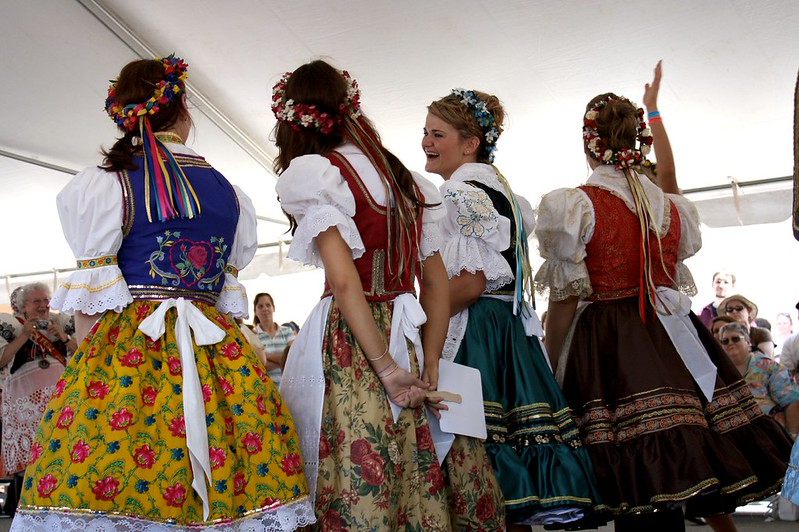
Czexan culture is shaped by the unique adaptation of Czech culture to a Texas environment, and Czech dances, celebrations, and events are held on a regular basis.
The National Polka Festival is an annual parade and festival held in Ennis, Texas celebrating the Czech heritage in the city. The 3-day festival is held every Memorial Day weekend. Most of the dance halls offer a lunch or dinner with Czech foods such as klobása (sausage), sauerkraut, and koláče, as well as live entertainment with Czexan polka music and dancing. Ennis also holds the annual Czech Music Festival focussing on Czexan music and dancing.
Temple is home to the Czech Heritage Museum. A Fayetteville museum celebrates Texas’s Czech settlement. In Caldwell is the Burleson County Czech Heritage Museum. In 2004, the Texas Czech Heritage and Cultural Center was opened in LaGrange. Houston’s Czech Center Museum Houston features Czech and Slovak culture, art, and history. Praha hosts the Praha Church Picnic, also known as the Pražská Pouť, which is celebrated with Catholic mass, food, Czexan music, and dancing. The city of West hosts Westfest every Labor Day, which includes a Koláče baking contest and a Taroky tournament. Crosby, northeast of Houston, hosts a Czech Fest and a Koláče Bake. The Czech Heritage Society of Texas has developed 14 chapters throughout the state.
Destination: Texas, Czech Republic