A Brief History of Sofia
The history of Sofia spans over 7,000 years, making it one of Europe’s oldest capital cities. Its long story is shaped by its strategic position at the crossroads of Europe and Asia, surrounded by healing mineral springs.
Ancient Thracian & Roman Serdica (700 BC – 500 AD)
The city was founded by the Thracian Serdi tribe around 700 BC, who settled near the area’s thermal springs.
Rome annexed the settlement in 29 BC, renaming it Serdica and turning it into a thriving regional hub.
Emperor Constantine the Great loved the city so much he famously referred to it as “my Rome.”
The 4th-century red-brick Church of St. George Rotunda, Sofia’s oldest preserved building.
Medieval Slavic & Bulgarian Sredets (809 – 1382 AD)
The city was incorporated into the First Bulgarian Empire in 809 AD by Khan Krum and renamed Sredets (meaning “middle” or “center”).It briefly fell under Byzantine control before becoming a major economic and strategic hub of the Second Bulgarian Empire.It was officially named Sofia in the late 14th century after the landmark Church of Saint Sophia.
Ottoman Empire Rule (1382 – 1878 AD)
Captured by the Ottoman Empire in 1382, Sofia became the capital of the vast Rumelia province.
The city underwent an Islamic architectural transformation, with many mosques, baths, and caravanserais constructed.
The Banya Bashi Mosque, built in 1566 by the famous architect Mimar Sinan, still stands today.
Modern Capital & The World Wars (1878 – 1944 AD)
Freed from Ottoman rule by Russian forces during the Russo-Turkish War in 1878, Sogua was declared the official capital of the restored Bulgarian state in 1879, sparking a massive European-style rebuilding phase.
The iconic, gold-domed Alexander Nevsky Cathedral was built to honour the Russian soldiers who died for Bulgaria’s independence.
Communist Era to Present Day (1944 – Present)
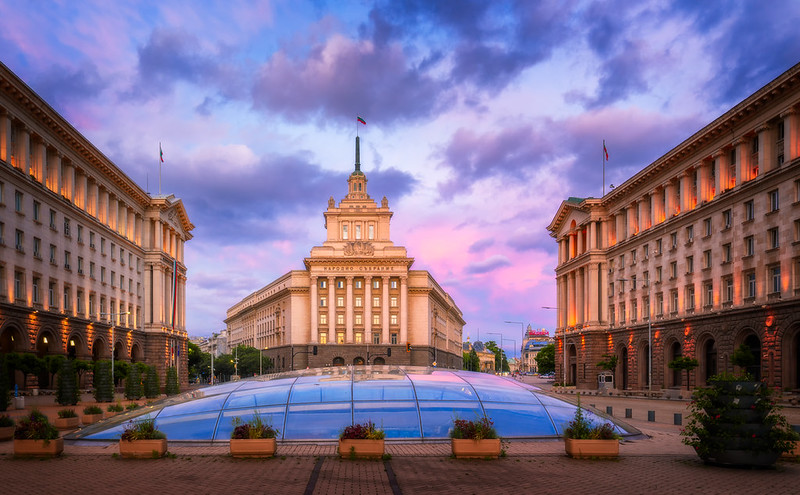
Following WWII, Bulgaria became a communist state, and Sofia was redesigned with massive socialist-classicist architecture.
The grand city-centre complex, featuring the former Communist Party House, defines this architectural era.
Following the fall of communism in 1989, Sofia transitioned into a democratic, tech-forward European Union capital.
Destination: Bulgaria