The Elvis Presley Trail
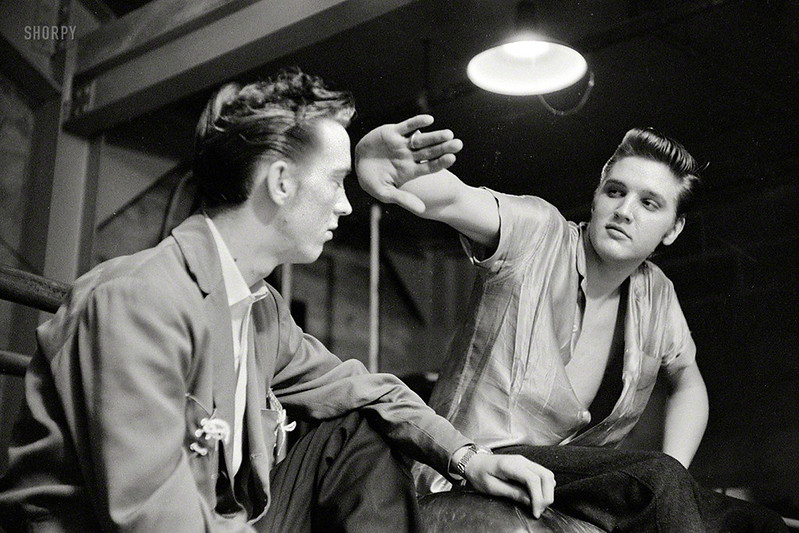
Elvis Presley is one of the great musical and cultural pop icons of the post World War 2 era.
If you are interested in exploring more about his life and times, check out these articles essential landmarks on our Elvis Presley Trail.
Graceland
The King’s famous 14-acre estate and 23-room home remains the ultimate pilgrimage site. You can tour the mansion’s iconic spaces—like the Jungle Room—and pay your respects at the Meditation Garden, where Elvis and his family are buried.
Located directly across the street from the mansion, this massive 200,000-square-foot entertainment complex houses his extensive collection of classic cars, custom jets, stage costumes, and career museum exhibits.
Known as the “Birthplace of Rock ‘n’ Roll,” this is the exact studio where a young Elvis recorded “That’s All Right (Mama)” in 1954. Guided tours let you stand in his exact recording spot and hold his original microphone.
Located in the heart of the historic entertainment district where Elvis spent his youth soaking up blues music, this life-size bronze statue captures him mid-performance with his guitar.
Lansky Bros.
Dubbed the “Clothier to the King,” this family-owned shop helped design Elvis’s signature flamboyant style. You can visit their retail store inside The Peabody Memphis hotel.
Overton Park Shell
An open-air amphitheater where music historians state Elvis put on the first-ever live rock ‘n’ roll show on 30 July 1954, playing as an opening act. It still hosts free seasonal concerts today.
The Arcade Restaurant
Memphis’s oldest diner features the dedicated “Elvis Booth” where he regularly ate. You can sit where he sat and order his favorite fried peanut butter and banana sandwich
The public housing apartment complex where the Presley family lived when they first moved to Memphis in 1948. Fans can tour the property or even book a night to sleep in his childhood bedroom.
The one-story ranch home Elvis bought with his early “Heartbreak Hotel” royalties in 1956. He lived here for 13 months before fan mobs forced him to seek the privacy of Graceland. While it is a private residence and closed to the public, a historic plaque marks the exterior for drive-by viewing.
Elvis Week: Celebrate all things Elvis during Elvis Week held in Memphis every August
*Other Elvis sites
Beyond Memphis, the trail of Elvis Presley landmarks spans the United States and extends into Europe, tracing his childhood, legendary performances, and military service.
Tupelo, Mississippi (The Childhood Trail)
Located about a 90-minute drive southeast of Memphis, Elvis’s hometown contains essential landmarks from his first 13 years of life:
The ultimate childhood site, featuring the modest two-room shotgun house built by his father for $180 where Elvis was born in 1935. The 15-acre campus includes his original childhood church building, a museum, and the “Elvis at 13” statue.
The historic shop where Gladys Presley bought an 11-year-old Elvis his very first guitar for his birthday in 1946, famously convincing him to take it instead of a rifle. An “X” marks the exact spot on the floor where he stood.
Tupelo’s oldest restaurant, where Elvis frequently ate with friends. You can still sit in the designated “Elvis Booth” and order a traditional doughburger.
Las Vegas & Beyond (The Performance Era)
Westgate Las Vegas Resort
The epicenter of his historic 1969–1976 live performance comeback. A life-size bronze statue of Elvis stands in the lobby to honor his record-breaking 636 consecutive sold-out shows
Elvis recorded the vast majority of his biggest studio hits here between 1957 and 1977. Fans can tour the historic Nashville space, which still features the piano he regularly played.
The historic chapel where Elvis’s character married Priscilla’s character in the climax of the iconic 1964 film Viva Las Vegas
Bad Nauheim, Germany (The Army Years)
While stationed at Ray Barracks in Friedberg during his US Army service (1958–1960), Elvis chose to live off-base in the beautiful nearby spa town of Bad Nauheim:
At the Hotel Villa Grunewald, Elvis and his entourage occupied Room number 10 for several months. The boutique hotel allows fans to book the exact room, preserved with its original heavy dark furniture and period decor.
The Castle Gate (Burgpforte) was the historic stone archway where the photograph for Elvis’s “A Big Hunk O’ Love” single cover was shot in 1959. A life-size graffiti mural now marks the spot so fans can recreate the exact pose.
Goethestraße 14 is the private, three-story residential house where Elvis lived out the final year of his military service. It is also famously where a young Priscilla Beaulieu first came to visit him.
Destination: United States / Tennessee / Mississippi / Deep South / Nevada / Germany