Philadelphia and the American Revolution
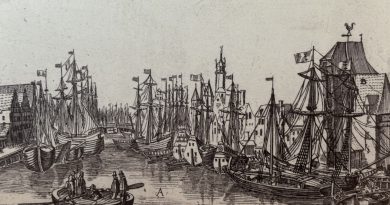
Philadelphia’s importance and central location in the colonies made it a natural center for America’s revolutionaries. By the 1750s, Philadelphia surpassed Boston as the largest city and busiest port in British America, and the second-largest city in the entire British Empire after London.
In 1774, as resentment of the British government’s policies towards the colonies and support for independence began burgeoning in the colonies, Philadelphia hosted the First Continental Congress at Carpenters’ Hall, and 12 of the original 13 colonies sent delegates to the Congress.
From 1775 to 1781, Philadelphia hosted the Second Continental Congress, whose 56 delegated unanimously adopted the Declaration of Independence inside what was then called Pennsylvania State House and was later renamed Independence Hall.
Written predominantly by Thomas Jefferson from his second-floor apartment on Market Streetwithin walking distance of Independence Hall, the Declaration has been described by Pulitzer Prize-winning historian Joseph Ellis as “the most potent and consequential words in American history,”and its adoption represented a declaration of war against Great Britain.
Since the Declaration’s July 4, 1776, adoption, its signing has been cited globally and repeatedly by various peoples of the world seeking independence and liberty. It also has been, since its adoption, the basis for annual celebration by Americans; in 1938, this celebration of the Declaration was formalized as Independence Day, one of only eleven designated U.S. federal holidays.
After George Washington’s defeat at the Battle of Brandywine in Chadds Ford Township, on September 11, 1777, during the Philadelphia campaign, the revolutionary capital of Philadelphia was defenseless, and the city prepared for what was perceived to be an inevitable British attack.
Because bells could easily be recast into munitions, the Liberty Bell, then known as the Pennsylvania State Bell, and bells from two Philadelphia churches, Christ Church and St. Peter’s Church, were hastily taken down and transported by heavily guarded wagon train out of the city. The Liberty Bell was taken to Zion German Reformed Church in Northampton Town, which is present-day Allentown, where it was hidden under the church’s floor boards for nine months from September 1777 until departure of British forces from Philadelphia in June 1778.
Two Revolutionary War battles, the Siege of Fort Mifflin, fought between September 26 and November 16, 1777, and the Battle of Germantown, fought on October 4, 1777, took place within Philadelphia’s city limits.

In Philadelphia, the Second Continental Congress adopted the Articles of Confederation on November 15, 1777. Independence Hall in Philadelphia was the meeting place for the Constitutional Convention, which ratified the Constitution on September 17, 1787, which is now the longest-standing codified national constitution.
Philadelphia served as capital of the United States for most of the colonial and early post-colonial period, including for a decade, from 1790 to 1800, while Washington, D.C. was being constructed and prepared to serve as the new national capital, and on five prior occasions between 1776 and 1790.In 1793, the largest yellow fever epidemic in U.S. history killed approximately 4,000 to 5,000 people in Philadelphia.The capital of the United States was moved to Washington, D.C. in 1800 upon completion of the White Houseand U.S. Capitol buildings.
Philadelphia remained the nation’s largest city until the late 18th century. It also was the nation’s financial and cultural center until ultimately being eclipsed in total population by New York City in 1790. In 1816, the city’s free Black community founded the African Methodist Episcopal Church, the first independent Black denomination in the country, and the first Black Episcopal Church. The free Black community also established many schools for its children with the help of Quakers. Large-scale construction projects for new roads, canals, and railroads made Philadelphia the first major industrial city in the United States.
Destination: Mid Atlantic States