The Anglo Afghan Wars
In the first half of the 19th century, the British East India Company was on the verge of replacing the Mughal Empire as the government of India, or Hindustan, as it was then known.
The Mughals had for three centuries governed the territories of Afghanistan, Pakistan, India and Bangladesh.
But a combination of imperial overreach, and political infighting on the Mughals side, and, on the British side, wily statecraft, technical advances made possible by its leading role in the industrial revolution and brazen commercial nous, would soon turn India and Pakistan into territory of the British Raj.
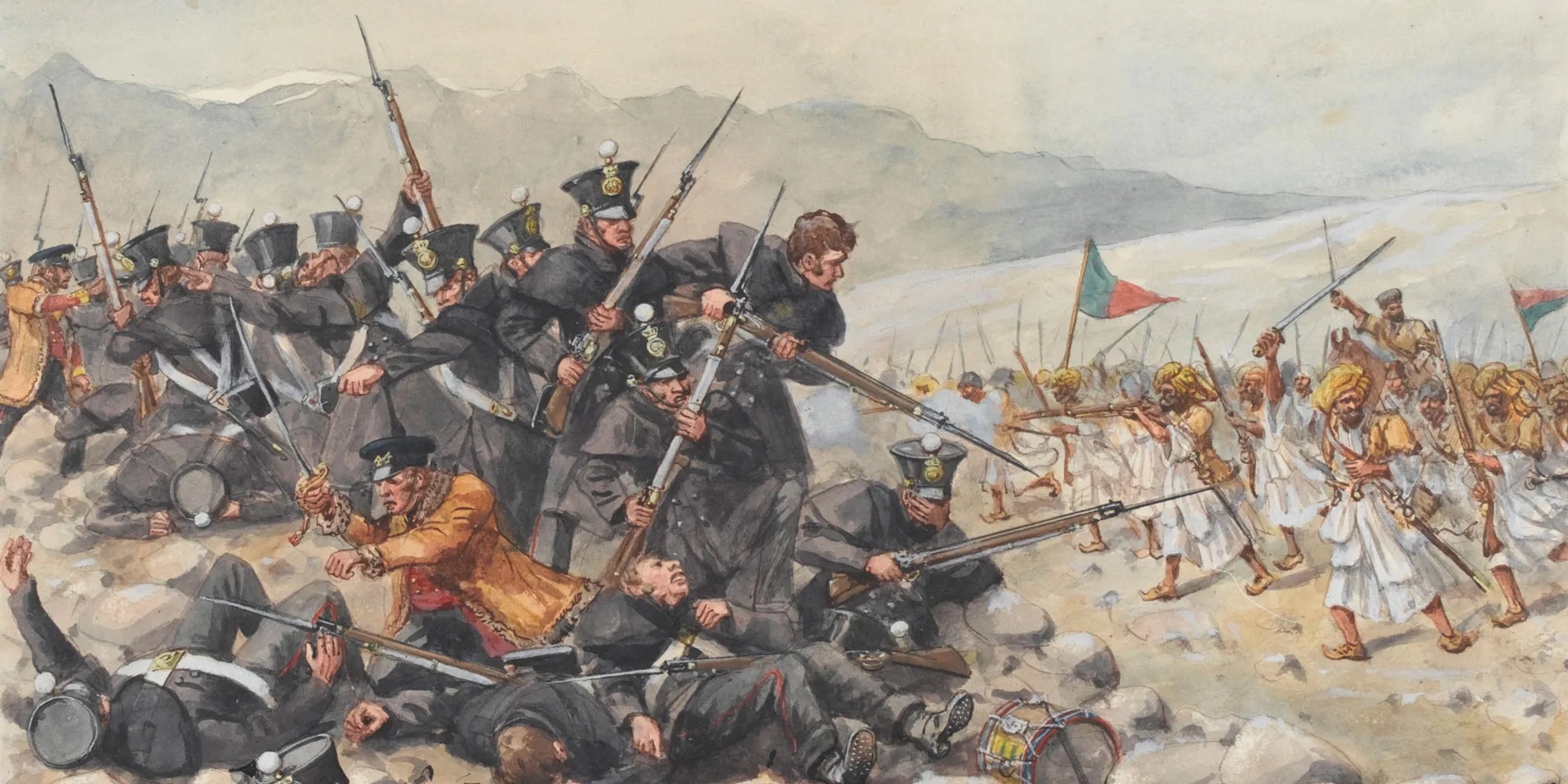
Against this background, and needing to reinforce the perimeter of its new possession, 60,000 British forces invaded Afghanistan aiming to install a favoured emir who would be a British ally of an expanding Russia.
After successfully taking Kabul a growing national rebellion forced the British out, into a catastrophic retreat where nearly the entire force was wiped out.
*Atkinson prints
The work of James Atkinson, a surgeon come artist who accompanied the ill fated British expedition into Afghanistan, tells the story. Atkinson was present at the storming of Ghuznee in July 1839 and the eventual capture of Kabul shortly after in the First Afghan War; Atkinson was recalled to India in 1840 to take up his post as a Superintending Surgeon and avoided the fate of the remaining British garrison which was destroyed whilst attempting to withdraw in the winter of 1841.
Destination: Afghanistan, England