The French in Indochina
The territories now known as Laos, Cambodia, and Vietnam were united under the colonial administration of French Indochina (Indochine Franchaise ) from 1887 until its dissolution after World War II and the subsequent First Indochina War.
*Vietnam
The French began their colonization in 1858, establishing control over southern Vietnam (Cochinchina) and later expanding to central (Annam) and northern Vietnam (Tonkin).
*Cambodia
The French Protectorate of Cambodia was established in 1863 when King Norodom signed a protectorate treaty to secure the monarchy from Thai and Vietnamese threats.
*Laos
The French Protectorate of Laos was established in 1893. It was consolidated after the Franco-Siamese War, formed from the Lao kingdoms of Luang Prabang, Vientiane, and Champasak.
* Structure of French Indochina
French Indochina was a federation of these separate territories, each with different administrative statuses:
Its headquarters were Hanoi (in Tonkin, northern Vietnam).The highest authority was a French Governor-General appointed by Paris.
A system of “indirect rule” was used, especially in the protectorates. Existing monarchs (the Emperors of Annam, Kings of Cambodia, and Kings of Luang Prabang) were retained but held no real political power. French Résidents Supérieurs oversaw all governance.
The French administration was driven by economic exploitation and a “mission civilisatrice” or civilising mission
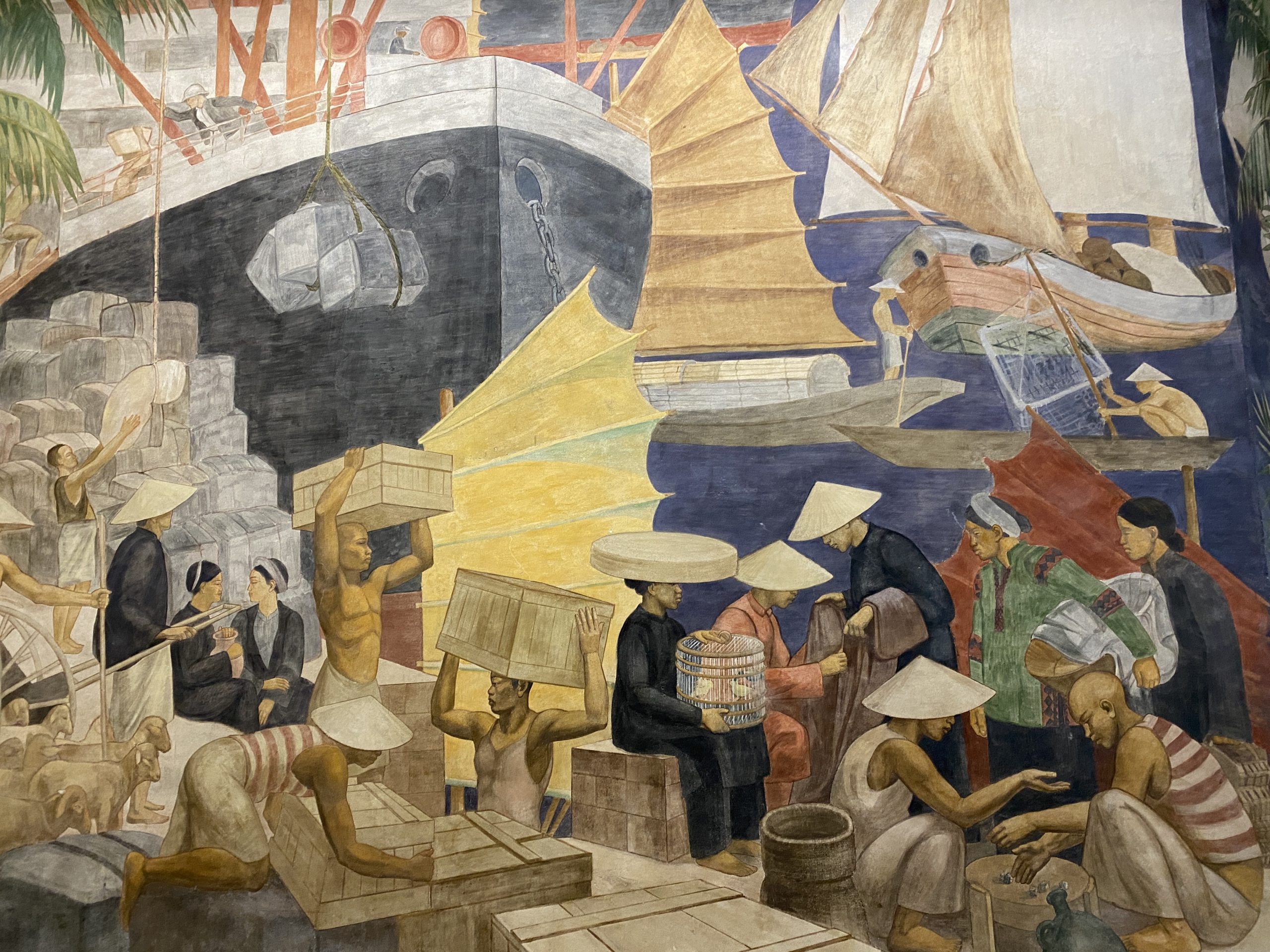
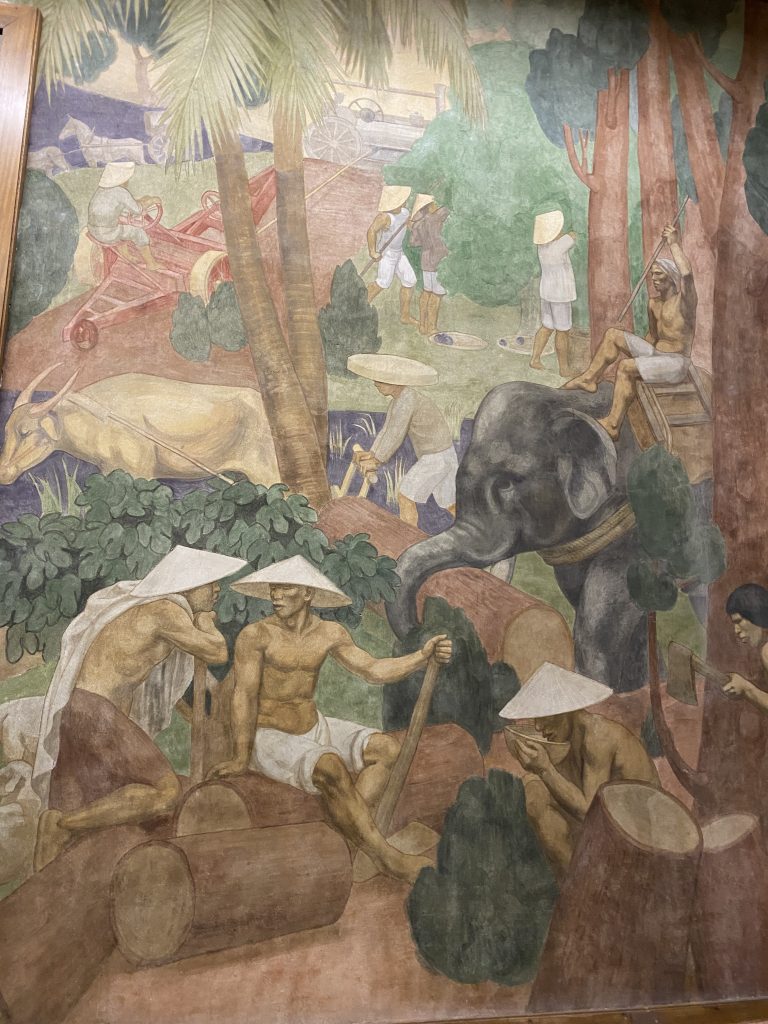
The colony was a source of raw materials (rice, rubber, coal and tin) and a market for French goods. This led to the development of rubber plantations (notably by Michelin) and mining operations, often with brutal labor conditions.
The French built infrastructure to service the export economy, most famously the Colonial Railway and the port of Haiphong. The Yunnan–Vietnam Railway was a major engineering feat.
Promotion of the French language and Catholicism was central. Education was limited to a small indigenous elite to create a class of intermediaries. This system produced the very Western-educated intelligentsia (like Ho Chi Minh) who would later lead independence movements.
The French imposed a uniform legal code and centralized administrative system, fundamentally altering traditional Southeast Asian political structures.
*The Path to Independence
Resistance existed from the start, but nationalist movements coalesced during and after World War II.
Following France’s defeat in Europe, French Indochina was administered by the pro-Vichy French colonial government under Japanese military supervision. In March 1945, the Japanese staged a coup, disarming and imprisoning the French, and nominally granting independence to Vietnam, Cambodia, and Laos.
After Japan’s surrender, France attempted to reassert control, leading to a war with the Viet Minh, a communist-led Vietnamese independence coalition. The war ended with the 1954 Geneva Accords, which recognised the full independence of Cambodia, Laos, and Vietnam.It temporarily divided Vietnam at the 17th parallel, leading to the separate states of North Vietnam (communist) and South Vietnam (pro-Western), setting the stage for the Vietnam War.
*Legacy
The colonial period left profound and complex legacies. French remains an administrative and cultural language, especially in Laos and Cambodia.
French colonial architecture, wide boulevards, and urban planning are defining features of cities like Hanoi, Saigon (Ho Chi Minh City), Phnom Penh, and Luang Prabang.
The fusion created unique foods like the Vietnamese bánh mì (French baguette with Vietnamese ingredients), cà phê sữa đá (iced coffee with condensed milk), and various pastries.
The centralised state model, legal codes, and the very borders of the modern nations are colonial creations.