
The Sikh Empire
The Sikh Empire, founded in the early 19th century, was a significant power in the Indian subcontinent, primarily in the regions of Punjab and parts of present-day Pakistan. It emerged under the leadership of Maharaja Ranjit Singh, who unified various Sikh confederacies and established a secular and inclusive governance system.
The Punjab was for almost three centuries under the control and governance of the Mughal Empire which started fracturing in the early 1700s. Sikhism was a relatively new religion having been formed in the 15th century just before the arrival of the Mughals from Central Asia. The city of Lahore in Pakistan became one of the three great Mughal capitals along with Delhi and Agra in India.
But the Punjab was also the historic heartland of the Sikhs. They had been persecuted by the Mughals for not converting to Islam and several of the gurus had been brutally executed by Mughal Emperors..
Originally pacifists ,the Sikhs transformed themselves into a military order and fought a guerulla campaign against the Mughals over a period of nearly two centuries. With the Mughal Empire crumbling they took control of the Punjab and Lahore and established their own State there.
Ranjit Singh’s reign from 1801 to 1839 is noted for its military prowess, modernization efforts, and the promotion of arts and culture. The empire was characterized by its religious tolerance, with Sikhs, Hindus, and Muslims coexisting and contributing to the state’s administration and military.
After Ranjit Singh’s death, the empire faced internal strife and external threats, particularly from the British East India Company. The Anglo-Sikh Wars of 1845-1846 and 1848-1849, ultimately led to its annexation by the British.
A century later, partition of India and the establishment of a Moslem Pakistan divided the Punjab down the middle and the resulting civil strife and bloodshed meant many Sikhs lost their land and were ethnically cleansed from West Punjab . They fled to the eastern half of the state.
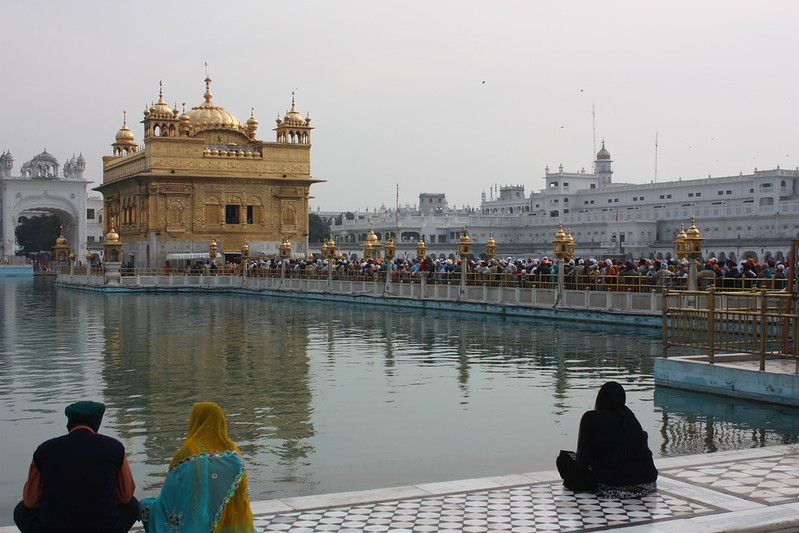
The legacy of the Sikh Empire is still felt today, particularly in the cultural and religious identity of Sikhs, and its history is a source of pride within the community. The empire is also recognized for its contributions to art, architecture, and the establishment of the Golden Temple in Amritsar, which remains a central religious site for Sikhs.