The Moors of the Balearic Islands
The Moors were North African and Arab Muslims who controlled the Balearic Islands of Ibiza, Mallorca and Menorca for over 300 years, They established a period of immense cultural, agricultural, and architectural prosperity from 902 AD until the Christian reconquest in 1229 AD.This Islamic territory was known as the Islas Orientales de al-Ándalus.
Key Periods of Moorish Control
902 AD: The islands were formally conquered and annexed to the Emirate of Córdoba. The capital of Mallorca (Medina Mayurqa) was established, laying the groundwork for modern-day Palma.
Before full military annexation, the Moors launched sporadic raids on the islands starting as early as 707 AD. However, the formal conquest took place in 902 AD. A Moorish nobleman named Issam al-Khawlani was forced to take shelter in Palma during a storm while on a pilgrimage to Mecca. Recognizing the strategic value of the islands, he convinced the Emir of Córdoba to launch an invasion. Al-Khawlani commanded the fleet, conquered the archipelago, and was named its first governor
1015–1115 AD: Following the collapse of the Caliphate, control shifted to the Taifa of Dénia, and later the islands became an independent taifa (small kingdom).
1114–1229 AD: The islands fell under the dominance of strict Berber empires, first the Almoravids and later the Almohads, before being conquered by Christian forces.
Moorish rule left an indelible mark on the Balearic Islands, visible long after their expulsion.
Agriculture: The Moors revolutionized farming by introducing intricate underground irrigation networks (qanats) and terraced hillsides, successfully cultivating crops like rice, saffron, and citrus fruits.
Architecture: In Palma, you can still visit Moorish historical sites, including the Arab Baths and the Almudaina Palace.
Language & Culture: Many local place names in the Balearics begin with the Arabic prefix “Bini-“(meaning “sons of”), and traditional folk music still reflects traces of its Andalusian roots.
The Fall of Moorish Rule
Moorish domination ended in 1229 AD when King James I of Aragon landed in Santa Ponsa (Mallorca). By 1231, the islands had fallen to Christian forces, marking the end of Islamic rule, although the Moors survived longer on the island of Menorca.
After the conquest, the major mosques were demolished or built over, including Palma Cathedral (La Seu), which was erected directly over the city’s main mosque.
There are annual “Moors and Christians” historical reenactment festivals celebrated across the islands.
Menorca
While Menorca was ruled for longer by Muslims -for nearly 400 years (903–1287 AD )when it was known as Manûrqa – very few standing Moorish monuments remain today. When King Alfonso III conquered the island, almost all Islamic architectural structures—such as mosques and palaces—were systematically demolished, rebuilt into Christian structures, or built over.
However, you can still visit a few critical archaeological sites and historic spaces that hold deep Moorish history:
The Castle of Santa Àgueda (Castell de Santa Águeda)
Located on a strategic hilltop near Ferreries, this is the most significant standing Moorish monument on the island. Built by the Arabs over an older Roman fort, it served as the island’s primary inland military stronghold and defense complex. It was the final bastion of Muslim resistance against Alfonso III in 1287.Visitors can hike up an ancient stone road to explore the atmospheric ruins. A 1,800-meter perimeter wall, several square and round defense towers, and original water cisterns are still visable
The Streets of Ciutadella
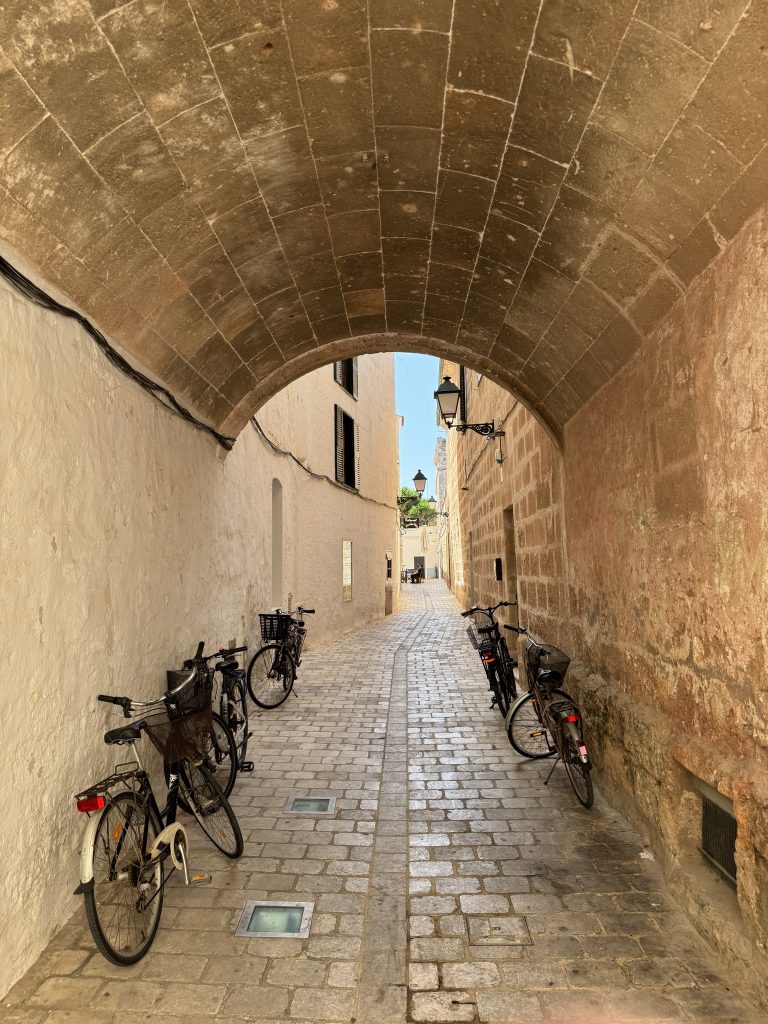
During Moorish rule, Ciutadella (then called Madina al-Manûrqa or Jamma) was the capital of the island. Wandering through the narrow, winding, maze-like alleyways of Ciutadella’s old town gives a direct feel for medieval Islamic urban planning.
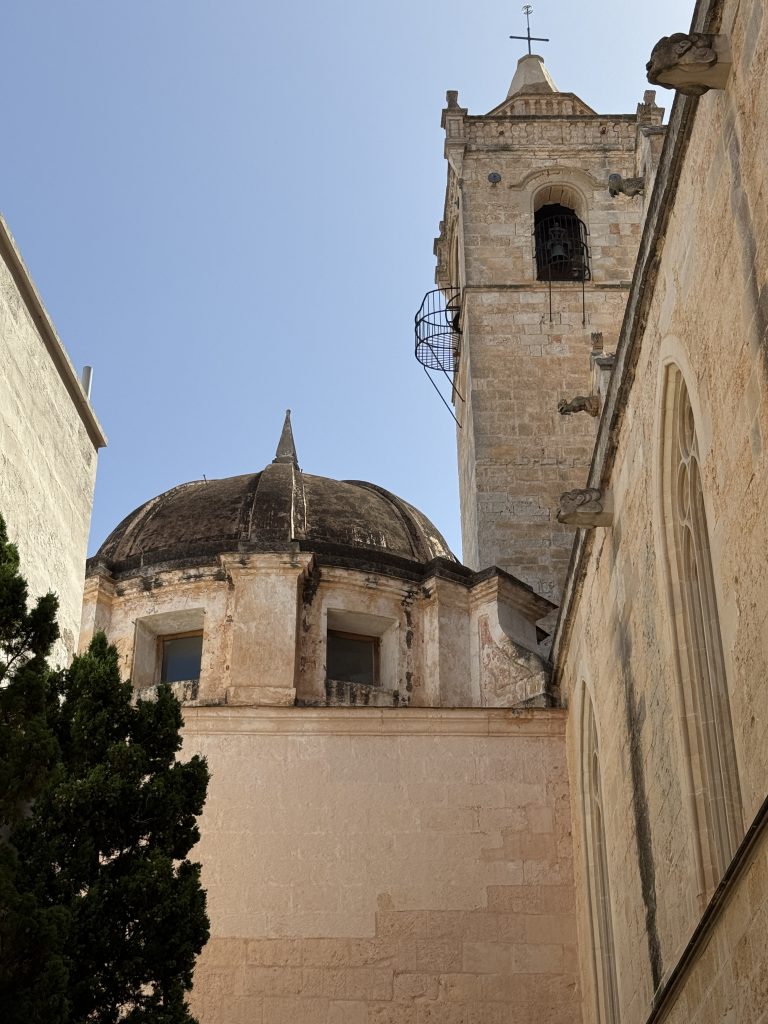
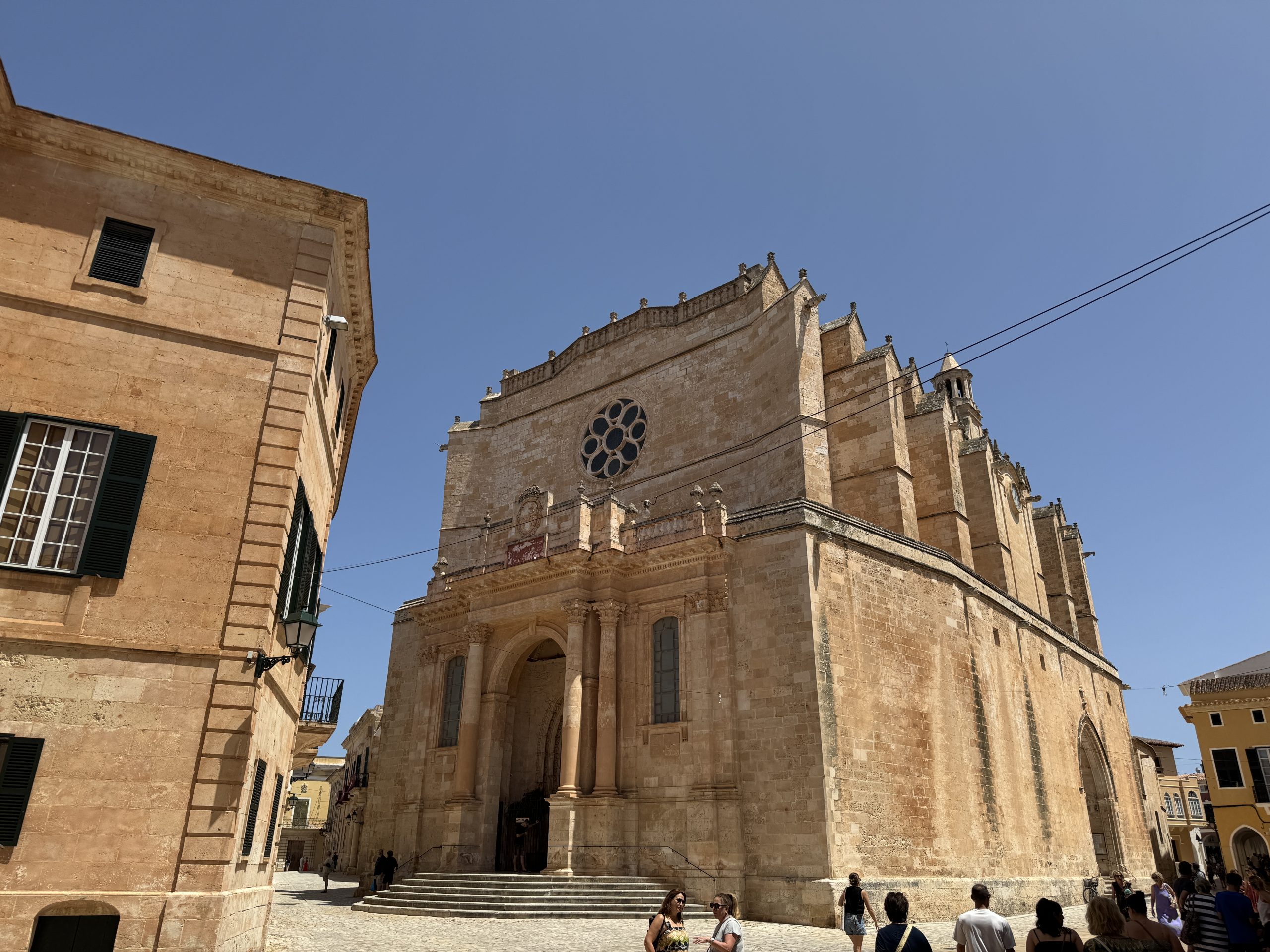
The Cathedral of Menorca: The grand Gothic Cathedral of Santa Maria was built directly on top of the city’s primary Moorish mosque. While the mosque is gone, the cathedral’s bell tower still retains the square, sturdy foundation of the original Islamic minaret tower.
Destination: Spanish Islands, Spain