
The Underground Roman Cisterns of Fermo
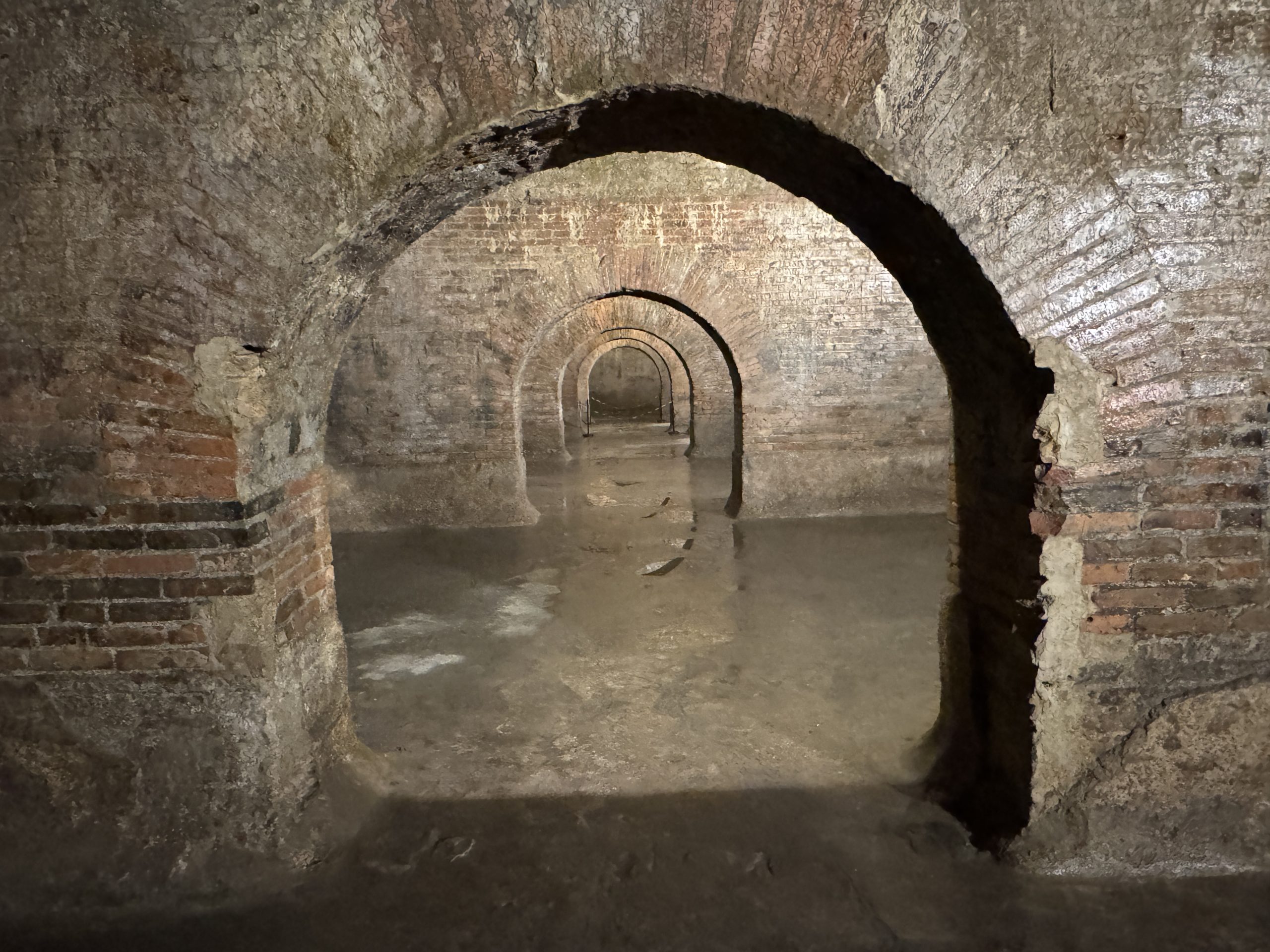
The hilltop town of Fermo, located in the Marche region of Italy is home to an incredible network of underground Roman cisterns regarded as the best preserved in Italy.
Commissioned by Emperor Augustus between the late 1st century BC and the 1st century AD this underground complex is one of the largest and most pristine examples of Roman hydraulic engineering in the world.
The complex spans over 2,200 square metres (21,000 square feet) deep under the city’s tufa rock.It features a strict grid of 30 interconnected, barrel-vaulted chambers arranged in three parallel rows.
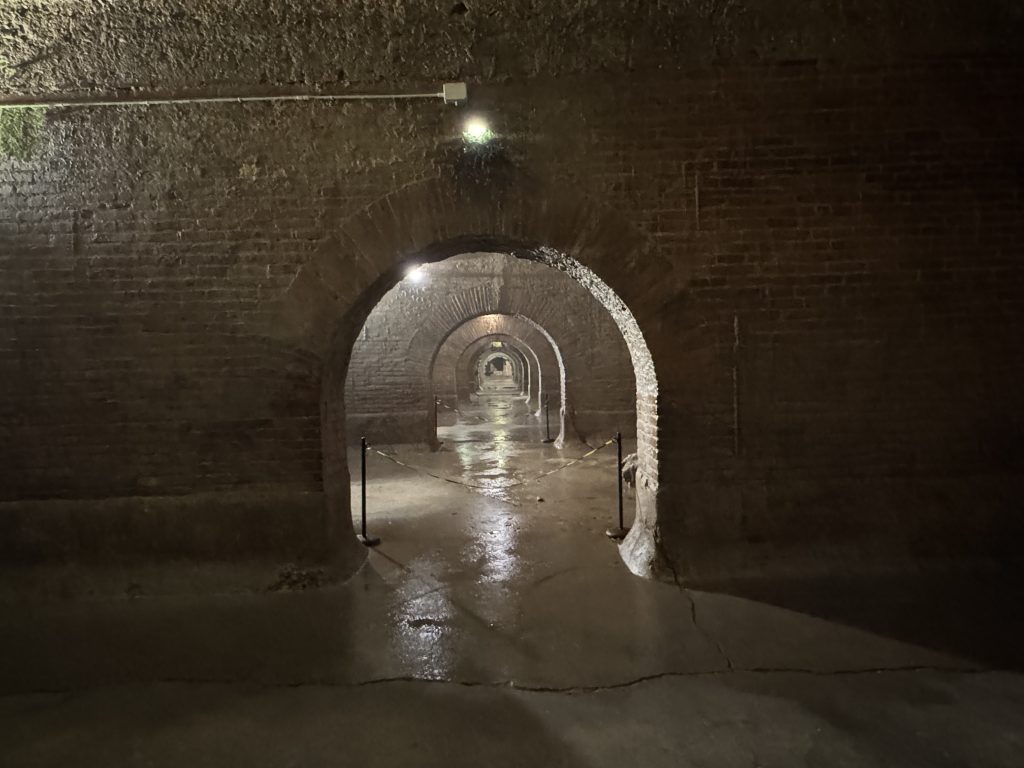
The cisterns were built to harvest, purify, and redistribute rainwater and spring water to the ancient colony of Firmum Picenum.
Because the colony was built high on a hilltop fortress, it lacked access to a standard river-fed aqueduct system. To solve this, Roman engineers built an ingenious, highly advanced collection and purification network:
Rainwater was gathered from a large urban catchment area and directed into an external canal system wrapping around the city’s perimeter walls. An underground pipe network connected to this exterior canal, funneling the water directly down into the subterranean chambers.
As water flowed slowly from chamber to chamber, impurities and heavy sediments sank undisturbed to the bottom of the tanks. Meanwhile, 10 ventilation shafts opened to the surface to circulate air, oxidizing and purifying the water for drinking.
The system safely stored and cleaned up to 3,000 cubic metres of fresh drinking water for the city’s inhabitants and public fountains.
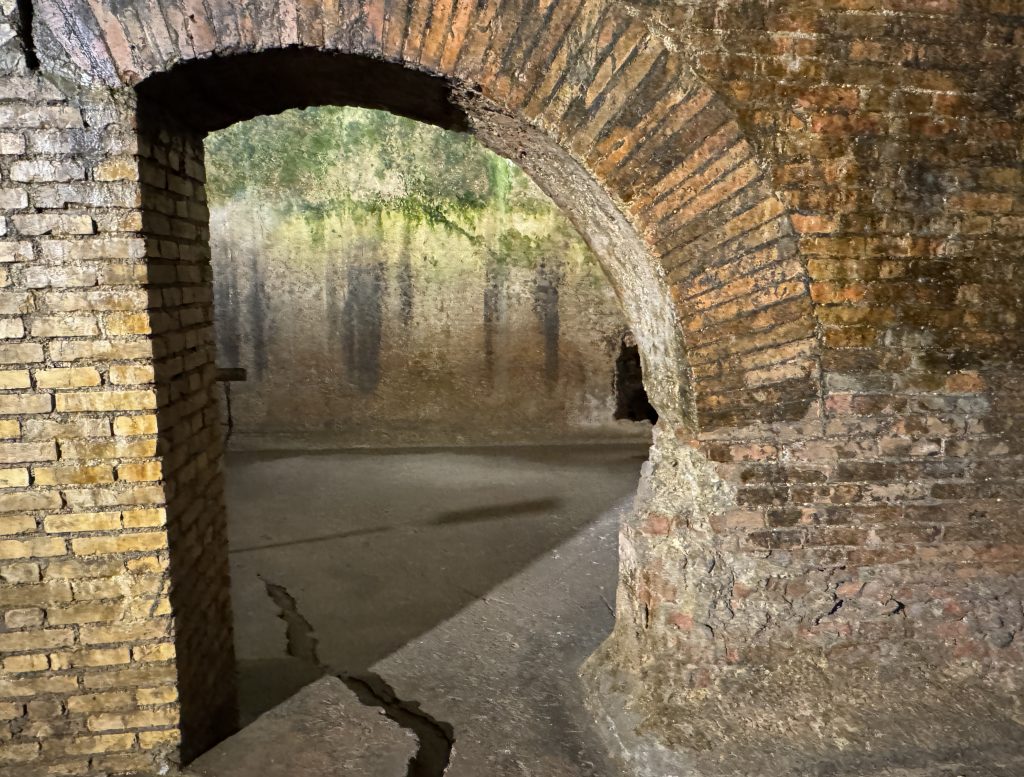
After the fall of the empire, parts of the grid were reused as medieval wine cellars by Dominican monks, and later served as air-raid shelters during World War II.
Parts strangely remained operational for water supply up until the 1980s
Destination: Italy