Great Explorers: Texas
Early Texas exploration was driven by Spain and France in the 16th and 17th centuries, focusing on mapping the coast, searching for gold, and establishing territorial claims.
Key explorers included Alonso Álvarez de Pineda who mapped the coast in 1519, Álvar Núñez Cabeza de Vaca (the first European to traverse Texas, from 1528 to 1534 and Robert La Salle who established a French fort on the Texas coast in 1685.
- Alonso Álvarez de Pineda (1519): Commissioned by Jamaica’s governor to explore the Gulf of Mexico, he mapped the Texas coastline and likely sighted Corpus Christi Bay, establishing a Spanish claim to the region.
- Álvar Núñez Cabeza de Vaca (1528–1536): Shipwrecked on Galveston Island, he and fellow survivors became the first Europeans to set foot in and travel across Texas, later reporting on the land and its people.
- Francisco Vázquez de Coronado (1540–1542): Searched for the mythical Seven Cities of Gold, traversing the Texas Panhandle but finding no riches.
- René-Robert Cavelier, Sieur de La Salle (1685): Attempted to find the Mississippi River but landed at Matagorda Bay, establishing Fort St. Louis, which prompted Spain to increase efforts to secure Texas.
- Alonso de León (1689): Led expeditions to locate La Salle’s colony, which had already failed, and established initial Spanish missions in East Texas.
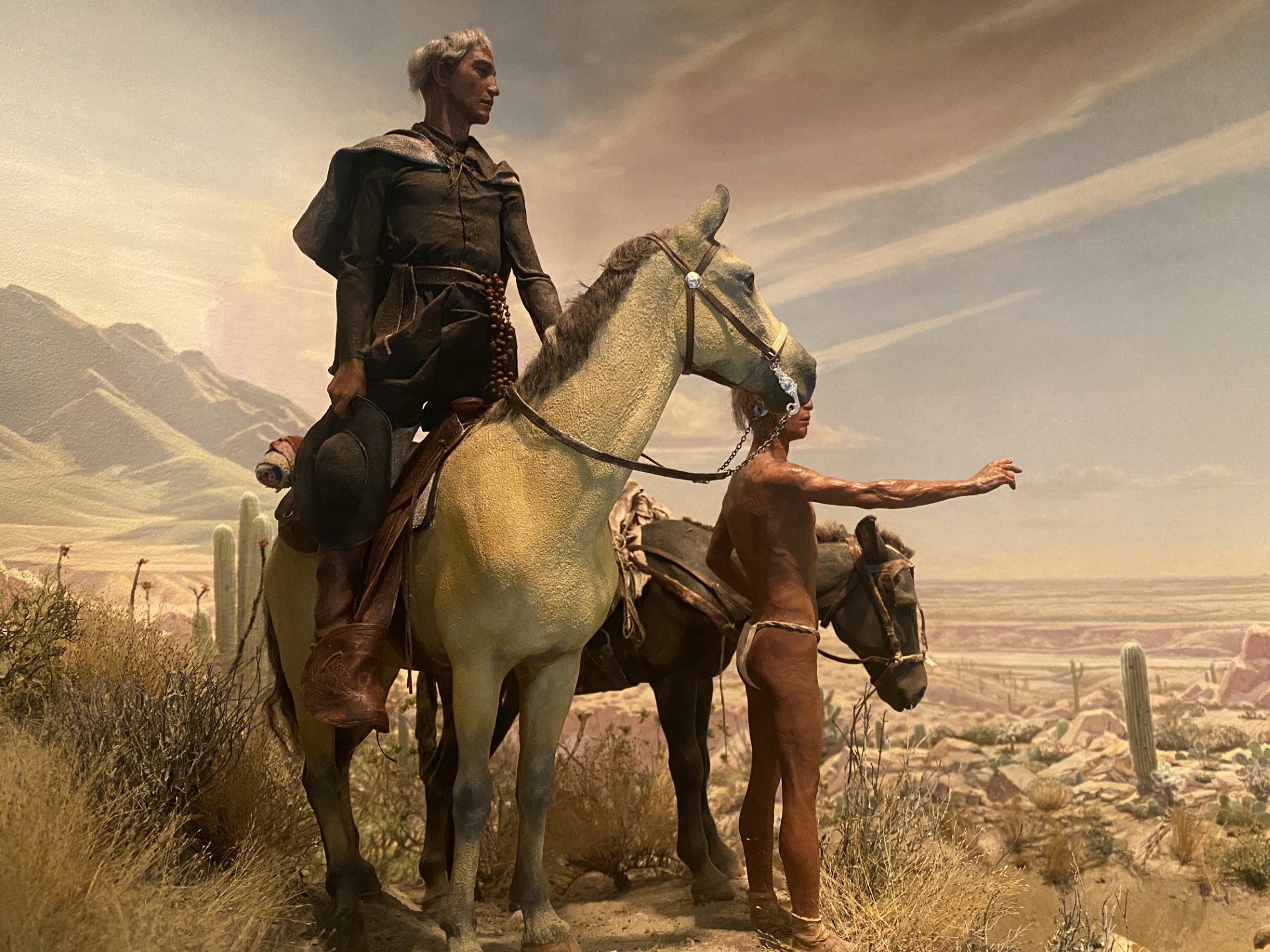
Spanish expeditions unintentionally introduced horses, which transformed the hunting and military capabilities of tribes like the Apache and Comanche.
European diseases brought by explorers, such as smallpox, decimated indigenous populations by up to 90%.
Spain eventually established missions, including those in El Paso in 1681 and San Antonio in 1718 to secure the territory.
Destination: Texas
Watch: Empire Builders Mexico, Episode 1
Watch: Empire Builders: America
Watch: Empire Builders: The Spanish Empire