Medieval Super Traders: The Hanseatic League
The Hanseatic League (also known as the Hansa) was a powerful medieval commercial and defensive network of merchant guilds and market towns that dominated trade across Northern Europe from the 13th to the 15th century.
It was not a country or a formal union with a single ruler, but rather a loose confederation of nearly 200 self-governing cities—primarily German—stretching from the Netherlands to Russia.
Merchants formed the alliance to safeguard their cargo ships and routes from rampant piracy and hostile feudal lords.
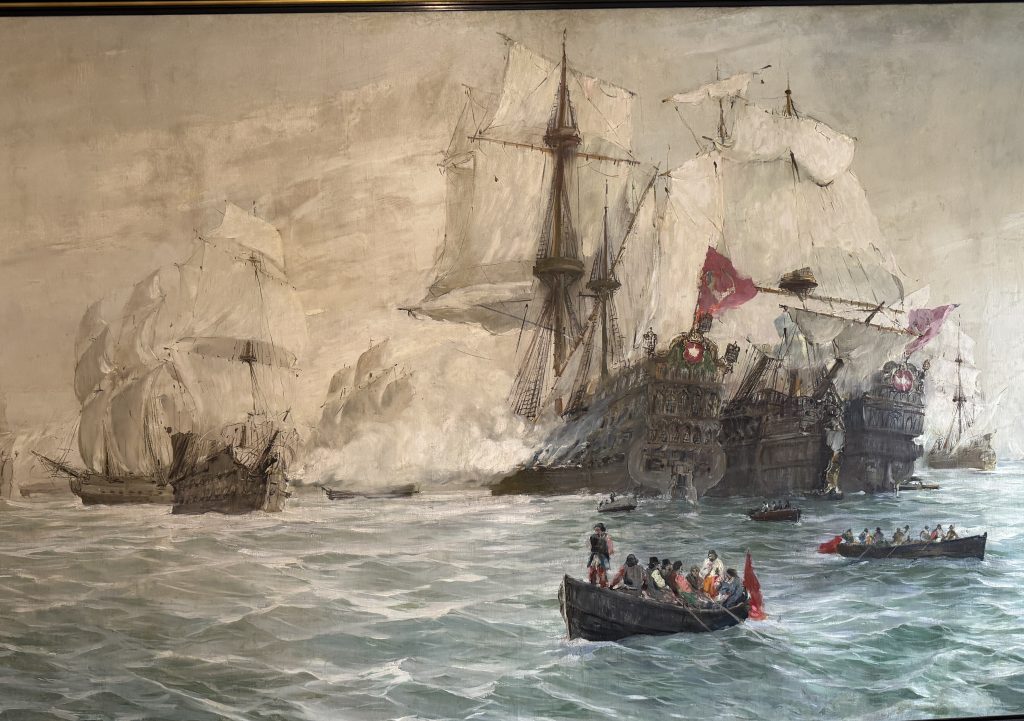
The league secured exclusive trading privileges and eliminated local tariffs for its members.
Members strictly controlled the trade of essential commodities like timber, wax, furs, grain, rye, salt, and fish.

The league established permanent, autonomous trading enclaves abroad—most notably in London, Bergen, Bruges, and Novgorod.
Though run by city councils and businessmen rather than a monarch, the league wielded immense political power. If a foreign king or ruler threatened their commercial privileges, the league would enforce economic embargoes or naval blockades. In extreme cases, they went to war. In 1368, the Hanseatic fleet defeated the Kingdom of Denmark, forcing the Danish king to grant them free passage through strategic shipping straits and veto power over future royal successions.
By the late 15th and 16th centuries, the league began to collapse due to internal rivalries, the rise of powerful, unified nation-states (like England, Sweden, and Poland-Lithuania), and the dawn of the Age of Discovery, which shifted the global wealth focus away from the Baltic toward transatlantic trade routes.
At its peak, the Hanseatic League was anchored by its de facto capital, Lübeck, alongside major market hubs like Hamburg, Cologne, Danzig (Gdańsk), and Riga, while its commercial power was driven by specialized destination-based merchant guilds and elite fraternities like the Brotherhood of Blackheads.
Because the word Hansa itself originally translated to “guild” or “fellowship,” the entire league was essentially a massive web of intersecting merchant organizations spanning nearly 200 cities.
The Guilds: The Engine of the League
The League operated at two distinct guild levels: long-distance merchant guilds that sailed international trade routes, and domestic craft guilds that controlled manufacturing inside individual city walls.
International Merchant Guilds (Fahrerkompanien)
Hanseatic merchants organized themselves into highly exclusive, powerful guilds named after their primary trading destinations. They pooled capital, shared shipping defense, and controlled specific trade monopolies:
- Schonenfahrer (Scania Travelers): The wealthiest and most powerful guild in Lübeck. They controlled the massive autumn fish markets in Scania (southern Sweden), dictating the entire European trade of salted herring.
Englandfahrer (England Travelers): Based out of northern German ports, this guild held a near-monopoly on exporting English wool and cloth back to the European mainland. - Nowgorodfahrer (Novgorod Travelers): Merchants who ventured deep into Russia to trade European cloth and salt for luxury furs, timber, and beeswax.
- The Brotherhood of Blackheads
The Brotherhood of Blackheads was an elite, highly unique military and commercial guild found in Baltic cities like Riga and Tallinn. It consisted entirely of young, unmarried, foreign German merchants who were not yet eligible for citizenship. Named after their patron saint, Saint Maurice (traditionally depicted as a Black Roman soldier), they functioned as a civilian militia to defend their trading towns against local uprisings and pirates while throwing legendary, lavish banquets at their iconic House of the Blackheads, in Tallin in Estonia and Riga in Latvia
Domestic Craft Guilds
Within each independent city, local craft guilds (bakers, blacksmiths, weavers, coopers) regulated daily production. The Hanseatic League relied heavily on these guilds to enforce strict quality controls. For instance, a barrel of salted beer from Munich or a bolt of cloth from Flanders had to meet precise standards, ensuring that any goods bearing the “Hansa” stamp maintained a global reputation for premium quality.
Destinations: Poland / Germany / Lithuania / Estonia / Latvia / Russia