
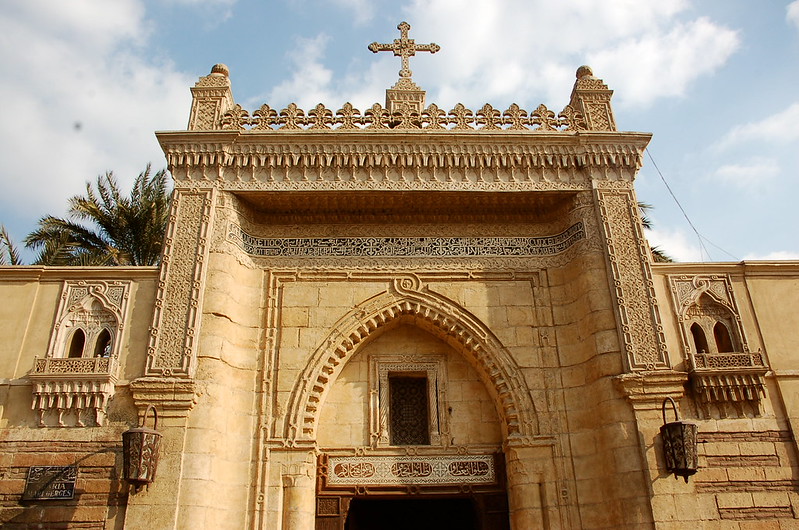
The Coptic Church
The Coptic Church is one of the oldest Christian institutions in the world, tracing its direct foundations back to the 1st century AD in Egypt. As a distinct apostolic body, it shaped early Christian theology, pioneered monasticism, and preserved its unique identity through centuries of shifting imperial and Islamic rule.
Historically, “Copt” simply means “Egyptian” (derived from the Greek Aigyptos), highlighting the deep cultural fusion between ancient Egyptian heritage and Christian tradition.
Foundation
According to sacred tradition, the Coptic Church was founded around 42 AD by Saint Mark the Evangelist, the author of the Gospel of Mark.
Saint Mark arrived in the bustling, cosmopolitan city of Alexandria, establishing it as one of the primary patriarchates of the early Christian world.
Mark founded the School of Alexandria, which became the premier center for early Christian scholarship, attracting legendary theologians like Clement and Origen.
The Era of Martyrdom and Monasticism
After the slaying of St Mark by the Romans the Coptic Church was profoundly shaped by severe Roman persecution, which ultimately forged its spiritual resilience.
Under Emperor Diocletian (starting 284 AD), Egyptian Christians suffered devastating waves of executions. This trauma was so foundational that the Coptic Calendar (Anno Martyrum) begins its numbering from the start of Diocletian’s reign.
In response to worldly corruption and persecution, the Egyptian deserts became the cradle of Christian monasticism. Saint Anthony the Great pioneered solitary monastic life (eremitic), while Saint Pachomius organized the first communal monasteries (cenobitic), creating a structural blueprint adopted worldwide.
The Great Schism:
The defining turning point for the Coptic Church’s independence occurred at the Council of Chalcedon in 451 AD, resulting in a permanent theological split from the Roman and Byzantine Churches.
The council debated the nature of Jesus Christ. The Western and Byzantine churches adopted the Diophysite view (Christ has two distinct natures: divine and human). The Coptic Church held the Miaphysite view (Christ’s divinity and humanity are perfectly united in one single nature).
Following the split, the Coptic Church rejected the authority of the Byzantine Emperor. For nearly two centuries, Coptic Christians faced severe political persecution from Byzantine rulers who attempted to enforce their own theological views on Egypt.
The Islamic Conquest
In 641 AD, Arab Muslim armies conquered Egypt, ending Byzantine rule and introducing a completely new socio-political landscape.
Copts initially welcomed the end of Byzantine oppression. Under Islamic rule, they were classified as Dhimmi (protected non-Muslim citizens). They paid a special tax (Jizya) but were permitted to practice their faith and retain their church leadership.
Over the centuries, waves of heavy taxation and periodic crackdowns under various caliphates led to gradual mass conversions to Islam. By the Middle Ages, Arabic replaced the Coptic language for everyday use, though Coptic remained the sacred liturgical language of the church.
Modern Renaissance
The modern era brought systemic reforms, institutional growth, and global expansion to the church.
The Sunday School Movement: Initiated in the early 20th century, this movement revitalized religious education, sparked a renaissance in monastic life, and produced deeply educated church leaders.
Global Diaspora: Under the leadership of Pope Shenouda III (patriarch from 1971 to 2012), the Coptic Church expanded rapidly beyond Egypt. Today, vibrant Coptic orthodox communities, churches, and monasteries exist across Europe, North America, and Australia.
Today, the Coptic Orthodox Church is led by Pope Tawadros II. Copts make up roughly 10% of Egypt’s population, standing as the largest Christian minority community remaining in the Middle East.
Destination: Egypt