Norman Forts of Britain: Pevensey Castle
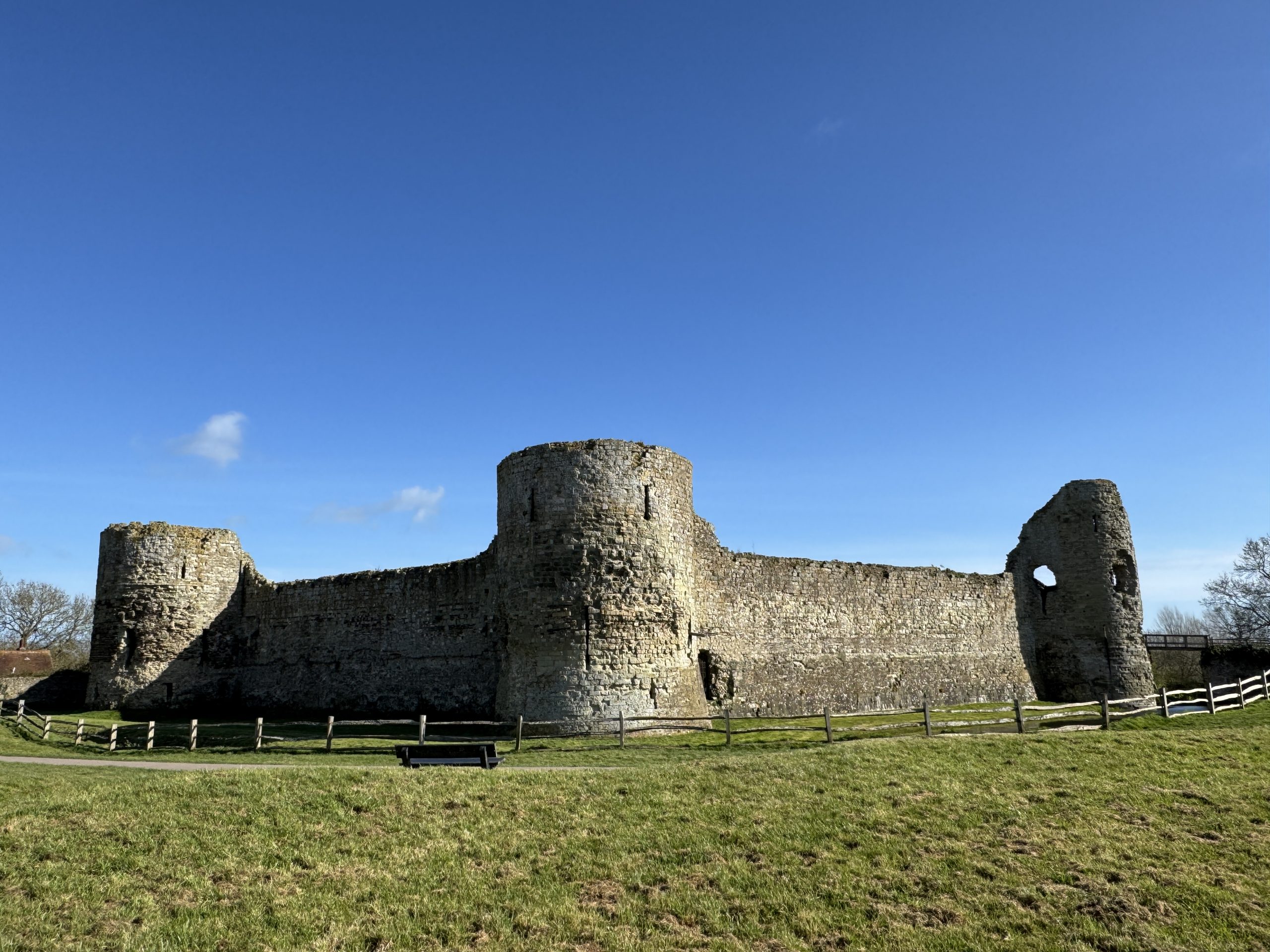
Begun in about 290AD, Pevensey was the biggest of the Roman ‘Saxon Shore’ fortresses. Its hugely impressive walls, more than 500 metres (1,640 feet) long, still stand almost to their full height.
Here, in 1066, William the Conqueror landed to begin his invasion of England, building a fortress within the Roman defences.
When William the Conqueror launched his invasion of England by landing at Pevensey Bay on 28 September 1066, his army sheltered for the night in a temporary fortification situated within the old Roman fort.
The Normans dug a ditch across the causeway linking the fort with the mainland and made repairs to the Roman walls to strengthen them.
The army left for Hastings the following day, en route to the Battle of Hastings.
William’s choice of Pevensey as a defensive location may not have been entirely due to practical military reasons. It also had political connotations, implying that the Normans were on a level with the Romans. He followed a similar pattern elsewhere in England, building the Tower of London alongside the still-extant Roman city wall and constructing Colchester Castle on top of the ruins of the Temple of Claudius.
Following William’s victory at Hastings, the county of Sussex came to be seen by the new regime as being of essential military value. It was both a frontier zone and an essential link between England and Normandy. In 1067 William left England for Normandy via Pevensey. He also appears to have used the site to distribute lands to his Norman followers, with Pevensey Castle and the surrounding area gifted to his half-brother Robert, Count of Mortain.
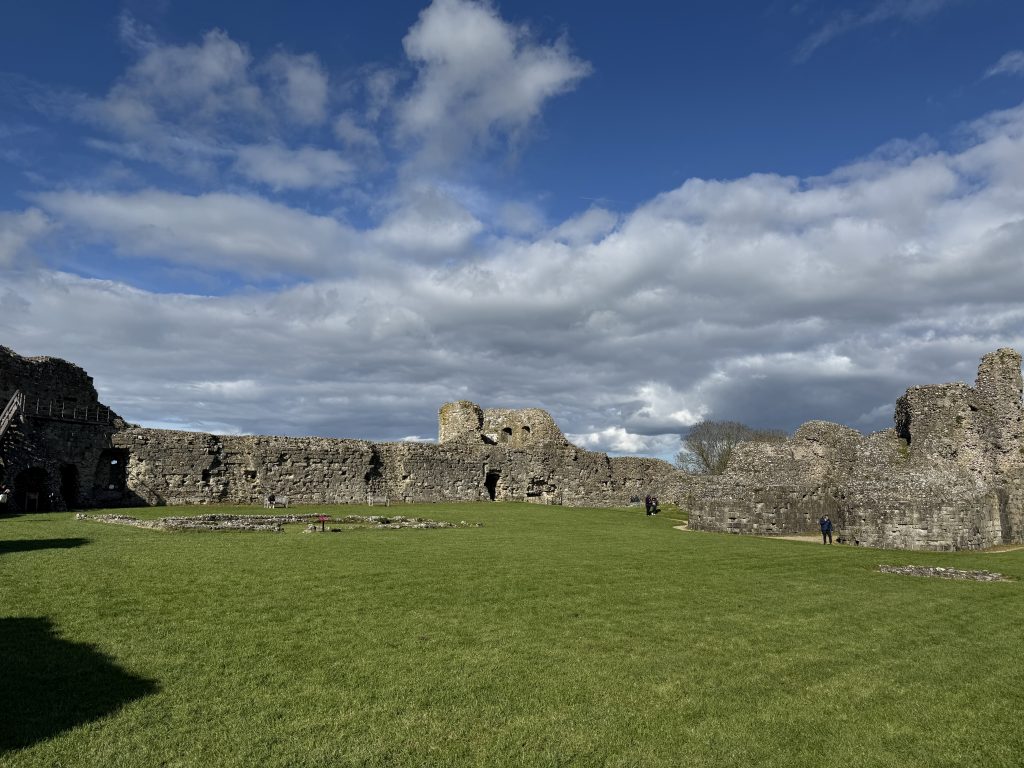
William’s temporary fortification within the Roman walls was expanded to create a permanent Norman castle at Pevensey, probably during Robert’s tenure sometime in the 1070s. The Roman walls were further repaired and two enclosures or baileys were created.
Robert also founded a small borough outside the Roman walls which was recorded as having 110 burgesses and a mint by the time the Domesday Book was compiled in 1086. This may have been the original site of the modern village of Pevensey, but it is equally possible that Robert’s borough may have been the foundation site of the village of Westham to the west of the castle, whose layout has many similarities to that of other Norman new towns.
The Norman castle’s defences were put to the test for the first time in the Rebellion of 1088, when Norman barons allied with Robert Curthose, Duke of Normandy rebelled against the new king William Rufus. The barons, who were also supported by William the Conqueror’s half-brothers Robert of Mortain and Bishop Odo of Bayeux, defended Pevensey Castle against an army led personally by William Rufus. Although the castle’s defences were strong enough to resist assaults from land and sea, its defenders were forced to surrender when they ran out of food after six weeks.Robert was allowed to keep the castle but his son William, Count of Mortain was stripped of it, along with his other English estates, after rebelling against Henry I in the early 12th century.
Destination: England
Read: Study Guide: The Normans