Wild West Fashion: The Bolo Tie
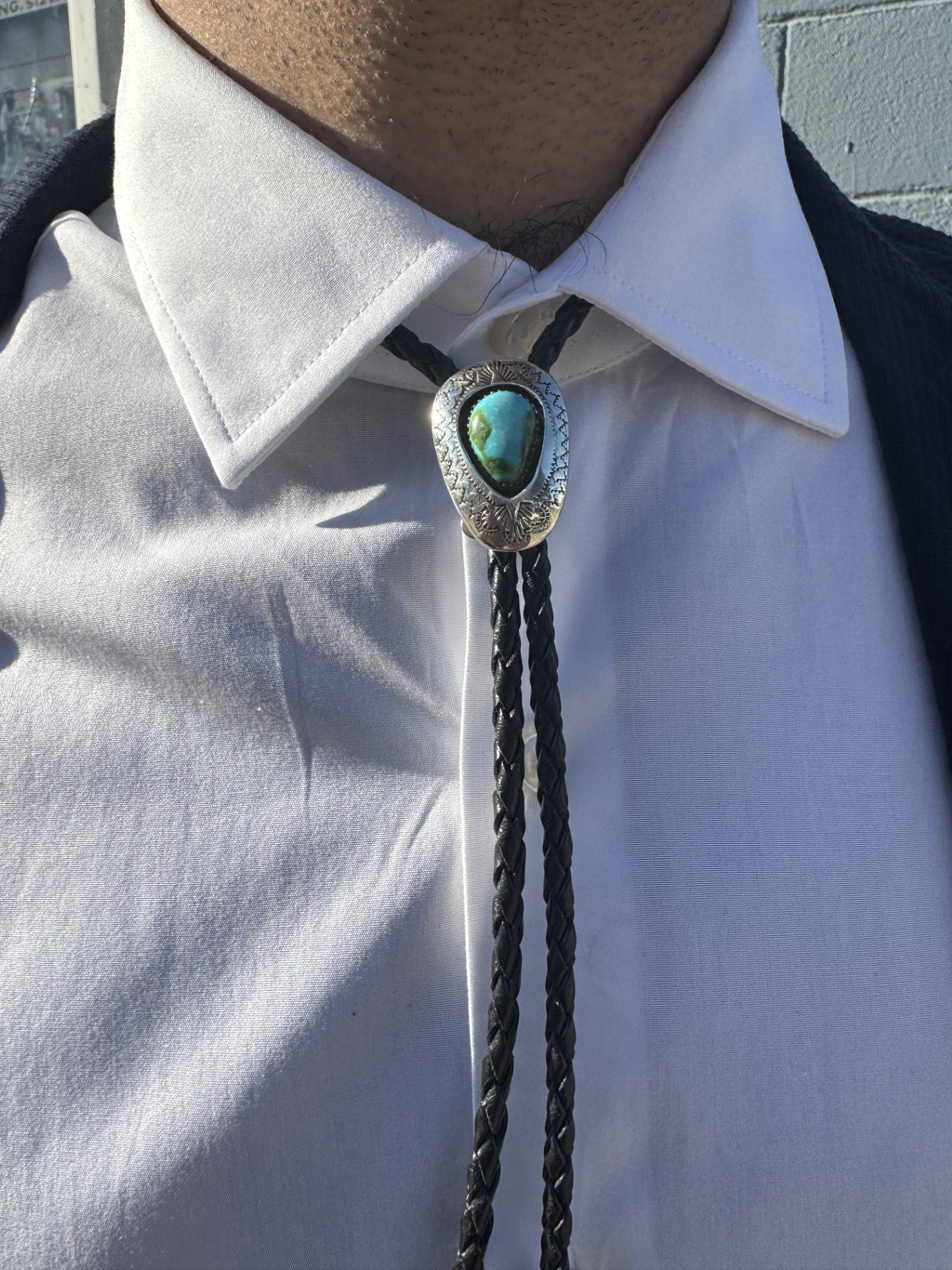
The bolo tie, featuring a cord with a decorative slide, originated in the American Southwest during the mid-20th century, heavily influenced by Native American silversmithing traditions.
Often credited to Arizona silversmith Victor Cedarstaff in the late 1940s, it became a staple of Western wear, gaining popularity in the 1950s and 60s. It is the official neckwear of Arizona, New Mexico, and Texas.
While Victor Cedarstaff is often credited with inventing the bolo tie after his hatband slipped off in the 1940s, the style likely evolved from traditional neckwear used by Native American tribes such as the Navajo, Hopi, and Zuni. Native American artists, particularly in the Southwest, elevated the bolo with intricate silver, turquoise, and copper designs.
The bo lo was named the official state neckwear of Arizona in 1978, New Mexico in 2001 and Texas in 2007. It is appropriate for both formal, western-style events and casual, everyday wear.
How to Wear a Bolo Tie
- Formal: Button the top shirt collar and slide the clasp up to the neckline for a structured look.
- Casual: Wear it with the top button undone and the slide placed lower for a relaxed, bohemian, or western style.
- Occasions: Frequently worn at rodeos, Western-themed weddings, or as a fashion-forward accessory.Commonly called a bola tie, cowboy tie, or string tie, this accessory is a staple of Western wear.
Destnations: Texas, New Mexico, South West USA