The Partitioning of Poland: A Geographical Highway
Poland’s primary vulnerability is its lack of natural defensive borders.
The country sits directly on the North European Plain, a massive, flat lowland corridor stretching from France all the way to the Ural Mountains in Russia.
Aside from the Carpathian Mountains on its southern border, Poland has virtually no large mountain ranges, deep canyons, or impassable deserts. For centuries, it functioned as a wide-open, highly traversable highway for massive armies marching east from Germany or west from Russia.
And Poland is situated in the exact “squeeze zone” between major rival European empires. Historically, Poland shared borders with expansive superpowers: the Kingdom of Prussia (later Germany) to the west, and the Russian Empire (later the USSR) to the east.
Whenever Germany or Russia sought to expand, attack each other, or establish a “buffer zone” to protect their own capitals, Poland was always the battlefield directly in the middle.
Poland wasn’t just easy to march across; it was highly lucrative to control. The same flat terrain that made it vulnerable also made it exceptionally fertile. During the Middle Ages and Renaissance, Poland was the primary breadbasket of Europe.
Access to the Baltic Sea via the Vistula River allowed whichever power controlled Poland to monopolize the lucrative European grain trade, making it a prime prize for regional rivals like Sweden and Prussia.
During the periods when Poland was most aggressively targeted, its internal political systems left it severely weakened and unable to mount effective defenses.
During the 12th and 13th centuries, the country was fractured internally into small, competing duchies, leaving it totally exposed to the Mongol invasions. In the 17th and 18th centuries, the Polish-Lithuanian Commonwealth adopted a system where any single noble could block legislation. This political gridlock paralyzed the state, starved the military of funding, and practically invited neighboring empires to step in and manipulate the government.
Timeline of Partition and Invasion
- 966–1138: Early Piast Era – Poland was unified and expanding medieval state.
- 1138–1320: Fragmentation Era – The state is split internally into dozens of rival duchies.
- The Feudal Fragmentation (1138–1320), which shattered the country internally
In 1138, King Bolesław III Wry-mouth Assist attempted to prevent civil war among his what’s your name Ian Cross? What happens? Would it go? Good morning Will and chicken there’s no chicken. Yeah I just spoke.p This includes toilet So sons by dividing Poland into several autonomous duchies under the Testament of Bolesław III.
The oldest son ruled the “Seniorate Province” (Kraków) and held supreme power, while younger brothers ruled individual provinces.
The system immediately broke down. Instead of unity, it triggered nearly two centuries of bloody civil wars.
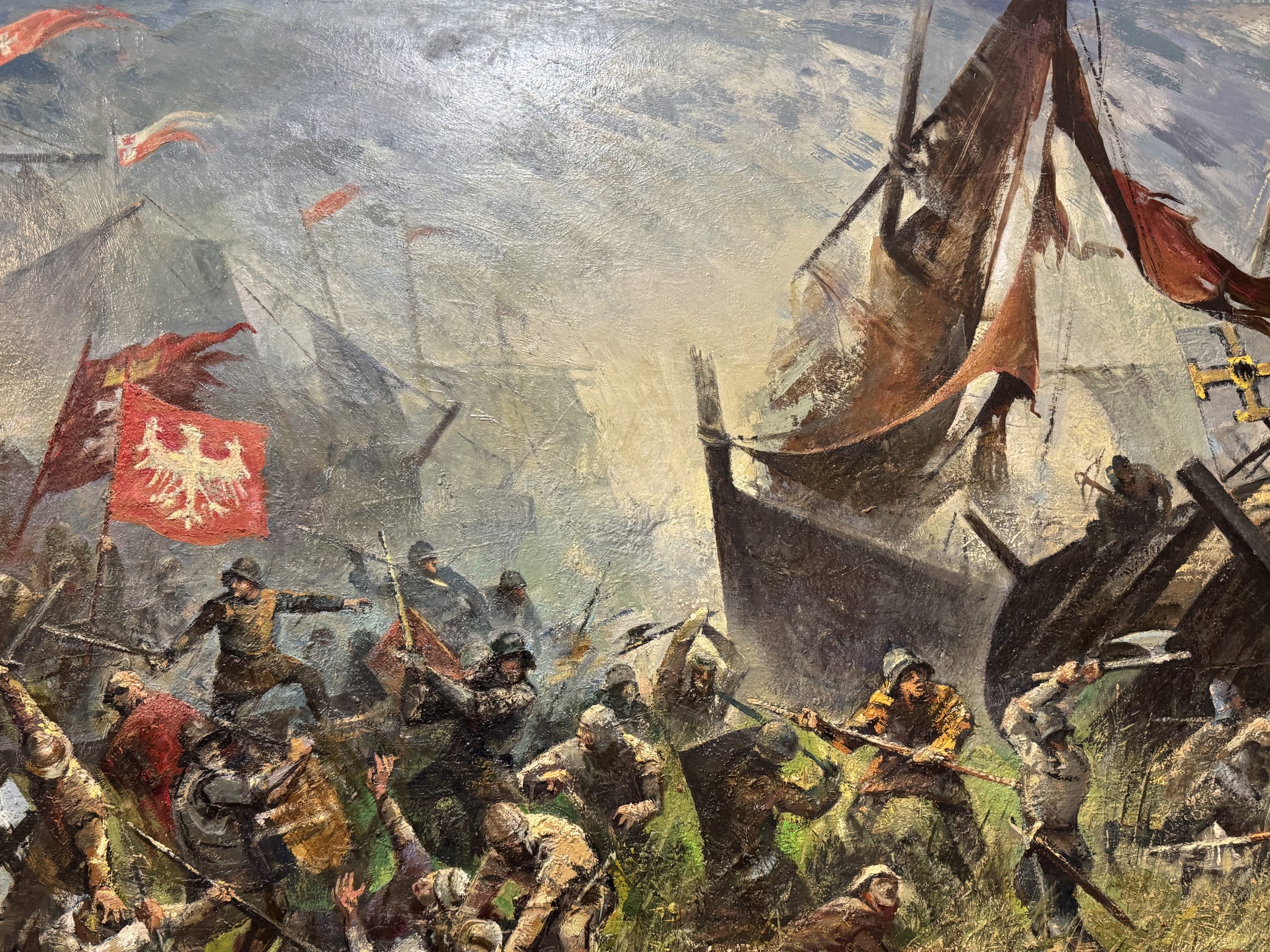
Poland fractured into dozens of tiny, weak principalities. This internal weakness allowed the Teutonic Knights to conquer northern lands and left Poland completely vulnerable to the devastating Mongol Invasions of 1241, 1259, and 1287.
Mongol Invasions of Poland
In the 13th century the Mongol invasions were devastating military campaigns designed to prevent European powers from sending aid to Hungary, the Mongols’ primary target.
Taking full advantage of Poland’s Feudal Fragmentation era, the Mongol armies easily bypassed localized defenses, burning cities, decimating populations, and temporarily shattering Polish unity.
The First and Deadliest Invasion (1241)
Led by Baidar and Kadan (grandsons of Genghis Khan), a diversionary force of around 10,000 to 20,000 riders entered Poland in early 1241.
The Mongols used mobility, feigned retreats, and psychological warfare. They bypassed heavily fortified stone castles but utterly destroyed unfortified towns.
In March 1241, the Mongols sacked and burned Kraków. According to legend, a trumpeter warning the city was shot through the throat by a Mongol arrow—an event still commemorated hourly today by the Hejnał Mariacki trumpet call.
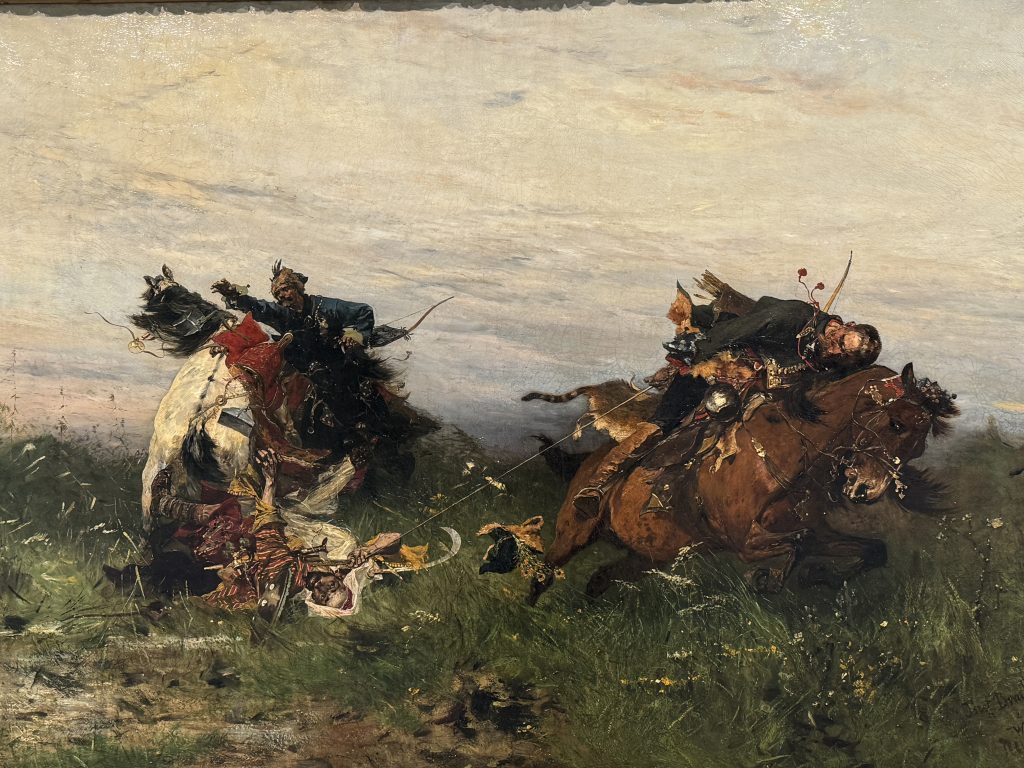
In The Battle of Legnica (Liegnitz on 9 April 1241, a combined European army of Polish knights, French Templars, and German miners led by Duke Henry II the Pious attempted to halt the horde. The heavily armored knights were completely outmaneuvered and crushed. Henry II was captured, beheaded, and his head was paraded on a spear.
Despite their total victory at Legnica, the Mongols suddenly withdrew south toward Hungary soon after. This was not because they were defeated, but because they had achieved their goal of neutralizing Poland, combined with the news that the Great Khan Ögedei had died back in Mongolia.
The Second and Third Invasions
The Mongols returned twice more under the leadership of the Golden Horde, executing brutal, highly organized plundering raids.
The Second Invasion (1259–1260): Led by the general Burundai, this raid was purely economic. The Mongols plundered Sandomierz and Kraków, enslaving over 10,000 Poles. Poland’s fragmented dukes offered almost no organized military resistance.
The Third Invasion (1287–1288): Led by Talabuga and Nogai Khan. This time, Poland was better prepared. Many cities had built modern stone fortifications, and the Polish forces successfully used guerrilla tactics. The Mongols failed to capture Kraków or Legnica and were forced to retreat with heavy casualties.
Reunification & Growth : 1320-1569
Poland reunites, forms a union with Lithuania, and grows into a European superpower.
The Deluge 1648–1660: – Foreign invasions devastate the country; the first partition is planned but fails.During a catastrophic period known as The Deluge (Poland was simultaneously invaded and occupied by Sweden and Tsardom of Russia, causing greater economic and population loss than World War II.
In 1656, Poland’s enemies signed the Treaty of Radnot, which was the first formal pact to partition Poland out of existence.
The treaty planned to slice the Polish-Lithuanian Commonwealth into five pieces:
- Sweden planned to annex Royal Prussia, Kuyavia, and northern Lithuania.
- Brandenburg-Prussia: Slated to receive Greater Poland.
- Transylvania (George II Rákóczi): Slated to take Lesser Poland and Kraków.
- Cossacks (Bohdan Khmelnytsky): Intended to gain control of Ukraine.
- Bogusław Radziwiłł: A treacherous Polish noble who was to receive the Duchy of Lithuania.
Poland mounted a massive, miraculous guerrilla resistance (symbolised by the famous Siege of Jasna Góra), Denmark declared war on Sweden to distract them, and the geopolitical alliance of the invaders collapsed before the treaty could be enforced.
The Three Partitions :1772–1795
The ultimate, successful destruction of the state by Russia, Prussia, and Austria.
The Partitions of Poland were a series of three territorial divisions that took place between 1772 and 1795, completely erased the sovereign Polish–Lithuanian Commonwealth from the map of Europe for 123 years.
The land was progressively annexed by its three powerful neighbors: the Russian Empire, the Kingdom of Prussia, and the Habsburg Monarchy (Austria).
Causes of the Decline
- The Liberum Veto: A political rule in the Polish parliament (Sejm) requiring total unanimity, which allowed a single noble to block any law and paralyzed the government.
- Internal political gridlock kept the Polish army dangerously small compared to its neighbors.
- Neighboring empires actively exploited Poland’s internal instability and manipulated its political factions.
- In the first partition in 1772 Poland lost 30 per cent of its land . In the second in 1793 most of the rest was taken . And in the third Poland ceased to exist as a sovereign nation .
The division of Poland dramatically shifted the balance of power in Central Europe, anchoring a long-term alliance between Russia, Prussia, and Austria.
Despite heavy cultural suppression and systematic attempts at Germanisation and Russification, the Polish national identity survived through culture, literature, and numerous armed rebellions.
The Congress of Vienna (1815)
In the 19th century, the “Fourth Partition” referred to the redrawing of European borders following the defeat of Napoleon Bonaparte.
Napoleon had briefly restored a semi-independent Polish state called the Duchy of Warsaw.
After Napoleon’s fall, the great powers met at the Congress of Vienna. They dismantled the Duchy and split its territories once again.
Prussia took western territories, Kraków became a temporary free city-state, and the remainder was turned into “Congress Poland”—a puppet kingdom with the Russian Tsar acting as the Polish King.
Frederick the Great and the Iron Chancellor
In the 18th and 19th centuries Prussia under its emperor Frederick the Great and then its Iron Chancellor , Otto Von Bismarck , who would preside over the new German state , Germany, had a police if aggressively expanding into Western Poland populating it with hundreds of thousands of German farmers, textile workers and other citizens
The Central Powers’ Puppet State (1916)
During World War I, Western media and historians occasionally used the term to describe the Act of 5th November 1916. Germany and Austria-Hungary occupied Russian-held Polish lands and established a nominal, hollow “Kingdom of Poland.” This was widely condemned as an artificial partition designed purely to draft Polish soldiers into the Central Powers’ armies to fight Russia.
Sovereign independence was finally restored on 11 November 1918, at the conclusion of World War I, following the collapse of all three partitioning empires.
The Invasion and Division of Poland (1939)
The most common and modern use of the term refers to the joint Nazi-Soviet invasion at the start of World War II.
On 23 August 1939, Nazi Germany and the Soviet Union signed the Molotov–Ribbentrop Pact, which contained a secret protocol explicitly carving up Poland into respective “spheres of influence”.
Germany invaded from the west on 1 September 1939, and the Soviet Red Army invaded from the east on 17 September.
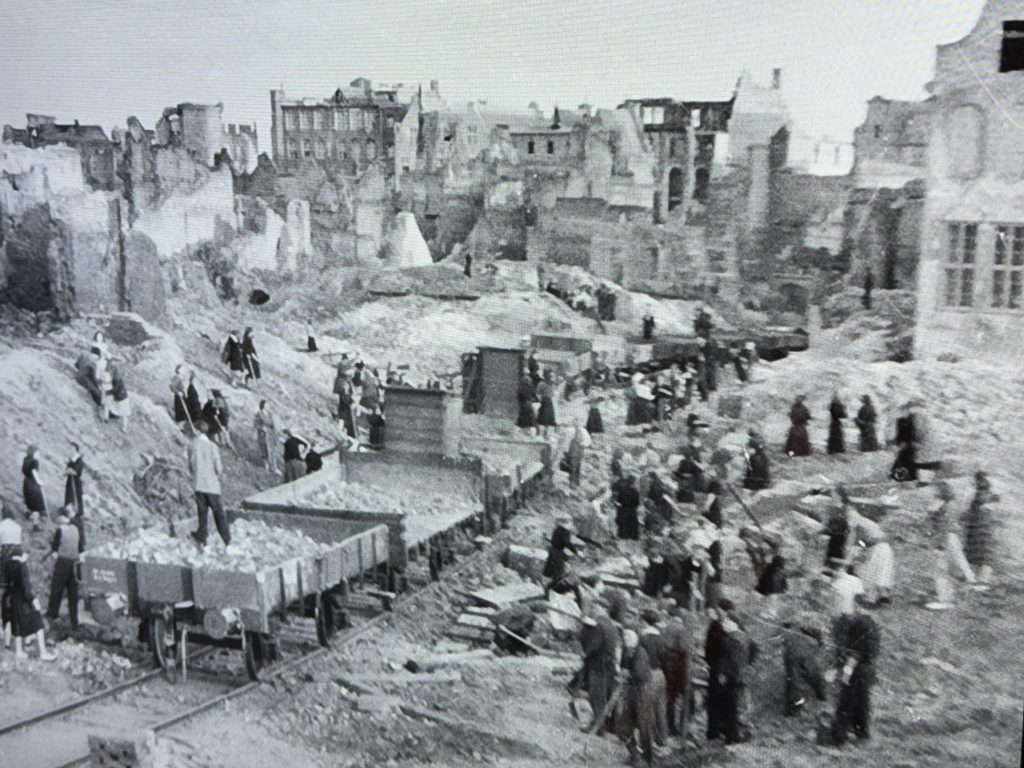
Within weeks, the Second Polish Republic was wiped off the map. The land was divided between the two totalitarian empires, resulting in brutal occupations, mass deportations, and war crimes like the Katyn Massacre.
The German occupation of Poland (was one of the most brutal regimes in modern history, resulting in the deaths of approximately 6 million Polish citizens—amounting to roughly 18% of the pre-war population. Triggered by the Nazi-Soviet pact, the occupation aimed to erase the Polish state, colonize the territory, and systematically exterminate its Jewish population.
The Partition and Administration
Following the invasion on September 1, 1939, Germany and the Soviet Union partitioned Poland. The German-controlled zone was split into two distinct administrative regions
Western regions (such as Greater Poland and Polish Silesia) were directly incorporated into the German Reich to be forcefully “Germanized”.
The central and eastern regions were placed under a brutal colonial administration led by Governor-General Hans Frank.
Nazi Germany sought “living space” (Lebensraum). Over 500,000 ethnic Germans were settled in homes from which hundreds of thousands of Poles had been violently evicted.
Through targeted operations like Intelligenzaktion, Nazi Einsatzgruppen (death squads) executed priests, professors, doctors, and political leaders to destroy the foundation of Polish society.
More than 2 million Polish civilians were deported to the German Reich to serve as slave labor in factories and farms.
The Polish language was banned in public life, secondary schools and universities were closed, and national monuments were systematically destroyed.
The Holocaust in Poland
Pre-war Poland was home to the largest Jewish population in Europe (~3.3 million). The occupying forces implemented the “Final Solution” through a two-stage process:
Jews were forced into overcrowded, sealed urban enclosures like the Warsaw Ghettoand Łódź Ghetto, where thousands died of starvation and disease.
The Nazi regime built its primary industrial death camps on occupied Polish soil, including Auschwitz-Birkenau, Treblinka, Belzec, Sobibor, and Majdanek.
Approximately 3 million Polish Jews were murdered.
Polish Resistance
Despite extreme repression, Poland never formally surrendered and established the largest underground movement in occupied Europe:
An entire clandestine government operated inside Poland, answering to the government-in-exile in London.
The main armed resistance sabotaged German supply lines and launched major military actions
The desperate Warsaw Ghetto Uprising (1943) and the massive Warsaw Uprising (1944) fiercely contested Nazi control before being brutally suppressed.
The occupation ended in early 1945 as the Soviet Red Army pushed German forces out of Polish territory, transitioning Poland from Nazi tyranny into decades of Soviet-dominated communist rule.
If you would like to explore this topic further, please let me know if you want to focus on:
The Russian Occupation -I945-1989
As the Red Army pushed Nazi forces back toward Berlin in 1944 and 1945, the Soviet Union reoccupied Poland.
Rather than restoring democratic sovereignty, Joseph Stalin installed a puppet communist regime known as the Polish Committee of National Liberation.
The NKVD actively hunted down and liquidated members of the Polish Home Army (Armia Krajowa) and other anti-communist partisans. A bloody, underground anti-communist insurrection persisted deep into the 1950s.
Agreed upon at the Yalta and Potsdam conferences, Poland’s map was physically shifted westward. The USSR kept the eastern lands stolen in 1939. In compensation, Poland received former German territories along the Oder–Neisse line.
Poland became a satellite state of the Soviet Union (officially the Polish People’s Republic). The country remained under direct Soviet military influence via the Warsaw Pact, with thousands of Red Army troops permanently stationed on Polish soil until the fall of the Iron Curtain in 1989.
The Polish Psyche
Centuries of partitions, invasions, and systemic attempts to erase their culture have left a profound, indelible stamp on the Polish national psyche. This historical trauma has forged a unique collective identity characterized by defiance, inherent skepticism toward authority, a deeply ingrained survival mindset, and a powerful sense of historical martyrdom.
The primary psychological traits resulting from Poland’s history shape its contemporary culture in several key ways.
1. Inherent Distrust of Authority and State Institutions
Because the state was occupied or controlled by hostile foreign powers for generations, Poles historically viewed the government as an enemy to be outsmarted, not an institution to trust.
The “All-or-Nothing” Mindset: Under occupation, political compromise was viewed as treason or collaboration with the enemy. This created a culture of fierce ideological conviction and revolutionary defiance.
Rebellion as a Virtue: Disobeying laws or actively sabotaging state operations was considered a patriotic duty for generations. This independent streak remains visible in Poland’s vibrant, often combative political culture and a lingering skepticism toward bureaucracy.
2. “The Christ of Nations” (National Messianism)
During the 19th-century partitions, Polish writers and poets developed a powerful philosophical concept known as Polish Messianism.
Promoted by Romantic poet-prophets like Adam Mickiewicz, this narrative likened Poland’s suffering to the crucifixion of Jesus Christ.
The belief was that Poland suffered innocently on behalf of other nations, and that its eventual “resurrection” (the restoration of independence) would bring about a freer, morally renewed Europe. This framing transformed geopolitical tragedy into a spiritual mission, helping preserve national hope when the country did not exist on paper.
3. Hyper vigilance and Generational Trauma
Recent studies highlight that Poland carries an exceptionally high baseline of intergenerational psychological trauma.
Due to the staggering devastation of World War II and the subsequent decades under Soviet communist rule, researchers note that nearly 19% of Poles exhibit symptoms of PTSD—a rate vastly higher than the global average.
The Survival Complex is a trauma which manifests in a cultural tendency toward hyper-vigilance, an acute sensitivity to geopolitical shifts along their eastern border, and a deeply ingrained instinct to prepare for the worst.
4. The Art of Resourceful Survival)
A direct psychological coping mechanism of both the Partitions and Communism is the concept of combinators two. It describes a specific blend of resourcefulness, cunning, and improvisation to get things done when the system is actively working against you. It fosters an incredible societal resilience. Poles pride themselves on being able to adapt, fix, or build almost anything under impossible conditions, viewing obstacles as things to circumvent rather than absolute barriers.
5. Cult of the Heroic Defeat
Unlike cultures that solely celebrate successful conquests, the Polish psyche deeply values and romanticizes the noble, tragic struggle against impossible odds.
Events like the failed 1830 and 1863 uprisings, or the devastating 1944 Warsaw Uprising, are treated with immense national reverence.
Fighting bravely for freedom against a vastly superior oppressor is viewed as a supreme moral victory, even if it results in total physical defeat.
Destinations: Poland, Germany, Russia, Hungary, Austria, Sweden, Lithuania