The Great Schism: A Church Divided
The Great Schism, also known as the East–West Schism, is the permanent break of communion that occurred in 1054 between the Roman Catholic Church in the West and the Eastern Orthodox Church in the East.
The “Great Schism” is also sometimes used to describe the Western Schism of 1378 to 1417, a separate political crisis where multiple rival popes claimed the papal chair simultaneously in Rome and Avignon in France
While the iconic catalyst to the Orthodox- Catholic split involved mutual excommunications exchanged by representatives of Pope Leo IX and Patriarch Michael Cerularius, the split was actually the culmination of centuries of widening political, cultural, and theological gaps.
The fracture developed along several cultural and theological fault lines over hundreds of years:
Rome had asserted universal jurisdiction and papal supremacy over all of Christendom. The Eastern patriarchs rejected this, viewing the Pope as merely “first among equals” with zero administrative power over their domains.
The Western Church added the Latin phrase filioque (“and the Son”) to the Nicene Creed to state that the Holy Spirit proceeds from both the Father and the Son.
The East condemned this change as unauthorized, uncanonical, and highly heretical.
The Western half of the old empire functioned entirely in Latin, while the East spoke and wrote in Greek. This barrier caused massive theological misunderstandings and isolation.
Disputes arose over everyday traditions. Rome enforced clerical celibacy and used unleavened bread for the Eucharist, whereas the East permitted married priests and strictly used leavened bread.
Excommunication
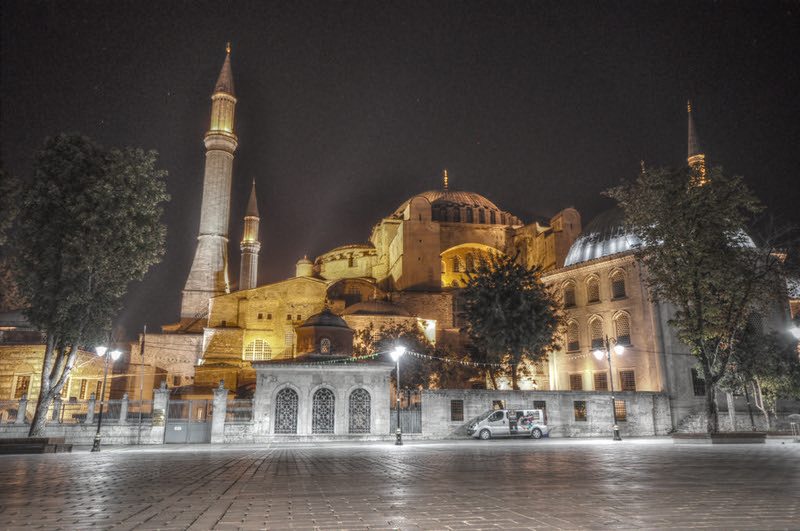
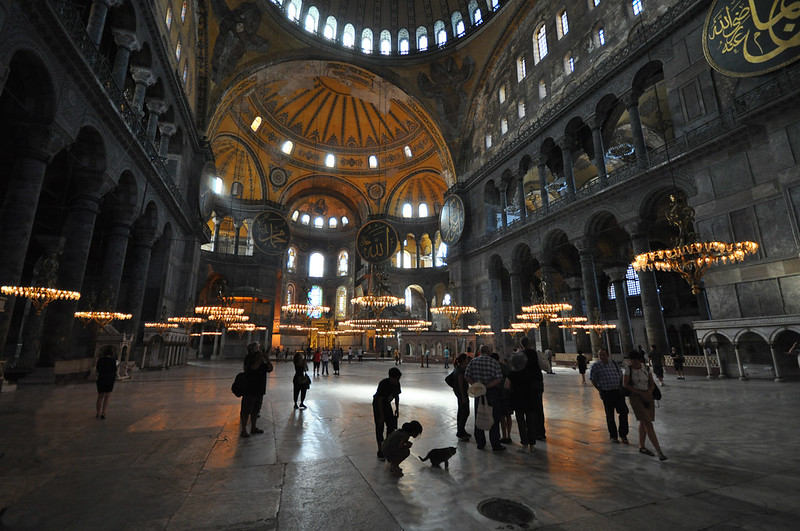
On 16 July 1054, the Papal Legate Cardinal Humbert marched into the Hagia Sophia in Constantinople and placed a bill of excommunication directly onto the high altar against Patriarch Michael Cerularius. The Patriarch promptly convened a council and excommunicated the legates in return.
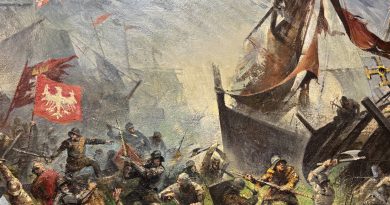
Historians note that ordinary Christians did not immediately view this as a permanent collapse of the entire Church. However, the hostility became truly irreversible in 1204 during the Fourth Crusade, when Western Latin Crusaders brutally attacked, sacked, and looted Constantinople, solidifying centuries of deep, undying resentment.
The Split Today
Centuries later, in 1965, Pope Paul VI and Ecumenical Patriarch Athenagoras I formally lifted the mutual excommunications of 1054 in a landmark gesture of peace. Despite this historic step and ongoing dialogue, full sacramental communion has never been restored, and the two major branches remain distinct ecclesiastical bodies.
Destinations: Italy, Spain, France, Greece, Russia, The Balkans, Turkey, Ukraine, Bulgaria, Croatia, Serbia