
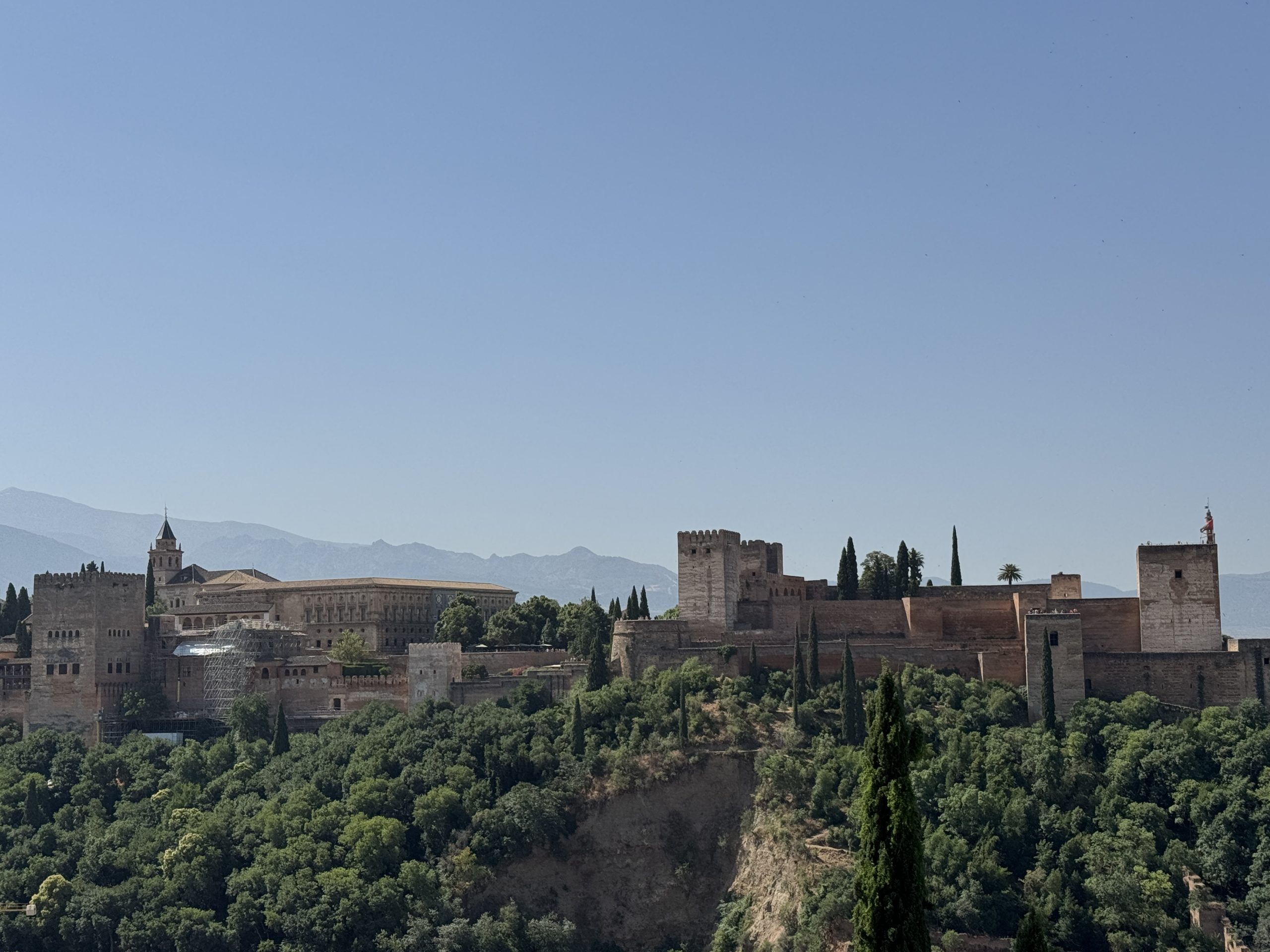
The Spectacular Palaces of the Alhambra
The Alhambra is a breathtaking medieval palatine city and fortress complex located in Granada, Spain, renowned as the world’s finest surviving example of Islamic architecture.
Perched strategically atop the Sabika hill, its reddish fortified walls encompass a sprawling layout of opulent palaces, military strongholds, and lush, water-centric gardens.
The complex blends delicate Islamic art from the Nasrid Dynasty with later Christian Renaissance additions.
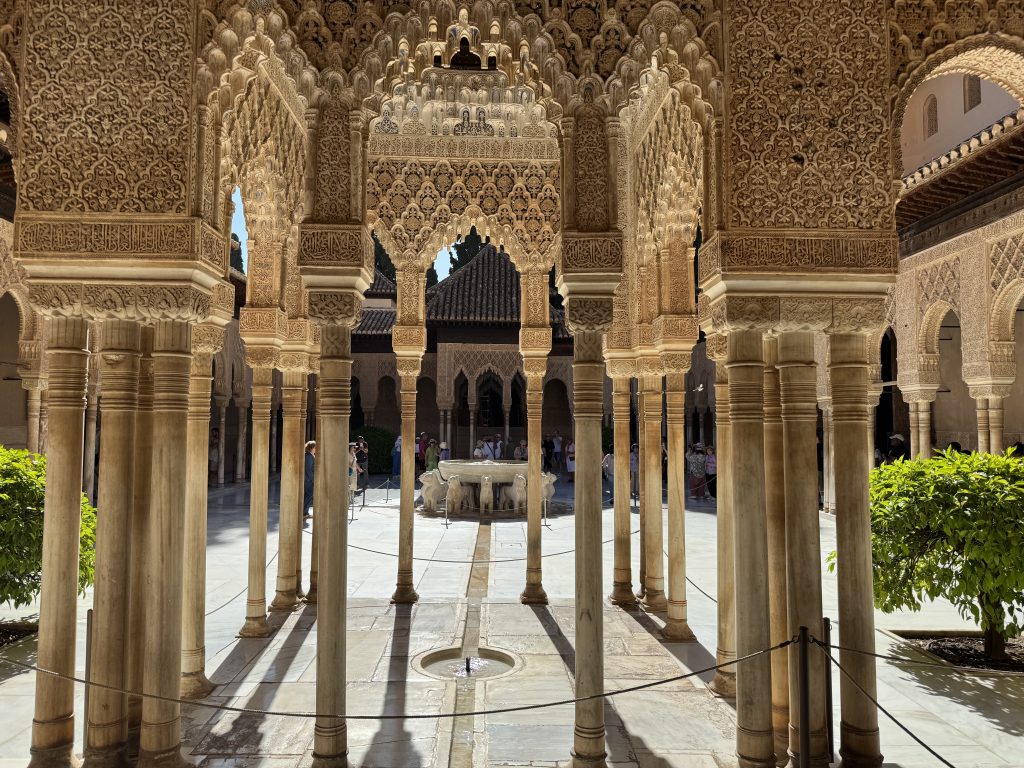
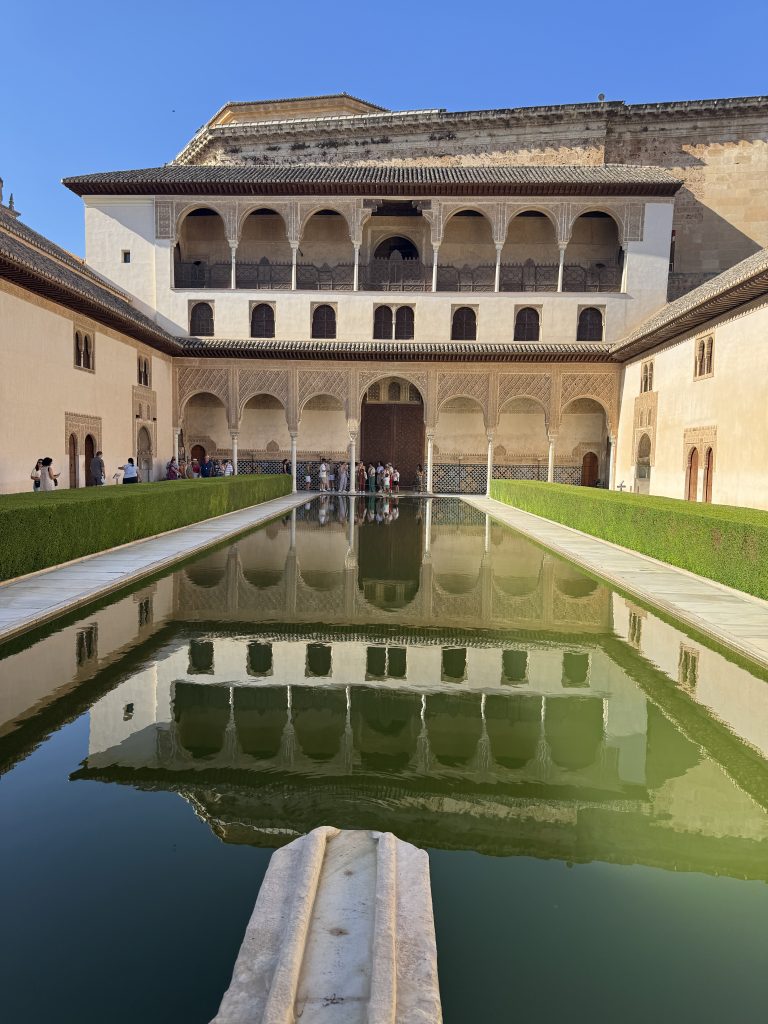
The Nasrid Palaces comprise the stunning core of the Alhambra. There are three surviving palaces which feature intricate geometric tilework, carved stucco calligraphy, and tranquil reflecting pools.
Nearby is an area known as the Generalife where you find the sultans’ summer estate, famous for its grand orchards, continuous water channels, and vibrant blooms.
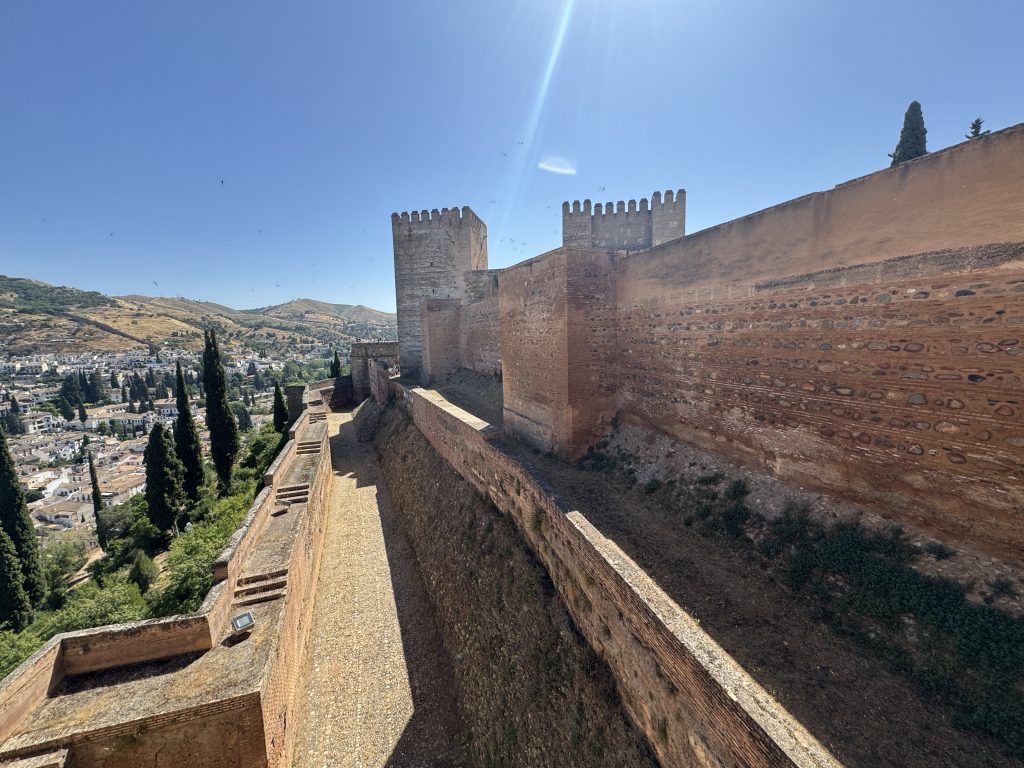
The Alcazaba fortress is the oldest military zone, complete with towering ramparts providing panoramic views of the city.
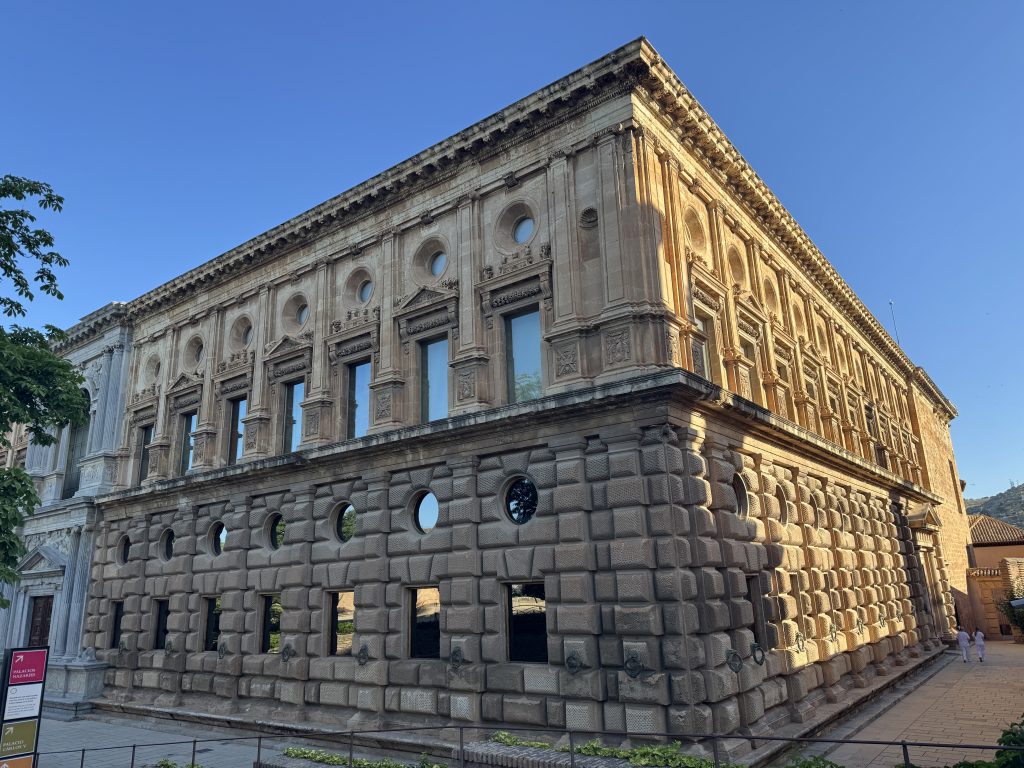
The Palace of Charles V with its unusual circular-courtyard is a Renaissance palace built after the Christian reconquest, which sits uneasily within the Moorish palace and fortress complex
The Alhambra was originally designed as a military zone. It became the royal residence and court of Granada in the mid-13th century after the establishment of the Nasrid Kingdom and the construction of the first palace by the founding king Mohammed ibn Yusuf Ben Nasr, better known as Alhamar, or Mahammad .
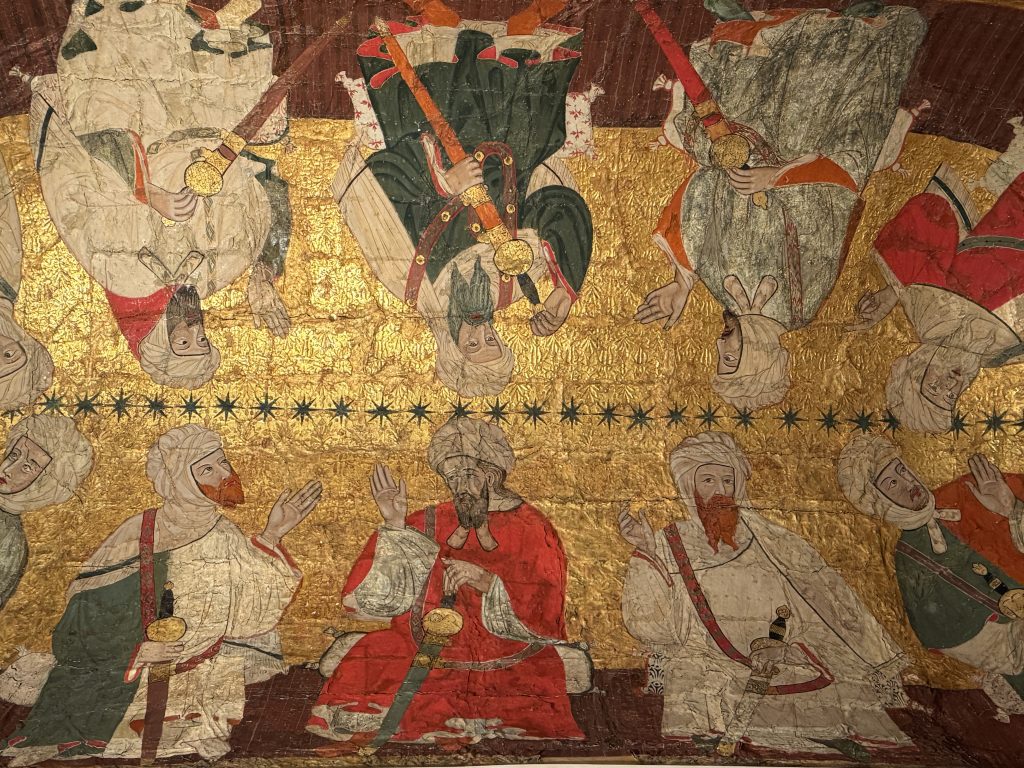
The name Alhambra has its origins in an Arabic word meaning “red castle or vermilion”, perhaps due to the color tone of the towers and walls that completely surround the hill of La Sabica, which under the light of the stars is Of silver color, but in the light of the sun acquires a golden tone. Although there is a more poetic explanation, narrated by the Muslim chroniclers who talk about the construction of the Alhambra “under the light of the torches.” Created originally for military purposes, the Alhambra was a fortress, a palace and a small medina, all at the same time. This triple character helps us understand the many characteristics of this monument.
There is no reference to the Alhambra as a residence of kings until the 13th century, although fortifications had existed since the 9th century. The first kings of Granada, the Zirtians, had their castles and palaces in the hills of Albaicin, located at next to the Alhambra and nothing remains of them. The Nasrids were in all probability the emirs who built the Alhambra, beginning in 1238.
The founder of the dynasty, Muhammed Al-Ahmar, began with the restoration of the old fort. His work was completed by his son Muhammed II, whose immediate successors continued the repairs.
The massive Gate of Judgement was created by Sultan Yusuf the 1st The construction of the palaces (called Casa Real Vieja) dates back to the 14th century and is the work of Yusuf I and Muhammed V regarded as the two greatest of 24 Sultsns who occupied the Alhambra.
Sultan Comares created a third palace, the Door of Justice, The Baths and some towers.
Muhammed V, completed the beautification of the palaces with the Hall of Lions, in addition to other rooms and fortifications. Muhammad’s palace is the most spectacular of the three , and not surprisingly he is regarded as the Alhambra’s greatest sultan and builder.
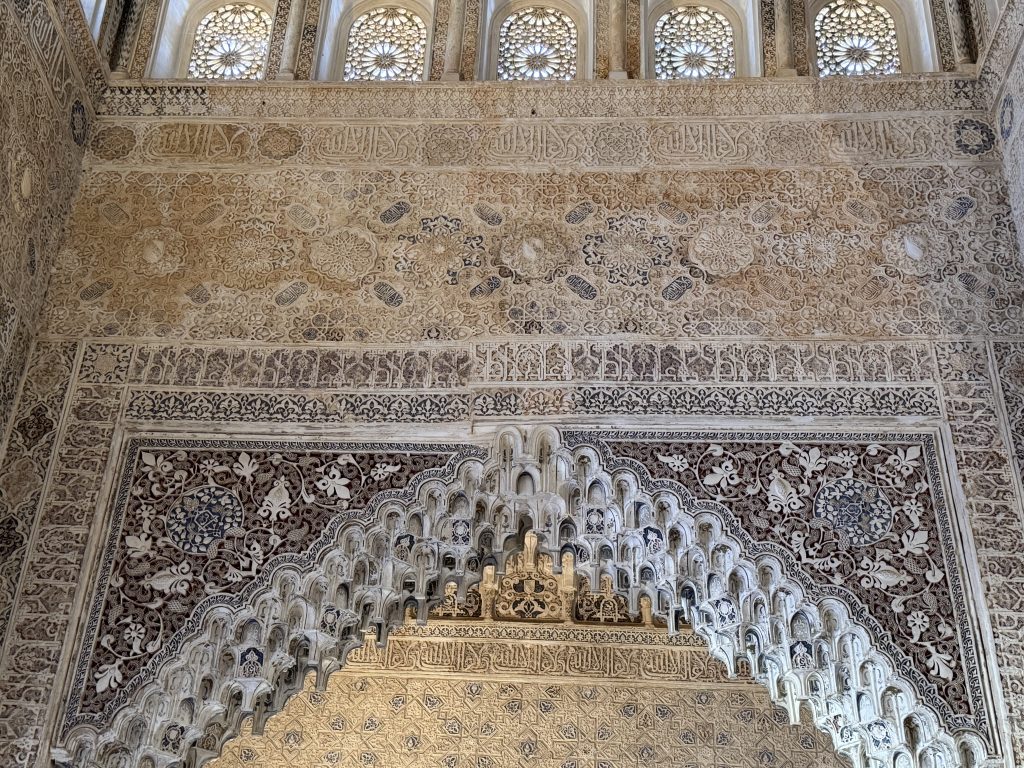
The stucco and plaster work on the ceilings are unique and restorers have been unable to replicate the complex dimensions used to create them even six centuries after their creation.
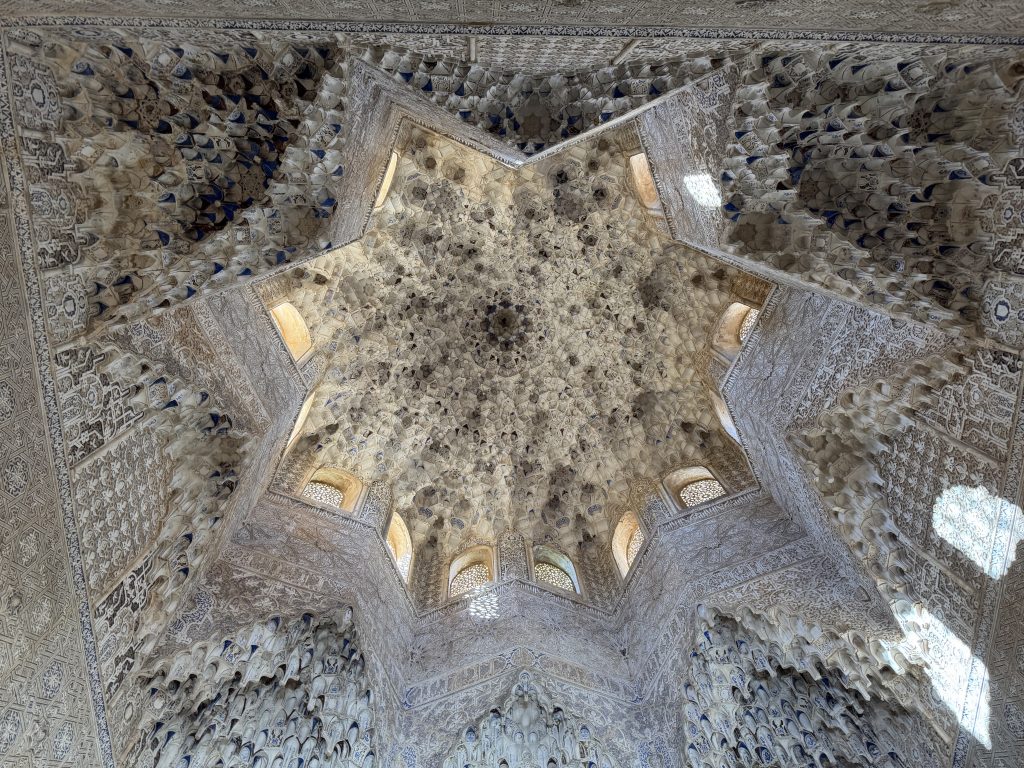
The Alhambra became a Christian court in 1492 when the Catholic Monarchs, Ferdinand and Isabella, conquered Granada. Later, several structures were built to house prominent citizens, military barracks, a Church and a Franciscan Monastery.
Destination: Spain