The Regions of Spain
Spain is divided into 17 Autonomous Communities (regions) plus 2 Autonomous Cities located on the coast of North Africa.
These regions function similarly to states or provinces and have a massive amount of cultural, linguistic, and geographical diversity.
The easiest way to understand them is to break them down by geographic area.
Northern Atlantic Coast (Green Spain)
This area is famous for its rocky coastlines, green mountains, surfing, and incredible seafood. It looks more like Ireland or Scotland than the rest of Spain.
Galicia: The Celtic corner of Spain; famous for seafood, the Santiago de Compostela pilgrimage, and its own language (Galician)
Asturias: A rugged mountain region known for prehistoric caves, rugged national parks, and dry apple cider.
Cantabria: Home to beautiful coastal towns, green valleys, and prehistoric art like the world-famous Altamira Caves.
Basque Country (País Vasco): A cultural powerhouse with its own unique language (Euskera), famous for San Sebastián’s beaches and Michelin-starred culinary culture (pintxos).
Ebro Valley & Pyrenees Mountains
Stretching along the mighty Ebro River and the border with France, these regions offer high-altitude skiing, vineyards, and deep medieval history.
Navarre (Navarra): Famous for Pamplona and the annual Running of the Bulls festival.
La Rioja: Spain’s most celebrated wine-producing region, dotted with thousands of world-class vineyards.
Aragon (Aragón): Home to the highest peaks of the Pyrenees mountains and the historic city of Zaragoza.
The Mediterranean Coast
The most heavily visited strip of the country, famous for pristine beaches, sunny weather, and vibrant coastal cities.
Catalonia (Catalunya): A wealthy, distinct region with its own language (Catalan), home to Barcelona, Salvador Dalí’s art, and the Costa Brava.
Valencia (Comunidad Valenciana): Famous for its massive beach resorts, orange groves, ultra-futuristic architecture, and being the birthplace of Paella.
Murcia: Known as Europe’s orchard due to its massive agricultural output, alongside a warm, salty coastal lagoon called the Mar Menor.
The Central Plains (The Heartland)
The high, arid plateau in the middle of Spain. This is the land of medieval castles, endless plains, and traditional windmills.
Madrid: The bustling capital region of the country, containing the golden triangle of art museums and a massive nightlife scene.
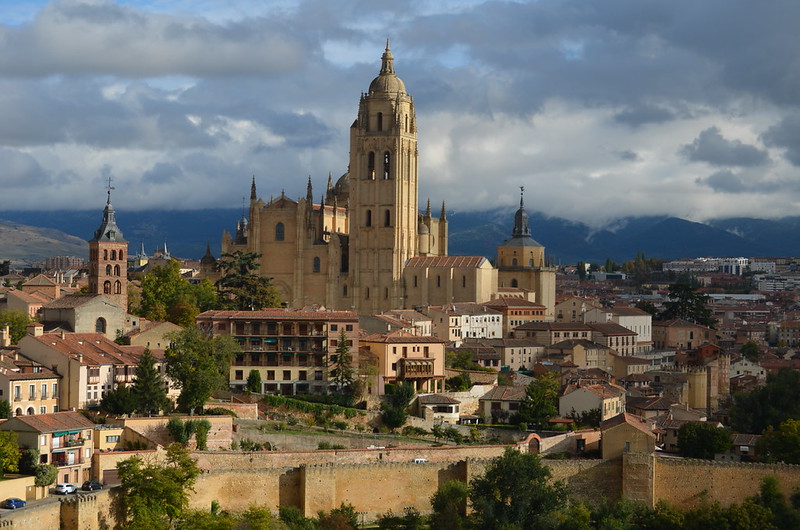
Castile and León (Castilla y León): Spain’s largest region, packed with historic Romanesque architecture, fortified walls ,such as those in Ávila ,and massive cathedrals.
Castile-La Mancha (Castilla-La Mancha): The land made famous by the book Don Quixote, known for its iconic windmills, saffron, and Manchego cheese.
The Southwest & South
The warmest parts of the country, deeply influenced by centuries of Islamic Moorish rule.
Extramadura: A rugged, rural frontier region bordering Portugal, filled with dense oak forests and incredible Roman ruins such as those in Mérida
Andalusia (Andalucía): The massive southern region that embodies classic Spanish stereotypes: flamenco dancing, bullfighting, tapas, and Moorish palaces such as Granada’s Alhambra, the Alcazars in Seville and Malaga and the mosque in Cordoba.
The Islands
Balearic Islands (Islas Baleares): An archipelago in the Mediterranean Sea including Mallorca, Menorca, and Ibiza.
Canary Islands (Islas Canarias): A volcanic chain of islands located in the Atlantic Ocean off the coast of Morocco, offering year-round tropical weather.
Autonomous Cities (North Africa)
Ceuta & Melilla: Two small, heavily fortified Spanish enclave cities sitting directly on the North African mainland.