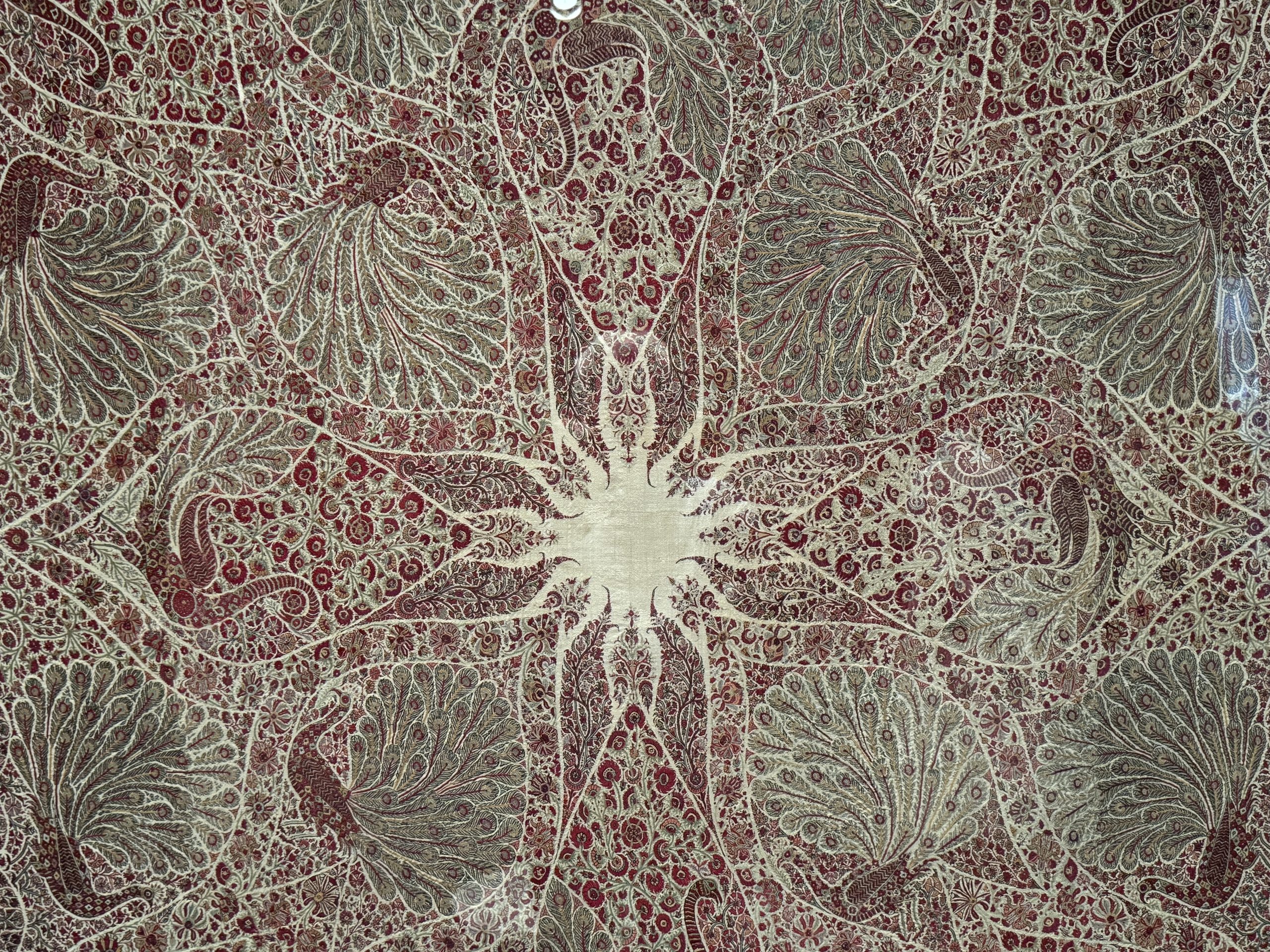
The Story of Pashmina Shawl
The word pashm means “wool” in Persian, but in Kashmir, pashm referred to the raw unspun wool of domesticated Changthangi goats.
In common parlance today, pashmina may refer either to the material or to the variant of the Kashmir shawl that is made from it.
Both cashmere and pashmina come from the same goat but typical pashmina is much finer and can also refer to a cashmere and silk blend.
The material gained prominence through its use in the Kashmir shawl. In Mughal times, this was used as an indicator of rank and nobility. In 1526, Babur (1483–1530) founded the Mughal Empire in India, and established the practice of giving khalat or “robes of honor”, typically made of expensive fabric, to members of their durbar to indicate high service, great achievement, or royal favor.
In his time, the Mughal khalat was a set of clothes, which could include a turban, long coat, gown, fitted jacket, sash, shawl, trousers, shirt, and scarf. One or all of these could be made of pashmina and embroidered in gold cloth.
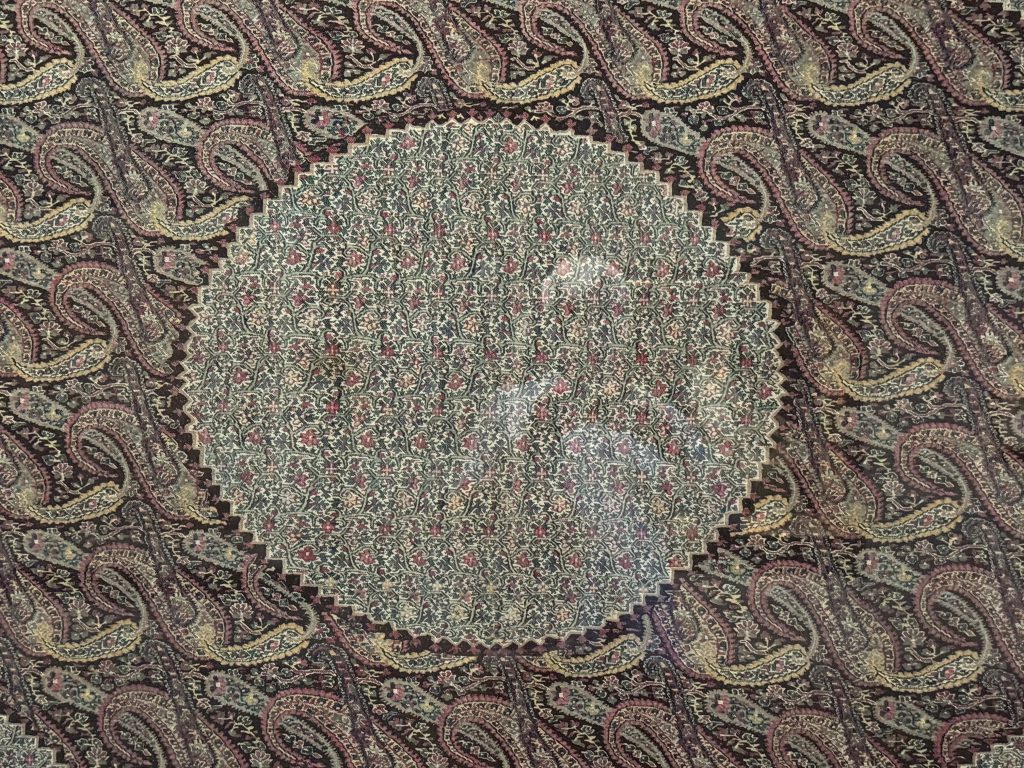
In 1568, Kashmir was conquered by Babur’s grandson Akbar. In Akbar’s time, a pair of pashmina shawls was an expected part of khil’at ceremonies.From the 16th to the early 20th centuries, the Safavid, Zand, and Qajar emperors of Iran also wore pashmina and gifted Kashmir shawls as khilat within their political and religious practices.
Pashmina blankets were also part of a wealthy woman’s dowry in India, Pakistan and Nepal In nineteenth-century English literature Kashmiri shawls were coded as women’s luxuries. They acquired the status of heirlooms, worn by a girl on her marriage and coming-of-age. They were inherited rather than purchased. Since English law restricted women’s abilities to inherit land, the Kashmir shawl served as an item of high exchange value that a woman could carry.
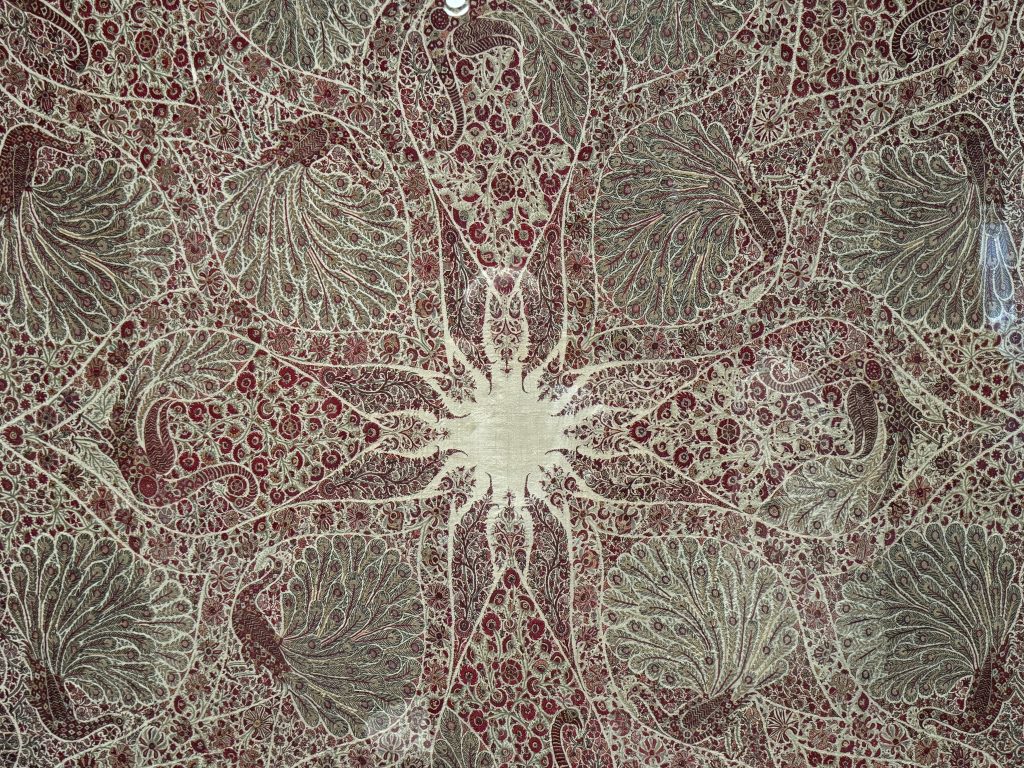
In France, the pashmina Kashmir shawl gained status as a fashion icon through Napoleon’s first wife, the Empress Joséphine’s enthusiastic use. These shawls suited the French well, providing the needed warmth, while adding visual interest to white French gowns through the traditional teardrop buta pattern and discreet floral motifs
The shawl became a symbol of French bourgeois status from the Bourbon Restoration(1815–48) through the Second French Empire(1852–70). As a class marker, it fulfilled 19th century French tastes because it looked rich, had extensive ornamentation, artistic qualities, and was made of expensive raw materials.
During the 19th century and with the coming of the Industrial Revolution , English traders from the East India Company , who were becoming increasingly powerful in India , started reproducing the famous teardrop pattern featured on the Kashmir shawl in Paisley, Scotland . Soon after it became a fashionable design known in Britain and elsewhere as the Paisley Pattern.
Destinations: Pakistan/ India/ Nepal/ Afganistan/ Iran/ France/ England / Scotland
Watch: The Mughal Empire